News Raw Materials
Pigments: holistic assessment of environmental impact
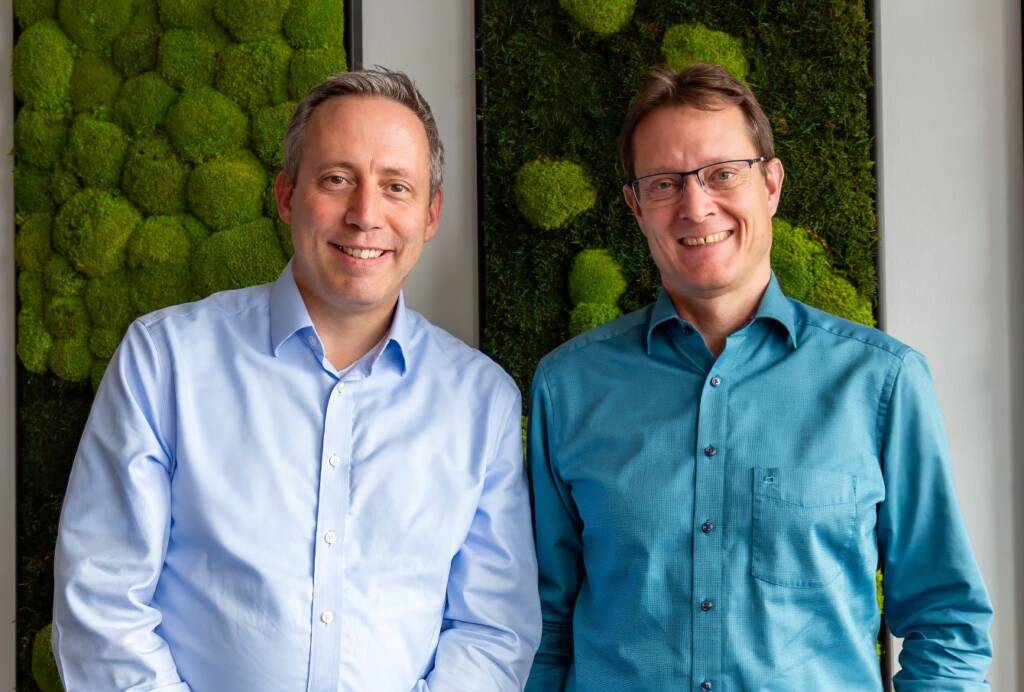
The focus is shifting from purely technical properties to sustainability, which is now a key driver of innovation. Our editor, Bettina Hoffmann, spoke to Lars Lücke and Heino Heckmann from Harold Scholz about the latest trends in the pigments industry.
What impact do new sustainability requirements (e.g. CO₂ footprint, circular economy, critical raw materials) have on material selection and innovation strategies for pigments?
Sustainability has long become a central criterion for innovation and material selection in the pigment industry. Customers increasingly expect transparency regarding the CO₂ footprint – from raw materials through production to logistics. Many companies are responding, for example, with Environmental Product Declarations (EPDs – such as for Bayferrox® from Lanxess or iron oxide slurries from Harold Scholz) and by reducing the Product Carbon Footprint (PCF) of their products (e.g. Scopeblue products from Lanxess). Renewable or CO₂-reduced feedstocks for pigments are also gaining importance and are increasingly considered in new product developments. A key success factor is the willingness of customers to pay for this added value.
In aqueous pigment preparations for emulsion paints, sustainability also plays a role in preservation: due to regulatory requirements, the biocide content is continuously decreasing. We observe a trend towards highly alkaline systems or water-free products such as our NOW range.
The circular economy is also becoming more important in material selection: raw materials should be recycling-friendly, and packaging should be designed for easy reuse. This applies to the pigment itself – where solutions are still being sought – but also to the packaging of pigments and pigment preparations such as preparations, granules and slurries: is it refillable, completely drainable, and easy to return?
At the same time, the origin of raw materials is coming into sharper focus. Critical raw materials or widely transported intermediates are increasingly being replaced by regional alternatives in order to contribute positively to the environment and to strengthen supply chain resilience.
Overall, the focus is shifting from purely technical properties to a holistic assessment of environmental impact, resource efficiency and security of supply – making sustainability a key driver of innovation in pigment development and, of course, in other components of paints and coatings.
How are digital tools (e.g. simulation, AI-supported formulation) changing collaboration between raw material suppliers and coating manufacturers in development?
Digital tools, particularly generative AI and machine learning, are currently transforming our industry fundamentally along the entire value chain – from pigment and pigment preparation development through to coating application at the customer.
Traditionally, collaboration between raw material suppliers and coating manufacturers has often been sequential: a product is developed, a sample is supplied, and then an extensive testing and adjustment process begins at the customer’s site.
In the future, this workflow will increasingly shift into a digital development environment. On the one hand, evaluation and planning of experiments will be accelerated with the help of AI: development loops are reduced, as existing knowledge is made more readily accessible in laboratory databases. This is an important support, particularly in view of the shortage of skilled professionals.
On the other hand, AI could be used to propose experiments or formulations based on proprietary results and publicly available raw material data that a human might not have considered.
For joint projects with customers and partners, this means they should be involved much earlier and more actively in the development process. This creates a partnership on equal footing, extending to the vision that both sides share data, simulation results and application experience. The more complex and time-consuming the projects, the more both sides will recognise the added value, as development risks are reduced.
Ultimately, digitalisation will turn pigment and pigment preparation development, as well as coating formulation, into a more collaborative innovation process. It will become faster, more efficient and more targeted – which represents a real competitive advantage, especially in times of complex sustainability and performance requirements.
At Harold Scholz, we are closely monitoring this topic and will certainly implement AI tools.