News Coatings Technologies
iCVD enables hydrophobic PSA films with water-resistant adhesion
Researchers have produced hydrophobic pressure-sensitive adhesive thin films using a solvent-free initiated chemical vapour deposition process. The fluorinated copolymer films combine high water contact angles with strong shear and peel performance, even after prolonged water exposure.
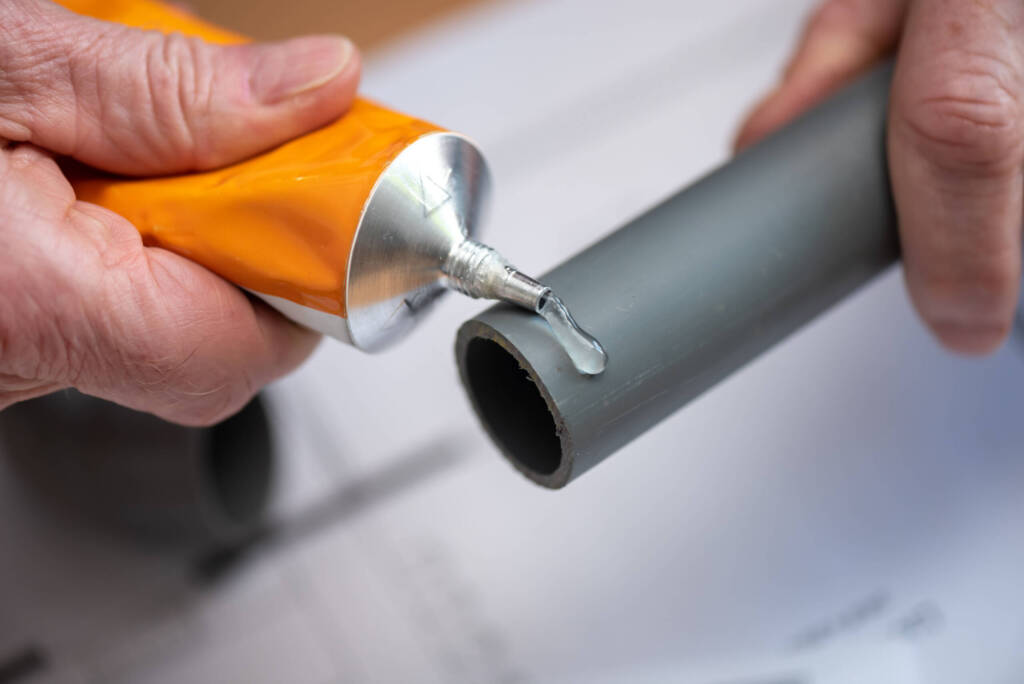
Pressure-sensitive adhesives (PSAs) are widely used in industrial and consumer applications, but their performance often deteriorates under humid or wet conditions. A new study demonstrates that initiated chemical vapour deposition (iCVD) can be used to fabricate hydrophobic PSA thin films that retain their adhesive properties even after immersion in water. The films are based on copolymers of 2-ethylhexyl acrylate (EHA) and the fluorinated monomer 2,2,3,4,4,4-hexafluorobutyl acrylate (HFBA).
By tuning the HFBA content in the copolymer, the researchers were able to control surface wettability. Higher fluorinated monomer fractions raised the water contact angle to a maximum of 161°, while surface roughness remained below 10 nm. This indicates that the fluorinated surface chemistry, rather than topography, dominates the wetting behaviour.
Strong adhesion and water resistance
The deposited films exhibited shear strengths exceeding 200 N/cm² and 180° peel strengths above 0.70 N/cm. Water immersion tests showed that fluorine-rich compositions retained most of their adhesive performance after 24 h of exposure, with only minor losses in both shear and peel strength. This durability under wet conditions represents a significant advantage over conventional PSAs, which typically suffer from rapid debonding in moist environments.
Reading tip: Formulating Adhesives and Sealants (2nd Edition)
This fully revised guide offers hands-on support for developing and testing modern bonding and sealing systems. Covering fundamental chemistry, formulation know-how and practical examples, it’s ideal for professionals in R&D and technical development.
Conformal coating and underwater bonding potential
Scanning electron microscopy confirmed that the iCVD process produced uniform and conformal coatings on porous bamboo fabrics without altering their underlying microstructure. Additional underwater adhesion experiments showed stable bonding in aqueous environments, suggesting potential for applications where moisture resistance is critical. The authors highlight that composition-controlled P(EHA-co-HFBA) thin films produced by the solvent-free iCVD route offer a versatile platform for next-generation, moisture-tolerant pressure-sensitive adhesives.
Source: Yılmaz, K. et al., Hydrophobic PSA thin films deposited by iCVD with tunable adhesion and enhanced water resistance. Progress in Organic Coatings, 110112 (2026).