News Markets & Companies
Tinol Paints expands to Canada: “International diversification has become a strategic necessity.”
Chaker F. Saab, Executive Chairman of Tinol Paint, discusses the company’s latest step in its international growth strategy: entering the Canadian market through a partnership with Cloverdale Paint. In this interview, he explains why collaboration is central to Tinol’s expansion plans, the opportunities in North America, and how international diversification is strengthening the company’s long-term resilience.

Tinol has built a strong reputation in Lebanon and the Middle East. What strategic factors made Canada the right next step for your international expansion?
Chaker Saab: Canada represents a highly developed and demanding market where performance, sustainability, compliance, and reliability are essential. For Tinol, entering Canada was not simply about geographical expansion—it was about demonstrating that our expertise can create value in some of the world’s most advanced coatings markets. The opportunity started through our collaboration with Wesgroup Properties, a leading real estate developer, which opened the door to North America. While initially exploring exports from Lebanon, we quickly realized that local manufacturing through a strong strategic partner would provide greater efficiency, sustainability, and long-term scalability.
Last year, Tinol described Cyprus as a “gateway” for its European expansion and emphasized lean, partnership-driven growth. How did the experience in Cyprus influence your approach to entering Canada and North America?
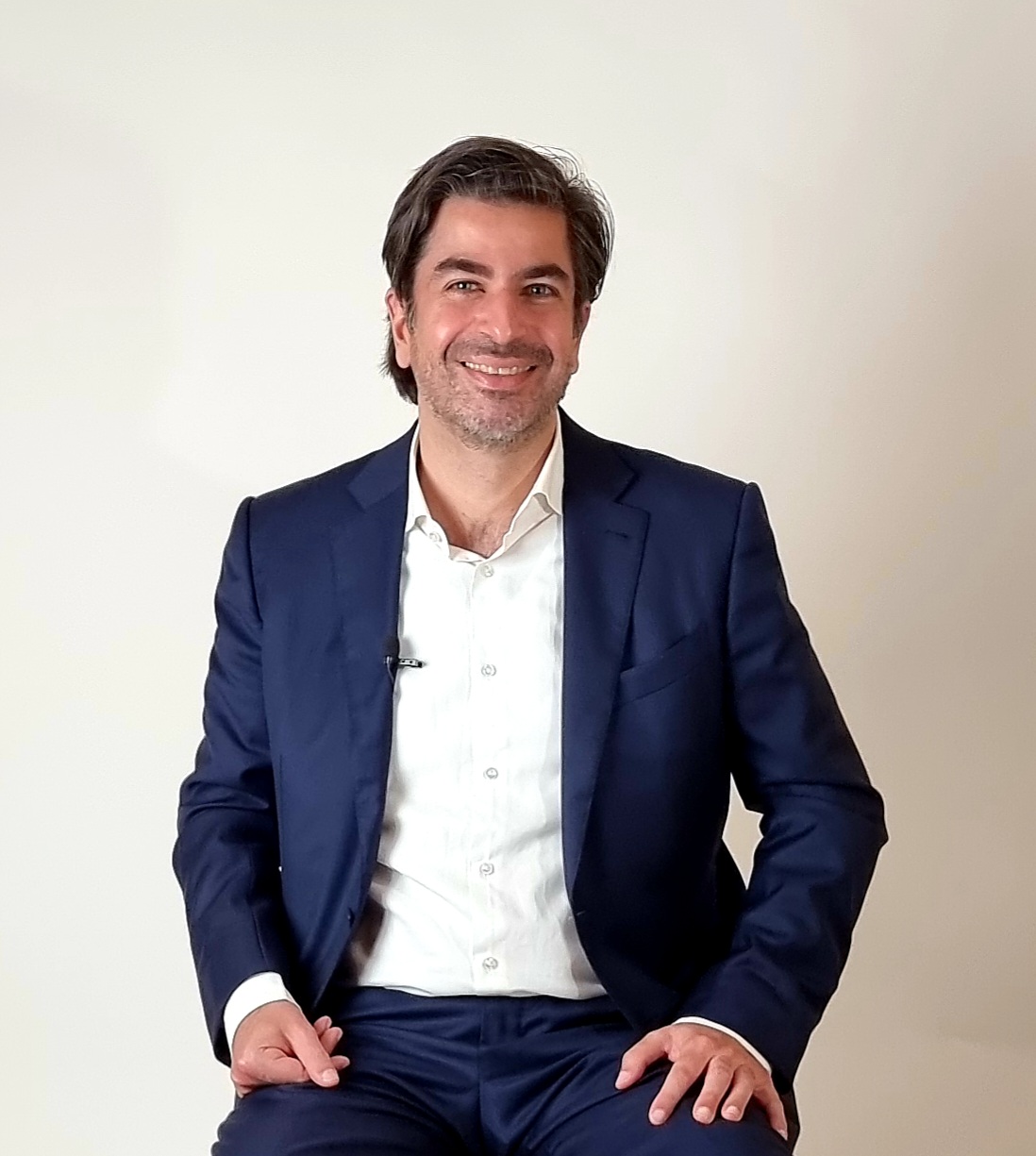
Saab: The common trait between our Cyprus–European expansion and our Canadian co-branding partnership is our lean, flexible, and partnership-driven approach. However, each region requires a tailored strategy. In Europe, the Middle East, and Africa, we combine direct exports with strong B2B strategic relationships and distribution networks, while our current North American model is built around strategic manufacturing partnerships. Producing closer to the market improves efficiency, reduces logistical complexity, and ensures faster service. The lesson from Cyprus was not to replicate one model everywhere, but to build adaptable structures that create value in each market.
Why did you choose to enter the Canadian market through a strategic partnership with Cloverdale Paint rather than through a standalone operation?
Saab: We favor a lean, agile market-entry strategy. Direct exporting is our preferred initial route, but when that is less advantageous, leaping straight to a standalone operation is premature and capital-intensive. To scale efficiently, we look for collaborative options. We chose a strategic partnership because we needed an ally with a mature infrastructure already in place. That is exactly why we turned to Cloverdale Paint—they provided an experienced on-the-ground team, sophisticated logistics, and a widespread, geographically diverse store network that gave us immediate market depth.
What made Cloverdale Paint the right partner for Tinol’s North American ambitions?
Saab: Collaboration has always been part of Tinol’s DNA. I personally believe strongly in collaboration among peers, and this mindset is shared across our team. I represent Tinol on the board of CRGI (Coatings Research Group Inc.), and we are also active members of Guild CPO and Color Guild—three international coatings organizations based in the US that bring together independent coatings manufacturers from around the world. Cloverdale Paint, the largest independent Canadian coatings manufacturer, is also an active member of these organizations.
Over the years, we have built a strong relationship with Cloverdale based on trust, shared values, and mutual respect. Combined with their manufacturing expertise, excellent reputation, and deep understanding of the Canadian market, this made the partnership a natural evolution. Both companies share a similar culture: a commitment to quality, flexibility, and building long-term relationships.
How important are private-label partnerships and co-branded solutions within your broader international growth strategy?
Saab: Private-label partnerships and co-branded solutions are an important pillar of our international growth strategy. We already manufacture such solutions for French, British, and Cypriot partners, and we are working on an exciting new project with a Danish company. This flexibility allows us to create opportunities across markets and adapt to different customer needs.
Our North American approach takes this concept one step further. Instead of starting with products and searching for customers, we engage at the executive level with major real estate developers, understanding their strategies, operational challenges, and long-term objectives. We analyze their existing models, identify opportunities for improvement, and build tailored solutions through the right manufacturing partners based on technology, logistics, capabilities, and shared values. The objective is always to create a win-win-win model: value for the customer, growth for our partner, and international expansion for Tinol.
What specific product technologies or coating solutions from Tinol are being introduced to the Canadian market?
Saab: Our long-term plan is to introduce specialized coating solutions based on Tinol technologies, starting with a range of solvent-free polyurethane waterproofing floor systems for parking structures. These products require careful adaptation, testing, and development to meet local market requirements. In parallel, we have worked closely with Wesgroup Properties and Cloverdale Paint to identify immediate solutions for their current needs, including high-end MPI-certified architectural coatings based on Cloverdale’s proven technology. This reflects the strength of our partnership model: combining Tinol’s product development expertise and customer-focused approach with the capabilities of a strong local manufacturer.
Does the move into Canada signal a shift from regional expansion toward building a truly global coatings platform?
Saab: Yes, it reflects our ambition to evolve into a more global player. While we remain strongly rooted in our core markets, we are increasingly focused on building a diversified international presence through strategic partnerships. However, our objective is not expansion for the sake of expansion. We believe in sustainable, focused growth where we can create real value.
In North America, our approach is not to compete as a mass-market paint supplier. We aim to position Tinol as a boutique coatings solutions partner, working closely with developers to understand their challenges and provide the right technical, commercial, and supply solutions.
Have geopolitical and economic challenges in Lebanon affected access to raw materials, technology partnerships, or product development priorities within Tinol’s coatings business?
Saab: Like many manufacturers in the region, we have faced challenges related to security, supply chains, and cost volatility. However, these conditions have also strengthened our agility and ability to adapt. Over the years, we have diversified our supplier base, optimized formulations, developed new products, achieved international certifications such as ISO, GreenGuard Gold and SCAQMD and reinforced our international partnerships. Operating from a challenging environment has pushed us to become more innovative, flexible, and resilient. In many ways, these challenges have helped us reinvent ourselves and accelerated our transformation from a regional manufacturer into a more internationally focused coatings company.
In light of ongoing geopolitical uncertainty in the Middle East, how important is international diversification for ensuring long-term resilience and growth in the coatings industry?
Saab: International diversification has become a strategic necessity. For Tinol, it is not only about reducing exposure to regional uncertainty, but also about accessing new opportunities, learning from different markets, and building stronger global partnerships. Each market brings new expectations, technologies, regulations, and customer needs, which ultimately makes us a stronger company. Our expansion into Europe and North America is part of a long-term vision: to build an international coatings company that remains proudly rooted in Lebanon while creating value across different regions of the world.