News Coatings Technologies
Ormosil sol delivers durable superhydrophobic concrete protection
Researchers have developed an organically modified silica sol that forms chemical bonds with cementitious substrates, providing concrete with long-lasting superhydrophobic protection. On-site validation on a concrete memorial in Lithuania confirmed stable performance after 21 months.
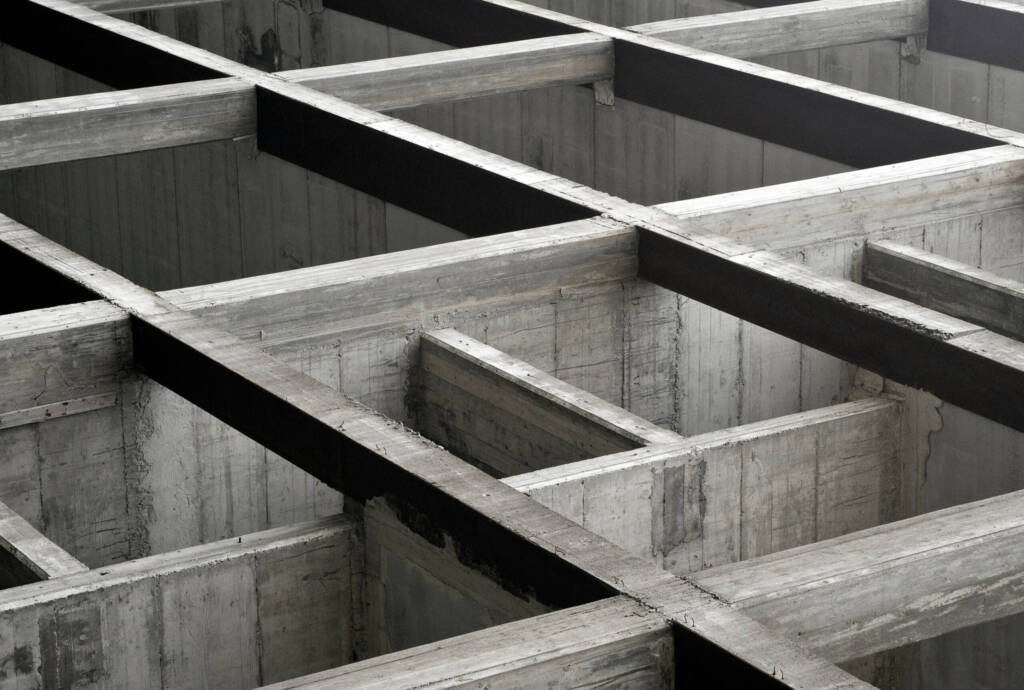
Water is the primary carrier of decay agents in concrete due to the material’s permeable and hydrophilic nature. While numerous superhydrophobic treatments combining hydrophobicity and water repellency have been developed in recent years, their limited durability under outdoor conditions remains a major obstacle. To overcome this, researchers developed an advanced organically modified silica (ormosil) sol designed to penetrate the pores and cracks of concrete and to react spontaneously with portlandite to produce C-S-H gel, the main component of cementitious materials.
A comprehensive investigation of the interaction between the sol and portlandite revealed two complementary bonding mechanisms: direct reaction of the silica precursors and pozzolanic reaction of the silica xerogel formed in situ. This chemical anchoring is identified as a key factor for the long-term performance of the coating.
Reading tip: Sol-Gel Technology in Practice
Explore the versatile applications of sol-gel technology in coatings with “”Sol-Gel Technology in Practice.“” Learn about sol-gel chemistry, processing techniques, and applications across industries. Discover how sol-gel coatings enhance durability, functionality, and environmental sustainability.
Laboratory validation and on-site performance
Cement mortars treated with the sol achieved superhydrophobic properties, with a static contact angle of 160° and a sliding angle below 5°. The performance results from the combined effect of surface energy reduction by the organic components and the regular nanoroughness produced by incorporated silica nanoparticles. Durability was confirmed through heavy rain testing, with the bonding capacity to the substrate identified as the main reason for the sustained performance.
The treatment was further validated under real-world conditions on a concrete-based memorial in Lithuania, where the superhydrophobic performance was maintained after 21 months of exposure. According to the authors, the system offers a promising route for the long-term preservation of concrete structures exposed to outdoor environments.
Source: Luna, M. et al., Long-term superhydrophobic coatings for concrete by producing bonds with cement matrix. Progress in Organic Coatings, 110128 (2026).