News Coatings Technologies
Innovations in pigment dispersion technologies pave the way for enhanced coating performance
A comprehensive review highlights groundbreaking advancements in pigment dispersion technologies such as high-speed dispersers, bead mills, and ultrasonic cavitation, paving the way for next-generation coatings.
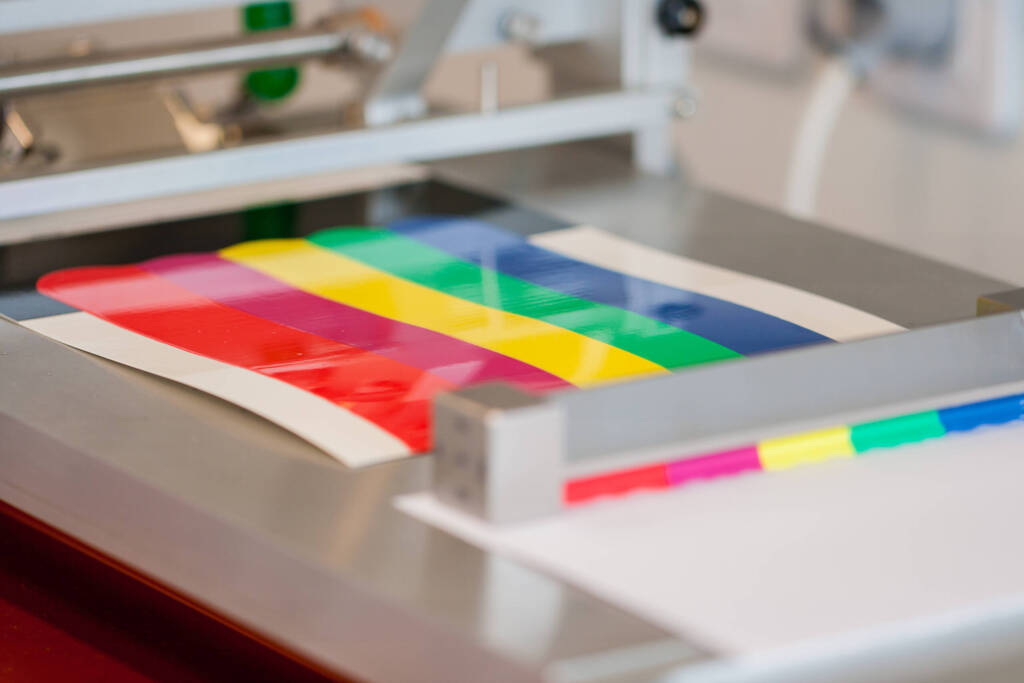
The latest review in the Journal of Coatings Technology and Research explores key advancements in pigment dispersion processes, which are vital for improving the performance and durability of polymeric coatings. The article evaluates three major technologies—high-speed dispersers, bead mills, and ultrasonic cavitation—and their respective impacts on pigment distribution, colour strength, and stability.
High-speed dispersers are highlighted for their effectiveness during initial pigment deagglomeration. However, viscosity-related limitations can reduce their efficiency in certain formulations. Bead mills offer finer dispersion capabilities but face challenges such as energy inefficiency and screen clogging during the grinding process. Ultrasonic cavitation, on the other hand, emerges as a scalable and energy-efficient technology that achieves nanoscale particle size reduction through acoustic shear forces and cavitation bubble collapse.
Reading tip: Colour Technology of Coatings
Ultrasonic Cavitation: A Breakthrough in Scalability and Energy Efficiency
Recent innovations, such as continuous-flow reactor designs, have transformed ultrasonic cavitation into a highly scalable solution, addressing energy management issues that previously hindered its widespread adoption. This method enables uniform dispersion and improved pigment stability, making it a promising choice for next-generation coatings. The review further emphasises the comparative advantages of these technologies in terms of energy input, surfactant optimisation, and viscosity control.
The integration of these advanced dispersion methods is seen as critical for developing coatings with superior performance, stability, and environmental sustainability. Future research directions identified in the study include improving energy efficiency and investigating novel additives to optimise dispersion quality and scalability for industrial applications. These advancements hold the potential to significantly impact coating technologies, enabling manufacturers to meet evolving performance and sustainability demands.
Source: Nagaraj, K., Badgujar, N. P., & Kulkarni, R. D., Advancements in pigment dispersion technologies: high-speed dispersers, bead mills, and ultrasonic cavitation for enhanced coating performance. Journal of Coatings Technology and Research, 23, 273–295 (2026).