News Raw Materials
Self-organising block copolymers based on COC for nanostructured materials
A research team from Taiwan has successfully synthesised a novel block copolymer from a cyclic olefin copolymer (COC) and polycaprolactone (PCL). The materials exhibit pronounced self-organisation at the nanoscale – with potential for structured applications in high-tech areas.
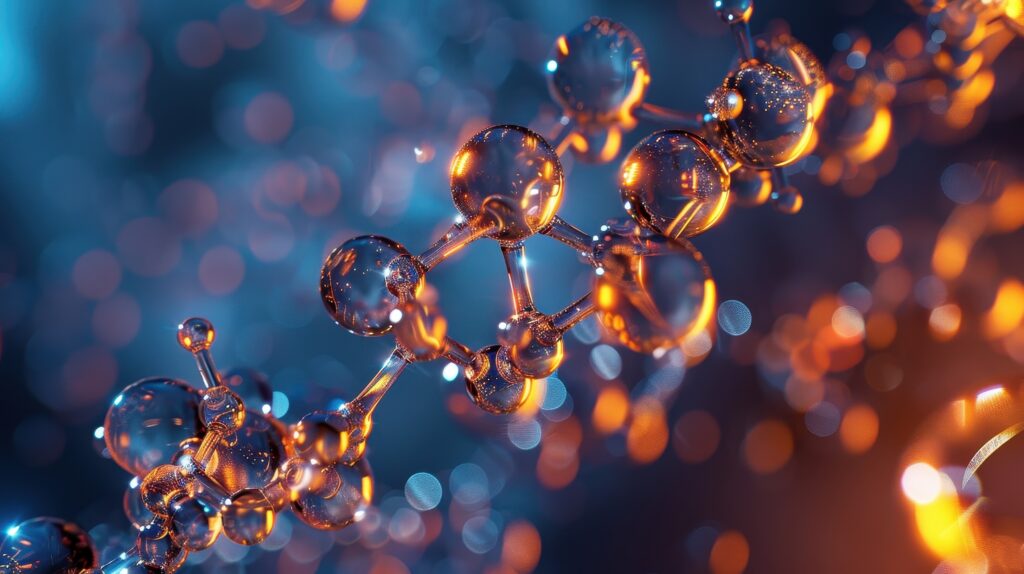
Cyclic olefin copolymers (COC) are characterised by high transparency, thermal stability and low moisture absorption. These properties have already established them in numerous technical applications, particularly in optics, medical technology and microfluidics. A new study now shows how COC can be converted into block copolymers through targeted functionalisation, which can then self-organise into nanostructured materials.
The researchers synthesised a COC-block polycaprolactone (COC-b-PCL) via a metallocene-catalysed chain transfer mechanism that enables the introduction of a hydroxyl group at the end of the COC chain. This functionalised COC chain then served as a macroinitiator for the living polymerisation of ε-caprolactone. This resulted in a block copolymer with a well-controlled block length distribution.
Reading tip: Polyester and alkyd resins
“Polyester and Alkyd Resins” belongs to the most diverse and important material classes of paint chemistry and their usage as binders has been established for a long time. This standard work goes into detail on the composition, structure and properties of these important binder groups and subjects previous findings in that field to a critical review. It shows different precise calculation approaches in modern coatings development, ways to formulate polyester and alkyd resins in experimental designs and how to vary them systematically. A practice- and future-oriented reference book that should not be missing in any laboratory!
Potential for ordered nanostructures
Particularly noteworthy is the ability of COC-b-PCL to organise itself into defined nanostructures. Self-assembly is based on the incompatibility of the two blocks and opens up new possibilities for targeted structuring on the nanoscale – for example, for applications in electronics, sensor technology or surface technologies.
The combination of the known properties of COC and the processability of PCL could be important for future material concepts in functional coatings or as carrier systems in bio-based applications.
Source: Chuang, Y.-C., Su, J.-W., Sung, Y.-C. et al.: Synthesis and self-assembly of a diblock copolymer consisting of a cyclic olefin copolymer and polycaprolactone, Polymer Chemistry, Issue 18, 2025. DOI: 10.1039/D4PY00000K