News Raw Materials
“One of the main challenges is transforming an energy-intensive production network”
Ranked first in Europe in the Dow Jones Best-in-Class Index for sustainability, Lanxess is driving efforts to become climate neutral by 2040 and achieve net zero by 2050. Sebastian Röhrig, Head of Corporate Responsibility, explains the strategies behind their goals, detailing measures in climate, water management, and product responsibility and the hurdles along the way. Interview by Vanessa Bauersachs

The Dow Jones assessment highlighted particularly strong results in climate strategy, water, human rights, and product responsibility. Starting with climate: what specific measures have you implemented in your production operations so far, and where does Lanxess currently stand on its path to climate neutrality by 2040?
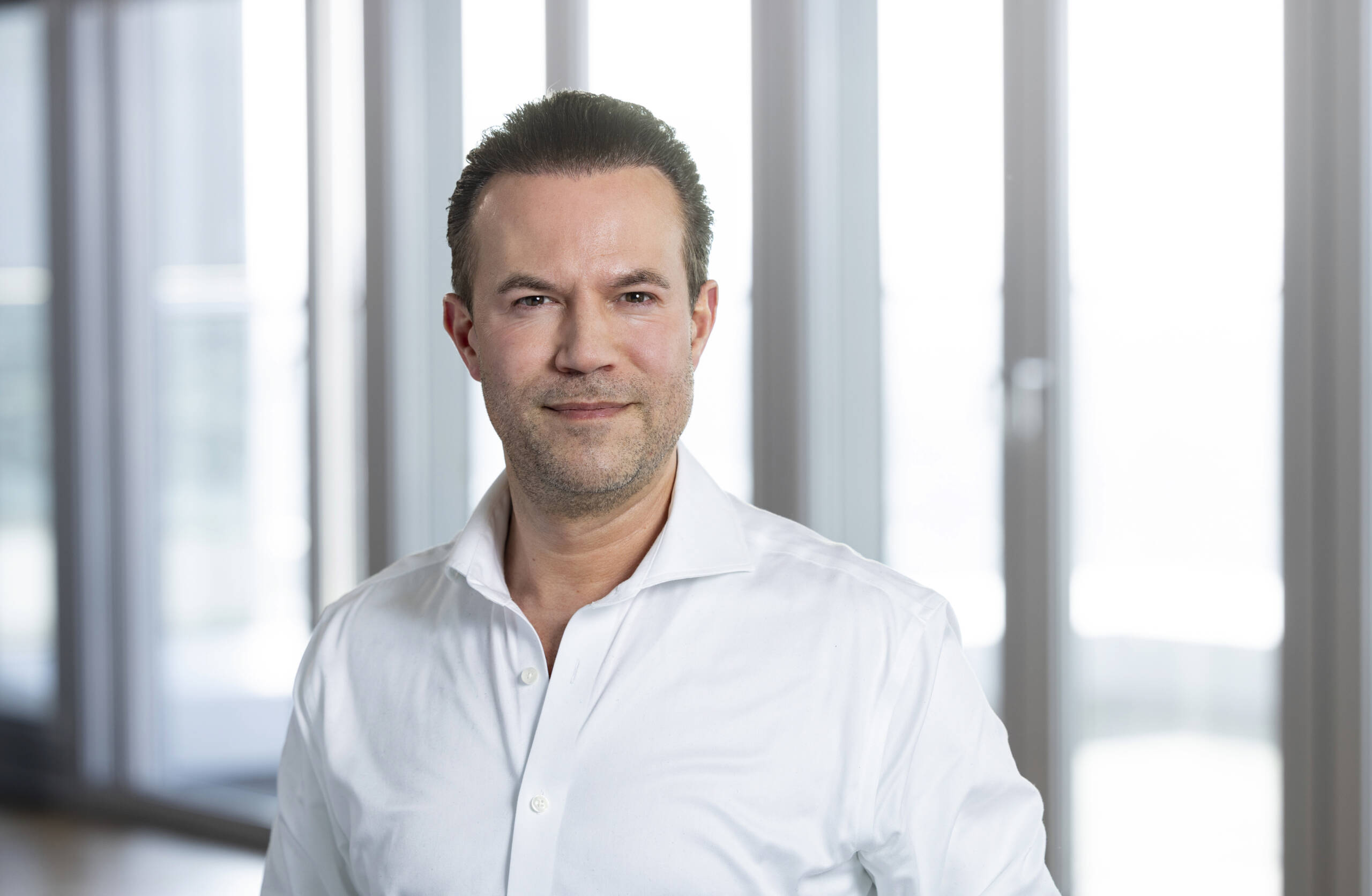
Sebastian Röhrig: Lanxess’ climate transition plan is built around three operational levers: process excellence, sustainable steam supply and clean electricity. In our production operations, we are already implementing a wide range of measures to reduce CO₂ emissions. These include heat recovery in thermal oxidation, energy-optimized motors, improved insulation, the electrification of steam generation, industrial heat pumps, vapor-compression evaporation and electric boilers. To give you an example for process excellence: At our site in El Dorado in the United States, we recover heat from hot process streams and use it to preheat colder streams. This saves around 5,300 tons of CO₂ per year.
Our target is to become climate neutral for Scope 1 and 2 emissions by 2040, and to reach net zero for Scope 3 by 2050. In 2025, Scope 1 and 2 emissions stood at 1,731 kilotons CO₂ equivalents. If you look back to 2004, when Lanxess was founded, the corresponding emission level was around 6,500 kilotons of CO₂ equivalents.
What does responsible water use look like concretely in your chemical production, and which measures have had the greatest impact so far?
Röhrig: For Lanxess, responsible water use means managing water in a structured and site-specific way. We do this through our Water Stewardship Framework. This includes risk analyses for individual sites, water-balance assessments, local action plans, dialogue with stakeholders and performance monitoring. One of our key focus areas is the reduction of water withdrawal at production sites located in water-stressed and water-risk regions. Key measures included cooling tower optimisation in Latina (Italy), water-saving measures in Qingdao (China) and a zero-discharge production site as well as rainwater projects with local communities in India. By the end of 2025, we had identified 10 water-risk sites, compared with 14 in 2019. At these locations, we have reduced water withdrawal by 41% compared to 2019. We have also set a new target to reduce absolute withdrawal at water-risk sites by a further 9 % by 2028.
Product responsibility was another area of strength in the assessment. In practical terms, what does that mean for the coatings-relevant parts of your portfolio, for instance, regarding substances of concern or reformulation?
Röhrig: For or our coatings-related products, product responsibility means safe ingredients, regulatory compliance, lower product carbon footprints, and reformulation where necessary. We use our Product Sustainability Monitor to identify products that contain critical substances, including substances of very high concern (SVHC) above 0.1%. Based on that analysis, we define action plans for substitution, reformulation, or phase-out. One example is phthalate plasticizers, which Lanxess phased out in 2022. Today, we offer “Mesamoll” as a phthalate-free plasticizer alternative for PVC, PUR, acrylates, and rubber. It is also used in coatings and spread-coated materials. More than 30% of the input materials for this product come from fully sustainable sources, which also contributes to reducing the product carbon footprint.
In addition, we have established a portfolio of sustainable products under our Scopeblue label. Compared with conventional products, Scopeblue products must either contain at least 50% sustainable raw materials or have a carbon footprint that is at least 50% lower. One example is trimethylolpropane, which is used in coatings, foams, adhesives, and lubricants and which is available as a Scopeblue product, too.
What have been the main technical or organisational hurdles along the way?
Röhrig: One of the main challenges is transforming an energy-intensive production network while continuing to maintain product quality, reliability, and competitiveness. This is particularly challenging in the current environment, where we have to keep a close eye on costs. The chemical industry is facing weak economic conditions, geopolitical tensions, strong price pressure, and overcapacities, especially from Asia and China. In Europe, bureaucracy, high energy costs, and emissions trading are also major challenges. This is especially true because regulatory frameworks and CO₂ cost structures differ significantly from region to region. Another challenge is the limited availability of bio-based or circular raw materials at competitive prices and in consistent quality. Here, we depend on reliable, certified supply chains.
Event tip
The Sustainable Coatings Conference, which takes place on 3 – 4 November 2026 in Amsterdam, Netherlands, will provide practical insights into low‑carbon technologies, circular economy approaches, bio‑based and water‑based systems, and robust assessment methods such as LCA and mass balance. Learn how the industry is responding to regulatory pressure, customer expectations, and material constraints – and how sustainability can become a measurable business advantage rather than a compliance burden.