News News
Enhanced photostability via E/Z photoisomerisation in benzylcyanocoumarin dyes
Researchers have developed a novel strategy to enhance the lightfastness of organic dyes by controlling E/Z photoisomerisation. PMMA-based coatings with these dyes exhibit exceptional colour and stability under UV-A irradiation.
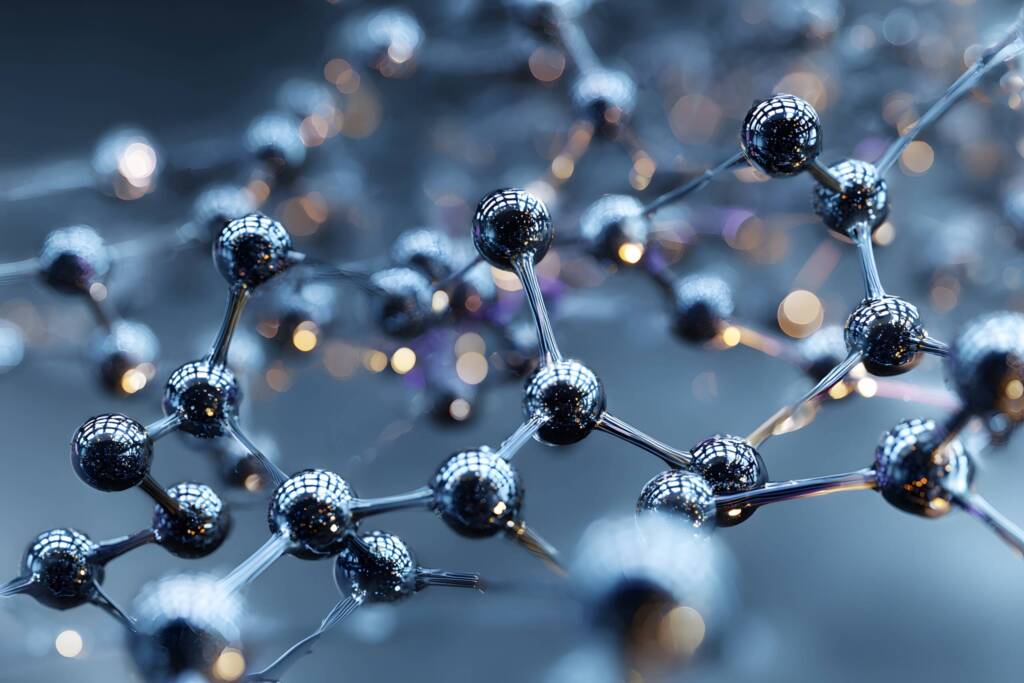
A South Korean research team has developed benzylcyanocoumarin derivatives with various functional groups to significantly improve the photostability of organic dyes. Their study focuses on controlling E/Z photoisomerisation, a photochemical process that influences the stability and optical properties of dyes.
Using quantum chemical calculations, the researchers analysed the behaviour of E/Z isomerisation during photophysical processes. Results indicated that both E and Z isomers exhibit similar optical absorption spectra, enabling stable colour performance even during isomerisation. This stability is attributed to the increased linearity of the Z-isomer, which maintains conjugation due to the “push-pull” effect between electron-donating and electron-withdrawing groups, preserving optical absorption properties.
Reading tip: waterborne coatings
The EC Tech Report Waterborne Protective Coatings gives you an extensive up-to-date bundle on protective coatings, focusing on water-borne solutions, with articles, videos and other content handpicked by the European Coatings Team. In addition to cutting-edge technical articles, the Tech Report is rounded off with valuable market insights and key fundamentals on water-borne protective coatings.
PMMA-based coatings with enhanced lightfastness
The synthesised dyes were incorporated into PMMA-based spin-coated films and subjected to accelerated UV-A irradiation tests. The coatings demonstrated minimal colour changes even under intense UV exposure, showcasing remarkable lightfastness. This highlights the effectiveness of the molecular design strategy targeting E/Z photoisomerisation control.
The study reveals the potential of benzylcyanocoumarin derivatives, which lack polycyclic structures, as promising candidates for the creation of highly photostable organic dyes and pigments. These findings are expected to contribute to advancements in functional organic coating materials, solar energy applications, and display technologies requiring superior colour and photostability.
Source: Jang, S. H. et al. E/Z photoisomerization-induced photostability in benzylcyanocoumarin dyes and their coatings. Prog. Org. Coat. 207, 109360 (2025).