News Coatings Technologies
Recyclable and self-healing polyurethane coating for marine corrosion protection
A Chinese research team has developed a novel polyurethane composite that combines self-healing, recyclability, and superior corrosion resistance. The material sets a new benchmark for sustainable marine protection coatings.
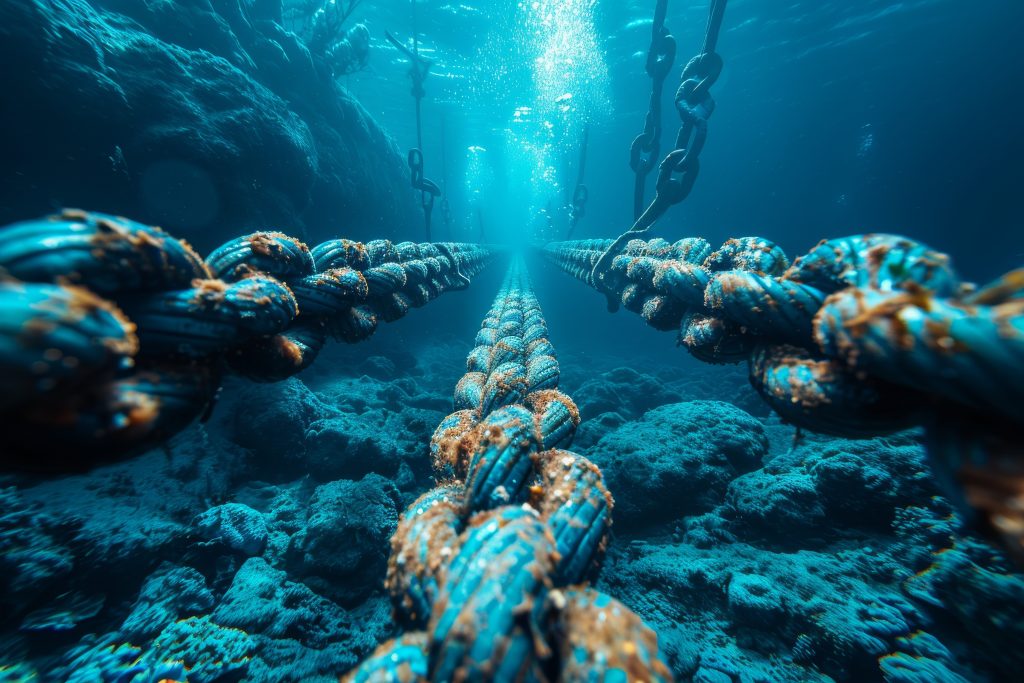
Polyurethane coatings are well known for their corrosion resistance, yet environmental concerns increasingly demand materials that are both sustainable and repairable. To achieve this balance, researchers created a polyurethane composite film (PU/F‑MWCNT) that incorporates functionalised carbon nanotubes (F‑MWCNT) with photothermal properties. The system utilises low-energy disulfide bonds and strong Diels–Alder (DA) bonds to optimise mechanical integrity and healing performance.
The resulting coating exhibits exceptional durability and self-repair capability, achieving up to 90 % healing efficiency after 60 s of near-infrared exposure. Beyond fast recovery, the modified carbon nanotubes enhance both the mechanical strength and barrier performance of the film.
Reading tip: High-performance Polyurethanes
Get up to speed with the latest developments in high-performance polyurethanes thanks to the new multi-media EC Tech Report! Placing special focus on innovative and environmentally friendly formulation of coatings systems, this extensive report provides deep insights into technological findings such as: Innovative routes to producing water-borne acrylic polyols for 2K PU topcoats, new silicone additives for high-performance anti-graffiti polyurethane applications, environmentally compliant two-component water-borne urethane dispersions and making ecological PU coatings a reality: using renewable acetone from bio-based, bio-circular and circular feedstocks.
Long-term protection and circular design
After 30 days of immersion in a 3.5 wt % NaCl solution, PU/F‑MWCNT showed an impedance increase of three orders of magnitude compared to unmodified PU, confirming its excellent electrochemical stability. Cavitation and erosion testing revealed a 49 % reduction in mass loss, and friction testing demonstrated a 46 % improvement in wear resistance. Moreover, PU/F‑MWCNT can be efficiently recycled: after one recycling cycle, the film retained 87 % of its original tensile strength.
This research illustrates how molecular design—combining reversible bonds and nanostructural reinforcement—can pave the way for sustainable polyurethane coatings in harsh marine environments.
Source: Tian, W. et al. Recyclable and self-healing polyurethane composite film based on disulfide and DA bond modulation strategies for marine anticorrosion applications. Progress in Organic Coatings, Volume 209, 109550 (2025).
Keywords: polyurethane coating, self-healing, recyclability, carbon nanotubes, Diels–Alder chemistry, disulfide bonding, marine coatings, corrosion protection, sustainability
Category: Coating technologies
Recommended product (English): EC Tech Report High-performance Polyurethanes