News Coatings Technologies
Superamphiphobic PPS coating delays icing and repels liquids
Researchers have developed a multifunctional polyphenylene sulfide-based composite coating that combines superamphiphobicity, mechanical durability and delayed icing. The system repels liquids of various surface tensions and significantly prolongs the freezing time of water droplets, opening up applications in anti-corrosion, self-cleaning and anti-icing.
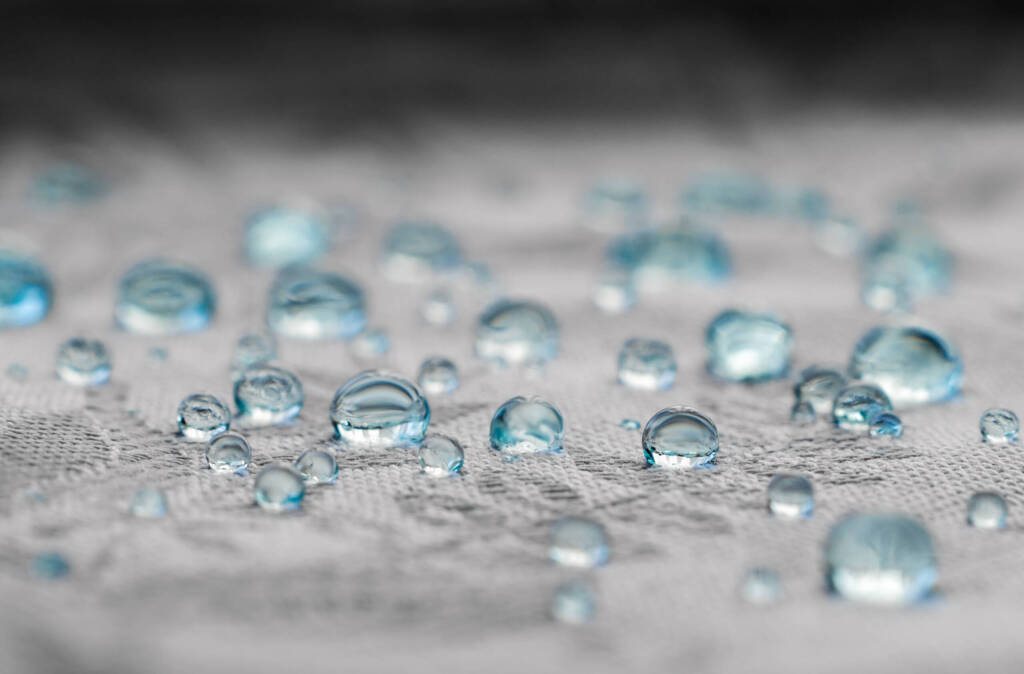
Superamphiphobic coatings have emerged as a promising solution to persistent challenges in surface adhesion, contamination, corrosion and liquid repellency. By providing resistance to a wide range of fluids, including both water and oil, they represent a key technology for developing next-generation “maintenance-free” self-cleaning surfaces. In this study, a series of multifunctional composite coatings, designated PPS/POS@Al₂O₃/ADP, was fabricated through a multi-step modification strategy that combines polysiloxane-coated alumina nanoparticles (POS@Al₂O₃), polyphenylene sulfide (PPS) and an aluminium dihydrogen phosphate binder (ADP).
The resulting coating features a rough micro- and nanostructure decorated with low-surface-energy functional groups. Contact angles for various liquids on the coated surface exceed 150°, confirming excellent superamphiphobicity. The coating also demonstrated strong adhesion, maintaining a contact angle of nearly 150° even after repeated tape peel testing.
Reading tip: Nanotechnology
Discover the potential of nanotechnology in coatings through “”Nanotechnology.“” Learn about nanomaterials’ role in enhancing coatings’ mechanical, optical, and barrier properties. Explore current research trends and applications driving the integration of nanotechnology into advanced coatings solutions.
Delayed icing and broad substrate compatibility
Beyond liquid repellency, the coating significantly delays the icing process and prolongs the complete freezing time of contaminated water droplets on the treated surface. Stable superamphiphobic performance was observed on a broad range of substrates, including metals and ceramics, underlining the versatility of the system.
The synergistic combination of PPS, polysiloxane-coated alumina nanoparticles and the aluminium dihydrogen phosphate binder provides an effective strategy for developing high-performance coatings that integrate superamphiphobicity, robust mechanical durability and delayed icing properties. Such systems show considerable potential in anti-corrosion, self-cleaning and anti-icing applications across industrial and infrastructure sectors.
Source: Zhang, H. et al., A polyphenylene sulfide-based superamphiphobic coating with delayed icing and self-cleaning properties. Progress in Organic Coatings, 110184 (2026).