News Coatings Technologies
Quartz sand yields nano-SiO₂ for durable anticorrosive coatings
Researchers have developed a cost-effective, eco-friendly route to synthesise nano-spherical silica from natural quartz sand and used it as a filler in water-borne epoxy coatings. The composite significantly improves long-term corrosion resistance on carbon steel in marine-like environments.
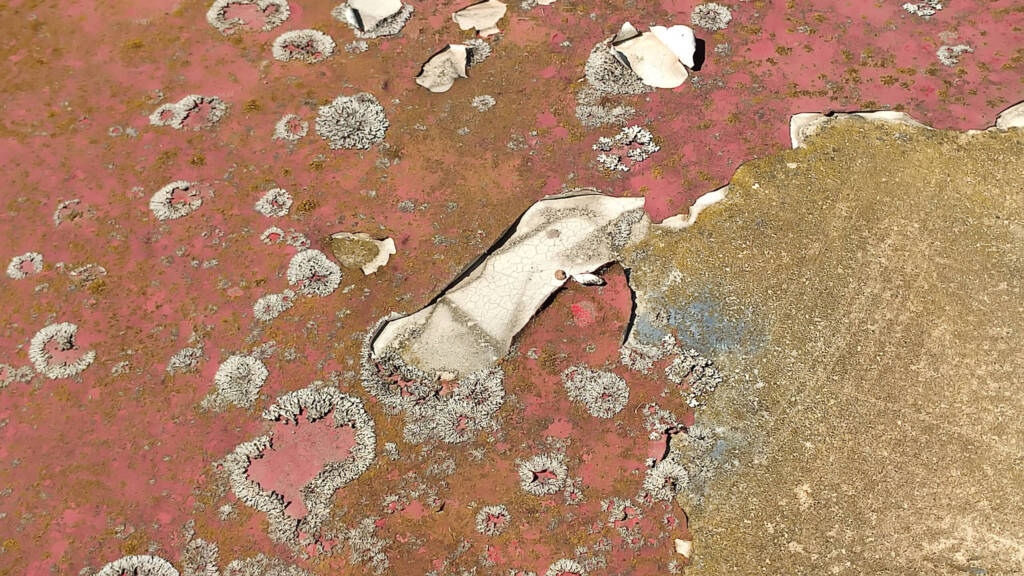
Marine and offshore infrastructure is continually exposed to highly corrosive conditions, and water-borne epoxy (WEP) coatings have emerged as a low-VOC alternative to solvent-borne systems. However, residual hydrophilic groups in WEP matrices facilitate the formation of polar channels, accelerating the diffusion of water, oxygen and chloride ions. A research team from Hebei University of Technology has addressed this limitation by developing nano-spherical SiO₂ (NSS) from natural quartz sand using a combined alkali-melting and sol-gel approach, providing an inexpensive and sustainable alternative to conventional TEOS-based silica synthesis.
The optimised process yielded highly monodisperse spherical particles of approximately 200 nm, prepared at 25 °C within one hour using 120 mL of ethanol. Characterisation confirmed a compact internal structure with a low pore volume of 0.052 cm³/g, in contrast to the more porous amorphous reference material (ANS).
Reading tip:
The EC Tech Report Waterborne Protective Coatings gives you an extensive up-to-date bundle on protective coatings, focusing on water-borne solutions, with articles, videos and other content handpicked by the European Coatings Team. In addition to cutting-edge technical articles, the Tech Report is rounded off with valuable market insights and key fundamentals on water-borne protective coatings.
Superior barrier performance at low filler loading
When incorporated into WEP at 0.5 wt%, the spherical filler delivered notable improvements. After 300 h of immersion in distilled water, the 0.5 % NSS/WEP coating exhibited a water absorption of only 17.51 %, compared with 44.2 % for the unmodified WEP. Electrochemical impedance spectroscopy in 3.5 wt% NaCl solution showed that the low-frequency impedance modulus remained at 1.41 × 10⁶ Ω·cm² after 30 days of immersion — an order of magnitude higher than the pure WEP reference. The coating also achieved a phase angle of 83.03°, indicating excellent barrier function.
Mechanism and benchmarking
The authors attribute the enhanced performance to a “labyrinth effect”: the uniformly dispersed nanoscale spheres pack densely within the resin matrix, sealing microporous defects and extending the diffusion pathway for corrosive species. Salt spray testing over 15 days confirmed minimal localised corrosion on the 0.5 % NSS/WEP system, whereas ANS-modified coatings showed signs of degradation within the first day. Benchmarked against recently reported eco-friendly systems based on rare-earth complexes or noble-metal nanoparticles, the quartz-derived NSS coating delivered comparable or superior long-term impedance values at significantly reduced raw-material cost, supporting industrial scalability for durable water-borne anticorrosive coatings.
Source: Yang, M. et al., Quartz sand-based nano-spherical SiO₂ synthesis and its corrosion efficacy of waterborne epoxy resin coatings. Progress in Organic Coatings (2026), https://doi.org/10.1016/j.porgcoat.2026.110057.