News Coatings Technologies
Hierarchical PDMS-PU nanocomposites offer non-toxic anti-fouling for marine applications
A new superhydrophobic nanocomposite based on PDMS-polyurethane and graphene/tungsten disulphide demonstrates strong antifouling, anticorrosion, and mechanical durability — without the use of biocides.
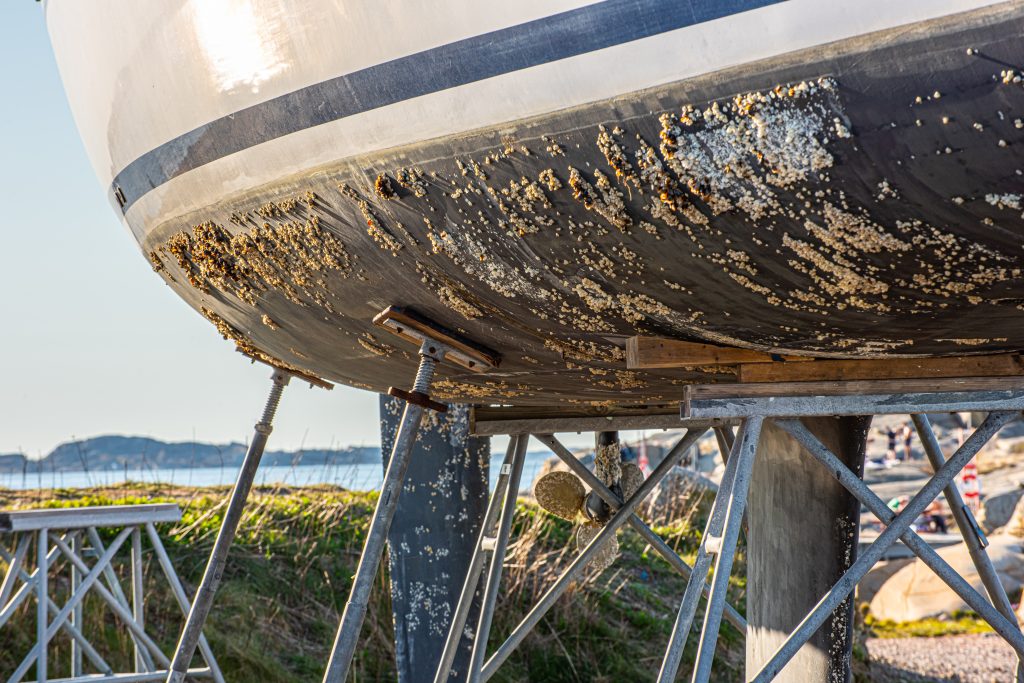
In a recent study published in Progress in Organic Coatings (Volume 200, March 2025), researchers developed non-toxic, superhydrophobic nanocomposite coatings designed for marine antifouling applications. The novel materials are based on a PDMS-polyurethane (PDMS-PU) matrix filled with graphene oxide (GO) nanosheets decorated with tungsten disulphide (WS₂) nanorods. The hybrid GO-WS₂ structure enables enhanced surface roughness and dispersion, which in turn improves water repellency and fouling resistance.
The nanohybrids were synthesised using a modified Hummers process and a surfactant-assisted hydrothermal method, followed by ultrasonic blending of the nanofillers into the polymer matrix. The result was a uniform distribution of GO-WS₂ particles within the coating, forming hierarchical micro/nano-rough surfaces. A nanocomposite with 2.5 wt% filler content exhibited a water contact angle of 150°, surface free energy of 20.4 mN/m, and excellent superhydrophobicity due to air entrapment in the structured surface.
Reading tip: Functional Coatings
The “EC Tech Report Functional Coatings” gives you an up-to-date bundle on automotive coatings with articles, videos and other handpicked content. In addition to technical articles about the latest technical developments, this all-in-one multi-media pack is rounded off with valuable market insights and important fundamentals about automotive coatings formulation.
Superior antifouling and anticorrosion under biological stress
The coatings were tested against four common marine microorganisms—Kocuria rhizophila, Pseudomonas fluorescens, Aspergillus fumigatus, and Candida albicans—over a 30-day laboratory period. The PDMS-PU/GO-WS₂ nanocomposite with 2.5 wt% filler showed the lowest microbial adhesion and surface degradation, outperforming other formulations.
In addition to its biological performance, the coating displayed high mechanical strength and corrosion resistance, making it suitable for long-term use in harsh marine environments. Its nonbiocidal nature offers an environmentally friendly alternative to traditional antifouling strategies, which often rely on toxic additives.
Source: Selim, M. S. et al. Non-toxic silicone-polyurethane nanocomposites filled with graphene/tungsten disulphide nanorods as hierarchical superhydrophobic marine antifouling surfaces, Progress in Organic Coatings, Volume 200, March 2025, 108987.