News Coatings Technologies
Superhydrophobic ceramicizable fire-retardant coating developed
A two-step method combining ceramicizable intumescent technology with superhydrophobic TiO₂ powder yields a fire-retardant coating that provides enhanced char strength, thermal insulation and water resistance on both steel and rigid polyurethane foam substrates.
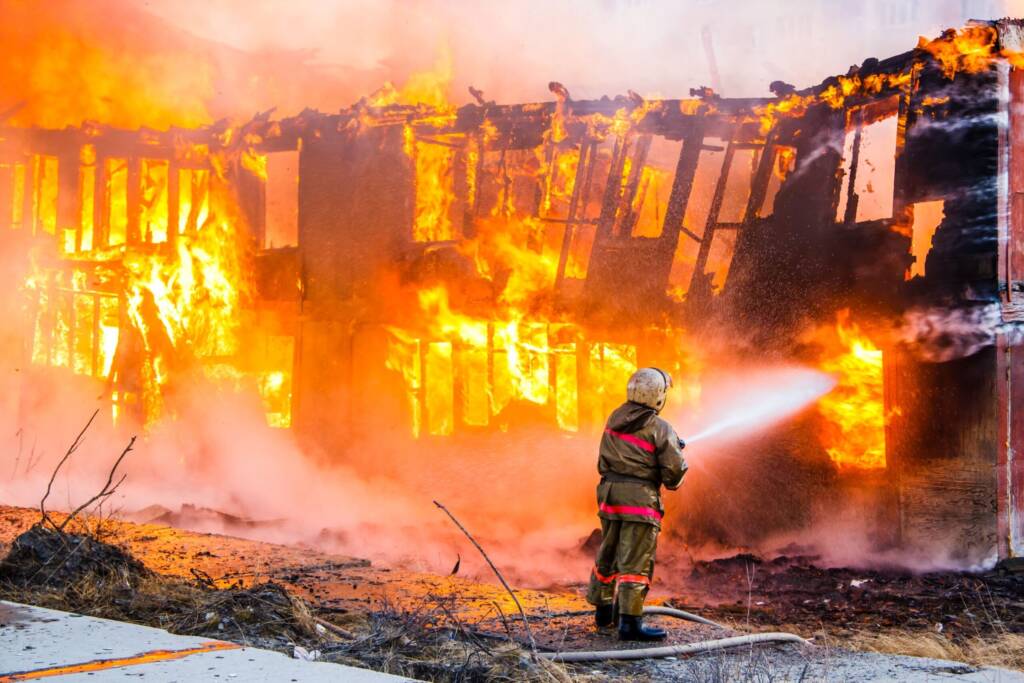
Intumescent fire-retardant coatings (IFC) are widely used due to their ease of application and high flame-retardant efficiency with minimal impact on substrate properties. However, conventional IFC systems suffer from inherent weaknesses, notably low char layer strength and the presence of hygroscopic components that compromise long-term durability. A research team has now addressed both limitations through a novel two-step approach.
In the first step, low-melting-point glass powder (LMGP) was introduced as a ceramic-forming filler into the IFC formulation, producing a ceramicizable coating (C-IFC) with significantly improved char layer strength. The ceramic strategy reinforces the protective char that forms during fire exposure, enhancing the coating’s structural integrity under thermal stress.
Event Tip: Basics on Flame-retardant Coatings
The short course Flame-retardant Coatings gives a clear overview of how fire‑protective coatings work and where they are used in building and industrial applications. Participants gain a basic understanding of fire behavior, (ignition, flame spread and heat exposure) and which of these factors can be influenced by a coating. Join in on 28 April 2026!
Superhydrophobic surface through modified TiO₂
In the second step, TiO₂ particles were surface-modified with 1H,1H,2H,2H-perfluorodecyltriethoxysilane (PFDTS) to create a superhydrophobic powder. This PFDTS@TiO₂ material was then sprayed onto the surface of the pre-cured ceramicizable IFC, resulting in the final composite coating designated C20-IFC/PFDTS@TiO₂.
The coating surface exhibited exceptional hydrophobicity, achieving a water contact angle of 157.5 ± 0.7° and a water roll-off angle of just 4 ± 0.3°. These properties confer excellent water resistance, self-cleaning and anti-fouling capability – effectively protecting the hygroscopic intumescent components from moisture degradation.
Dual-substrate fire protection with lasting durability
Performance testing demonstrated that the coating provides effective fire-retardant and thermal insulation properties on both steel structures and rigid polyurethane foam (RPU), confirming its versatility across different substrate types. By integrating ceramicization technology with superhydrophobic surface engineering, the study offers a universal approach to developing high-performance protective coatings that combine fire resistance with water repellency – a concept the authors describe as achieving “fire and water non-invasion” alongside self-cleaning functionality.
Source: Tang, D. et al., A two-step method to construct a superhydrophobic, ceramicizable intumescent fire-retardant coating suitable for steel and RPU. Progress in Organic Coatings 109951 (2026).