News Coatings Technologies
Biochar-based composite coating boosts wood fire safety
Researchers have developed a halogen-free flame-retardant composite coating for wood that combines biochar, kaolin, polyvinyl acetate and trimethylsilyl polyphosphate. The coating significantly reduces heat release and smoke generation, improving the fire safety of wood for construction and interior applications.
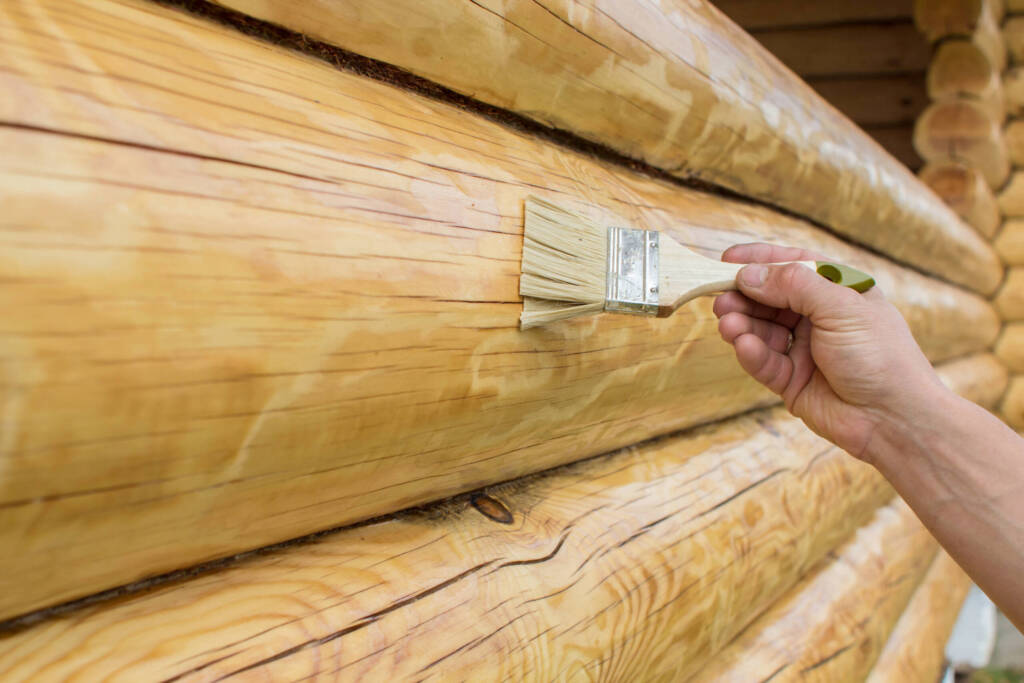
Wood is widely valued as a sustainable construction material, yet its high flammability restricts its safe application in many areas. To address this limitation, researchers developed a novel flame-retardant composite coating based on polyvinyl acetate (15 wt%) combined with biochar (0.5 wt%), kaolin (2 wt%) and trimethylsilyl polyphosphate (3 wt%) in methanol. The composite was prepared by solution blending and applied through single-layer drop-casting at a thickness of approximately 0.6 mm.
Comprehensive characterisation using ATR-FTIR, Raman spectroscopy, TEM, TGA/DTG/DSC, cone calorimetry and optical 3D surface analysis confirmed uniform filler dispersion, strong chemical interactions and enhanced thermal stability, with a char yield of approximately 26 % at 800 °C.
Reading tip: Wood Coatings
Get up to speed with the latest developments in outdoor wood coatings with the new multi-media EC Tech Report! Enter the subject of outdoor wood coatings formulation like never before, with technical articles, market insights, and essential fundamentals distilled from renowned book excerpts.Discover the future of wood coatings with a focus on water-borne and bio-based raw materials, paving the way for sustainable, environmentally friendly solutions. Learn to better analyze and optimize coatings performance and gain the knowledge you need to develop wood coatings with unparalleled efficiency and a smaller environmental footprint.
Reduced heat release and smoke generation
Cone calorimeter tests demonstrated significant improvements over uncoated wood. Total heat release decreased to 48.77 MJ/m² compared with 63.56 MJ/m², while the average heat release rate dropped to 80.82 kW/m² from 100.65 kW/m². Mass loss rate was also reduced to 6.558 g/s·m² versus 7.781 g/s·m² for the reference sample.
Additionally, the coated wood exhibited lower smoke volume rates and reduced surface temperatures, indicating improved flame retardancy and smoke suppression. The authors highlight the formation of a compact char layer as a key mechanism. The halogen-free, bio-based system offers a sustainable approach to enhancing the fire safety of wood for construction and interior use.
Source: Kolya, H. et al., Sustainable flame-retardant composite coating for wood using biochar, kaolin, polyvinyl acetate, and trimethylsilyl polyphosphate. Progress in Organic Coatings, 110124 (2026).