News Coatings Technologies
Durable transparent flame-retardant and antibacterial siloxane coating for natural fabrics
A newly developed aromatic siloxane coating with an α-aminophosphonate covalent structure provides cotton and silk with high flame retardancy, antibacterial activity and exceptional transparency, while maintaining strong adhesion and durability under moisture and friction.
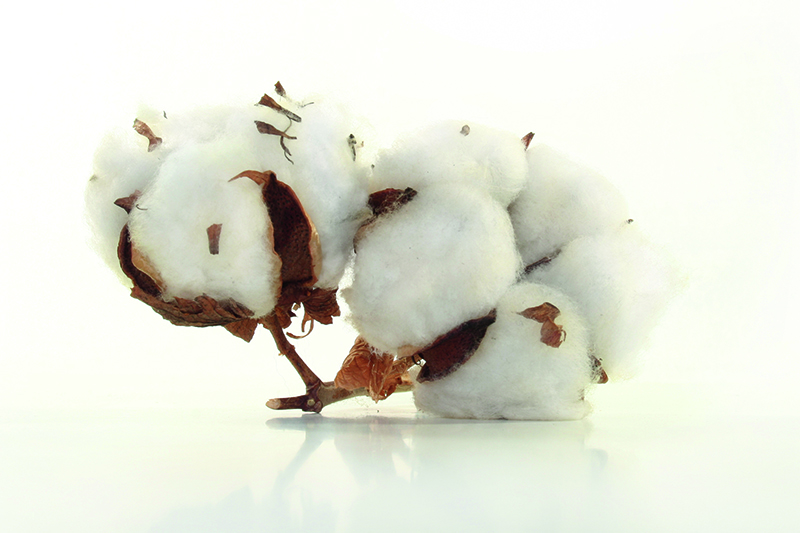
Flame-retardant and antibacterial textiles are increasingly in demand for environments where natural fabrics face microbial exposure and fire hazards. This study introduces a multifunctional siloxane-derived coating that integrates phosphorus, nitrogen and silicon to achieve efficient flame retardancy alongside antibacterial action.
The engineered α-aminophosphonate-doped structure enables almost complete light transmission in the visible range (approximately 100 %), preserving the natural appearance and feel of cotton and silk.
Reading tip: Functional Coatings
The EC Tech Report “Functional Coatings” gives you an up-to-date bundle on functional coatings with articles, videos and other handpicked content. In addition to technical articles about the latest technical developments, this all-in-one multi-media pack is rounded off with valuable market insights and important fundamentals about functional coatings formulation.
Self-extinguishing behaviour and antibacterial performance
The coated textiles exhibited desirable LOI values and reduced heat release, demonstrating effective fire resistance. Simultaneously, the covalent network provided strong antibacterial activity against Staphylococcus aureus and Escherichia coli.
Enhanced cohesive energy resulted in high interfacial adhesion (2.7 MPa shear strength), supporting resistance to high humidity and mechanical abrasion. The coating therefore offers a robust solution for applications requiring long-term protection, hygiene and material transparency.
Source: Wang, Z.-H. et al., Durable transparent flame-retardant and antibacterial coating for natural fabrics. Polymer Degradation and Stability 244, 111848 (2026).