News Raw Materials
From scrap to strength: Rubber waste as epoxy resin precursor
A new chemical recycling method developed at the University of North Carolina offers a sustainable alternative for rubber waste. By transforming discarded tyres into epoxy resin precursors, the process avoids toxic by-products and operates under mild conditions.
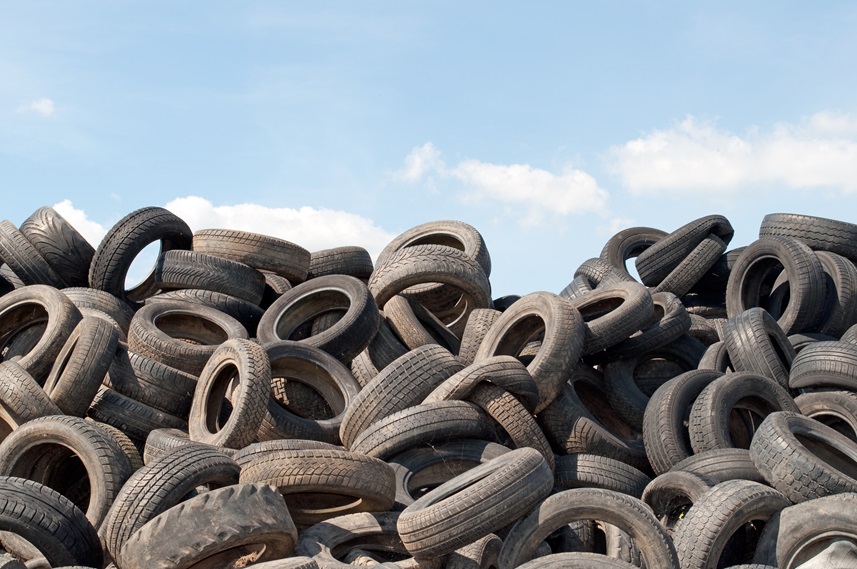
Researchers from the University of North Carolina (UNC) have developed a two-step process that breaks down waste rubber into valuable building blocks for epoxy resins. The method, which uses C–H amination and polymer backbone rearrangement, enables the transformation of complex rubber networks into amine-functionalised materials – suitable for use in industrial coating systems.
This work, led by Dr Aleksandr Zhukhovitskiy and published in Nature, offers a more environmentally friendly alternative to pyrolysis, a conventional rubber recycling technique that generates harmful by-products such as benzene and dioxins. The new process works at relatively low temperatures (35–50 °C) and in aqueous media, reducing both energy use and potential health risks.
Reading tip: epoxy coatings
Uncover cutting-edge developments in water-borne epoxy resin technology and their use in various coatings application fields with the new EC Tech Report Water-borne Epoxy Coatings. Designed for both newcomers and industry experts, this multimedia PDF report offers a comprehensive blend of technical articles, market insights, and exclusive video presentations.
Chemical innovation enables sustainable recycling
The two-step method begins with the targeted insertion of amine groups using a sulphur diimide reagent. This functionalisation sets the stage for the rearrangement of the polymer backbone, converting previously insoluble rubber into amine-rich, soluble fragments. These can then be used in the production of epoxy systems with mechanical properties comparable to conventional petroleum-based formulations.
During tests, the molecular weight of a model polymer dropped from 58,100 g/mol to just 400 g/mol. Real-world rubber waste was fully broken down within six hours, showing the potential for industrial scalability.
Potential for epoxy coatings and green chemistry
Epoxy resins derived from this process may offer performance characteristics similar to those of conventional bisphenol A-based systems. As epoxy materials are widely used in coatings, adhesives and composites, the method presents a promising avenue for more sustainable formulation approaches.
Beyond its technical merits, the research also evaluated the process using the Environmental Impact Factor (E-factor). While the full E-factor remains high due to solvent use, the simplified E-factor (excluding solvents) is significantly lower, indicating opportunities for optimisation. The team is currently exploring greener solvent alternatives to enhance the process’s environmental profile.
Source: University of North Carolina, Nature, April 2025