News Production & Lab
Electrothermal upcycling: new impetus for plastic waste
An overview study shows how electrothermal techniques can transform plastic waste into valuable chemicals – supporting circular economy goals and renewable energy use.
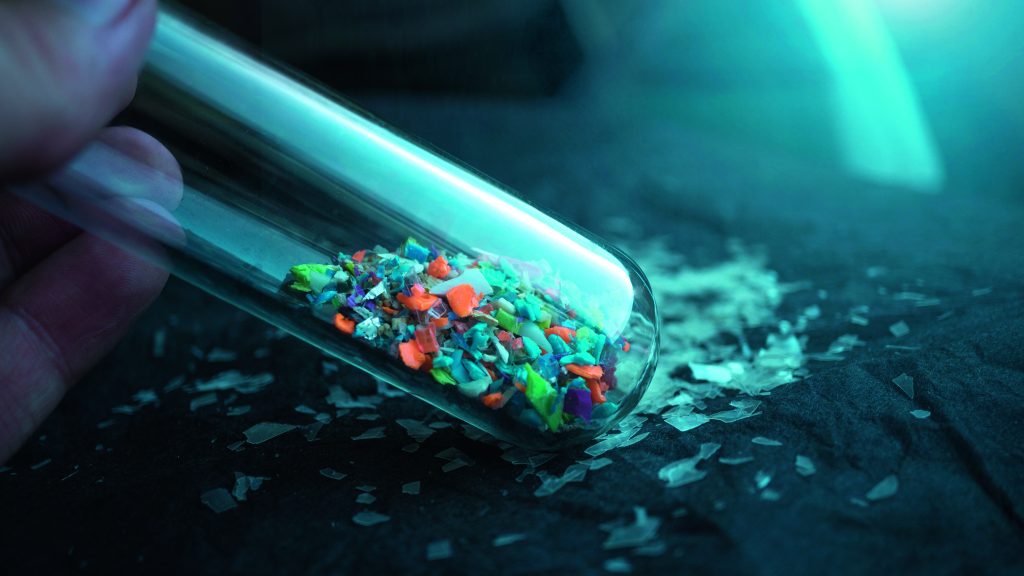
Plastic waste presents a double-edged challenge: environmental burden and feedstock for valuable monomers. Traditional recycling often struggles with material degradation and low product value.
An international research team has now reviewed how electrothermal processes, including Joule heating, microwave catalysis, induction heating, plasma-based methods and laser-assisted upcycling, can drive rapid, selective and energy-efficient depolymerisation.
Reading tip: Sustainability
Learn more about current approaches to produce coatings in a more environmentally friendly way and to give coated products a longer service life in the EC Tech Report Sustainability. In addition, its handpicked content dives deeply into the European Green Deal, its key points and main purpose as well as consequences for the coatings industry.
Hybrid processes for large-scale use
The review highlights key mechanisms, recent advances and comparative performances of different techniques. Techno-economic assessments and life cycle analyses point to the industrial potential of these processes.
Particular focus is given to hybrid approaches combining multiple methods to boost conversion efficiency and scale-up. Such strategies could transform plastic waste into a valuable resource for sustainable chemistry.
Source: Luo et al., Green Chemistry, Issue 25, 2025