News Production & Lab
Catalyst-free solvent-assisted chemical recycling: new solution for plastic waste
Researchers have shown how polyester and polycarbonate waste can be chemically recycled through solvent-assisted, catalyst-free aminolysis – even for mixed plastics.
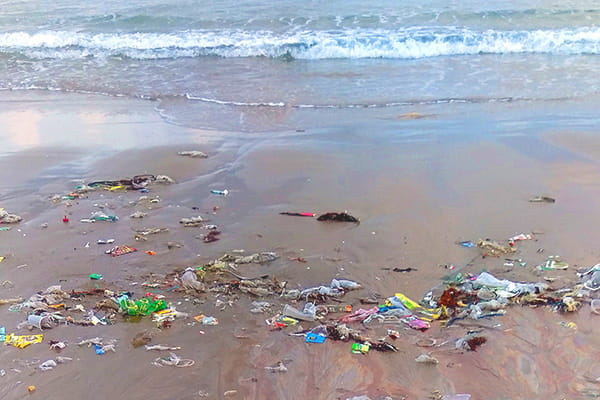
The low degradability of mass-produced plastics continues to pose major challenges for the environment and health. Chemical recycling is considered a promising approach for converting plastic waste back into valuable monomers – but existing processes often require catalysts, high temperatures or excessive use of nucleophiles.
A Japanese research team has now developed a simple, versatile method: with the help of selected polar aprotic solvents, the aminolysis of polyester and polycarbonate waste is possible without catalysts. The decisive advantage: the process takes place under mild conditions and is suitable for both single-type and mixed waste.
Reading tip: Sustainability
Learn more about current approaches to produce coatings in a more environmentally friendly way and to give coated products a longer service life in the EC Tech Report Sustainability. In addition, its handpicked content dives deeply into the European Green Deal, its key points and main purpose as well as consequences for the coatings industry.
Mild, flexible and scalable
The solvents act as promoters that efficiently facilitate depolymerisation. This opens up new potential for the industrial implementation of chemical recycling processes – especially for waste that is difficult to process using conventional mechanical or thermal methods. The strategy presented provides a practical basis for recovering monomers from plastic waste, thereby promoting circular economy and resource conservation. It could help to significantly reduce the environmental impact of plastics in the long term.
Source: Cheng et al., Green Chemistry, Issue 25, 2025