News News
Nano-thermal analysis reveals solvent retention in epoxy–amine coatings
Using nano-thermal analysis (NanoTA), researchers in the UK have identified local solvent residues in epoxy–amine coatings. The findings offer new insights into interfacial behaviour and the impact of retained volatiles on coating performance.
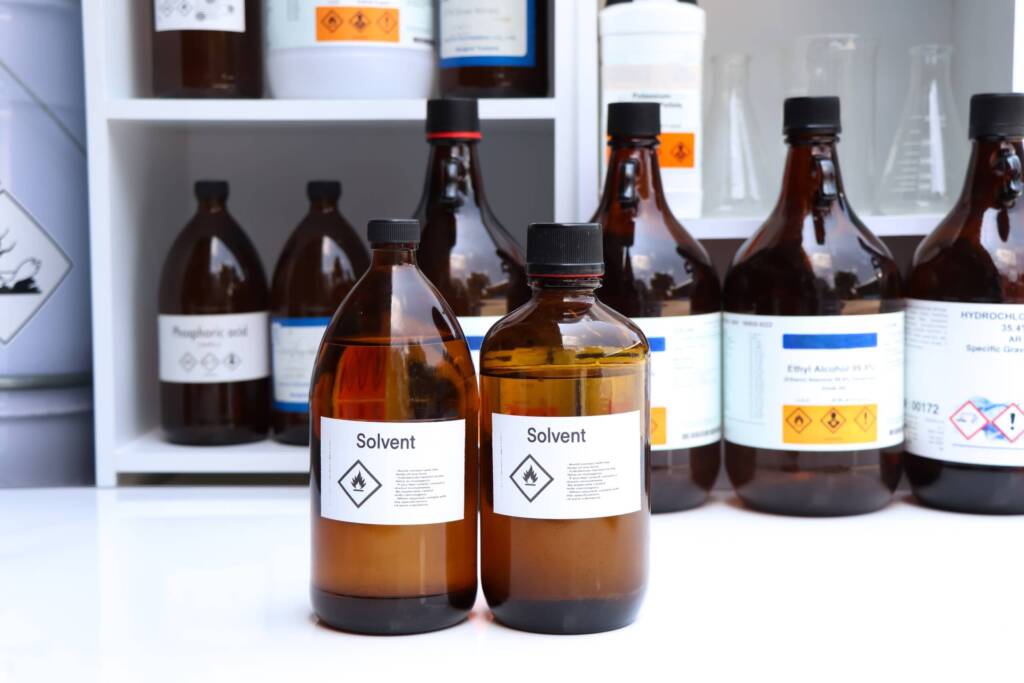
Thermoset polymers are widely used as matrices in protective coatings, where solvents help adjust viscosity and control drying times. However, a fraction of these solvents often remains trapped within the polymer network, potentially affecting coating performance. A team led by Naomi Farrer at the University of Manchester explored this phenomenon using nano-thermal analysis (NanoTA) – a technique capable of resolving local thermal transitions at the nanoscale.
Unlike conventional Differential Scanning Calorimetry (DSC), NanoTA successfully detected volatile residues in both model epoxy–amine coatings and industrial epoxy–phenalkamine formulations. The study revealed enhanced solvent retention at the polymer–metal interface, highlighting the significance of interfacial effects in film performance.
Reading tip: Paint analysis
The book “Paint Analysis” provides modern analytical techniques for the coatings industry, addressing complex questions beyond “standard methods.” It offers practical guidance for failure analysis, production control, and quality management, blending theory and practice. Ideal for formulators, paint engineers, and technologists seeking foundational knowledge in instrumental paint analysis and solutions to everyday challenges.
Multiple thermal transitions indicate solvent mixtures
In industrial formulations, multiple transition temperatures were observed, indicating the coexistence of various solvent mixtures within the network. Moreover, the phenalkamine crosslinker showed strong interaction with solvent molecules, reinforcing binding within the polymer matrix.
These findings advance understanding of interfacial dynamics and solvent behaviour in protective coatings, supporting the optimisation of industrial formulations to minimise residual solvents and improve long-term coating stability.
Source: Farrer, N. et al. Insights into volatile presence within epoxy amine coatings using nano-thermal analysis. Prog. Org. Coat. 207, 109406 (2025).