News Markets & Companies News
The future of industrial coatings will not be defined by chemistry alone
Gerard de Vries, recently appointed Chief Commercial Officer of family-owned coatings manufacturer Teknos, has a clear message: succeeding in this market takes more than good chemistry. He explains why customer intimacy, sustainability and data will decide who comes out on top – and why a family business holds the advantage. By Damir Gagro.
Teknos positions itself as a fourth-generation family business in an industry dominated by listed multinationals. Where do you believe this ownership model creates a competitive advantage?
Gerard de Vries: Being a family-owned company gives Teknos a very clear advantage: we can think in generations, not quarters. In an industry where many decisions are driven by short-term financial cycles, our ownership model allows us to stay close to our values, our employees and our customers.

For us, growth is not only about volume or market share. It is about building something sustainable, meaningful and long-lasting. That mindset is deeply embedded in our culture. It enables us to invest in long-term partnerships, technical expertise, innovation and sustainability, even when market conditions are challenging. Customers feel that difference. They know we are not simply looking for the next transaction. We want to understand their business, help them solve problems, improve their processes and support their growth. That creates trust and in industrial coatings, trust is one of the most valuable assets you can have.
I believe our family ownership gives us the freedom to be entrepreneurial, agile and personal, while still operating internationally with strong technical capabilities. That combination is powerful.
Many coatings companies are facing slower market growth, geopolitical uncertainty and increasing price pressure. Where do you see the greatest opportunities over the next five years?
de Vries: The greatest opportunities will come from companies that can help customers become more competitive, more sustainable and more efficient at the same time.
Yes, the market environment is challenging. Growth is slower in some segments, there is pressure on costs and supply chains remain uncertain. But these challenges also create demand for better solutions. Customers are looking for partners who can help them reduce waste, lower energy consumption, improve durability, simplify processes and strengthen the sustainability profile of their own products. That is where Teknos can make a real difference. We see opportunities in high-performance industrial coatings, wood coatings, energy-efficient curing technologies, more sustainable raw materials and solutions that help extend the lifetime of customer products.
The next five years will not only be about selling coatings. They will be about helping customers build stronger, more resilient and more sustainable businesses. That is why I am optimistic. Companies that combine technical expertise, customer intimacy and a long-term view will have a strong role to play.
Industrial customers increasingly expect suppliers to contribute technical expertise rather than simply deliver products. How is Teknos adapting its innovation model to meet those expectations?
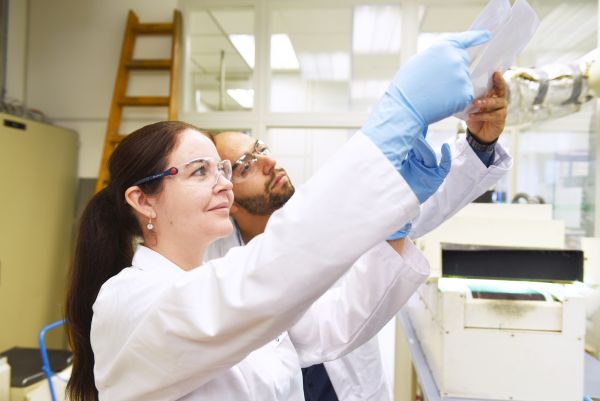
de Vries: We fully agree with that development. Our customers do not simply need paint in a can. They need solutions that improve their production, protect their products and help them grow their business. That means innovation has to start much closer to the customer. At Teknos, we are increasingly working together with customers at an earlier stage, understanding their production lines, application processes, performance requirements, sustainability targets and commercial ambitions.
Our innovation model is becoming more collaborative, practical and value-driven. We combine R&D expertise with local technical service, customer insight and application know-how. The goal is not innovation for its own sake. The goal is to create measurable value: better durability, faster processing, lower environmental impact, reduced waste, improved aesthetics and stronger end-product performance. For us, innovation is a partnership. The best solutions are developed when we sit next to the customer, not opposite the customer.
Where do you currently see the greatest demand for new coating technologies – from customers themselves or from regulatory developments?
de Vries: It is both, and increasingly the two are connected. Regulation is clearly accelerating change, especially around chemicals, emissions, VOCs, substances of concern and circularity. Teknos has publicly set ambitions around lower VOC content, renewable and recycled raw materials (windshield recycled PVB), and reducing substances of concern, which reflects how important this transformation has become for the industry. But the strongest demand comes when regulation and customer ambition meet. Many of our customers are not waiting for legislation to force them to act. They want to differentiate their own products, improve their sustainability performance and respond to the expectations of their customers and markets.
That creates strong demand for coating technologies that are safer, more durable, more resource-efficient and easier to use. We see particular interest in waterborne technologies, lower-emission solutions, longer-lasting coatings, improved application efficiency and technologies that support energy savings. In many cases, customers are asking a very practical question: “How can coatings help us become better?” That is exactly the type of question Teknos wants to answer.
Many coatings companies are investing in digitalisation and data-driven services. Where do you see the greatest value being created for industrial customers?
de Vries: The real value of digitalisation is not in technology itself. The value is in helping customers make better, faster and more confident decisions. For industrial customers, coatings are part of a wider production process. If we can use data to improve application consistency, reduce defects, optimize consumption, predict maintenance needs or support more accurate technical recommendations, then digitalisation becomes a real business advantage. I see three major areas of value. First, digital tools can improve transparency, for example in product selection, compliance information and sustainability data. Second, data can support productivity by helping customers reduce waste, rework and reduce downtime. Third, digital services can strengthen collaboration by making technical knowledge more accessible across sites, countries and teams.
At Teknos, we believe digitalisation should support the relationship with the customer, not replace it. The future is a combination of digital intelligence and human expertise. That is where the strongest value will be created. An example is a new route to market with E- commerce that we are currently piloting in Europe and role out broader in 2027.
Sustainability has evolved from a differentiator into a basic expectation. Where do you believe coatings manufacturers can still create genuine competitive advantage?
de Vries: You are right, sustainability is no longer optional. It is expected. But that does not mean all sustainability efforts are equal. The real competitive advantage will come from companies that can combine sustainability with performance, reliability and economic value. Customers cannot compromise on quality. They need coatings that protect, perform and last, but they also want solutions with a lower environmental impact. This is where coatings manufacturers can make a real difference. We can help extend product lifetimes, reduce the need for repainting or replacement, lower VOCs, improve material efficiency and support the transition to more sustainable raw materials. Teknos’ sustainability focus includes developing longer-lasting products, reducing VOC content, and increasing the use of renewable and recycled raw materials.
For Teknos, sustainability is not a marketing slogan. It is part of how we create long-term value. As a family-owned company, we feel a responsibility to future generations but also to our customers today. Our ambition is to make sustainability practical, measurable and commercially valuable for them. This is also why our tag line is “we make the world last longer”. That is where the competitive advantage lies: helping customers grow responsibly.
Looking ahead, which technological developments do you believe will have the greatest impact on industrial coatings over the next decade?
de Vries: I believe the biggest impact will come from technologies that combine performance, sustainability and productivity. We will see continued development in waterborne and lower-emission technologies, bio-based and recycled raw materials (windshield recycled PVB example), advanced curing systems, coatings that reduce energy consumption and solutions that extend the lifetime of materials. There will also be growing importance around lifecycle assessment, circularity and the ability to demonstrate the environmental value of coating systems. At the same time, digital technologies will become more important, not only in how coatings are developed, but also in how they are selected, applied, monitored and optimized in customer production environments. But ultimately, the most impactful technologies will be those that solve real customer problems. A coating technology is successful when it helps a customer improve quality, reduce cost, improve sustainability, or open new market opportunities. That is why the future of industrial coatings will not be defined by chemistry alone. It will be defined by the ability to connect chemistry, application expertise, data and customer value.
What role do you believe medium-sized international companies such as Teknos can play in a market that is often characterised by either global giants or niche specialists?
de Vries: I believe companies like Teknos have a very important role to play. We are large enough to operate internationally, invest in innovation and support demanding industrial customers, but we are also close enough to be personal, flexible and entrepreneurial. That is a powerful position. Global giants can sometimes become complex and distant. Niche specialists can be very strong in one area, but may lack international reach. Teknos sits in a unique space between those two worlds.
We can bring technical expertise, sustainability ambition and international capabilities, while still maintaining the closeness, trust and speed of a family company. That makes us a strong partner for customers who want more than a supplier. They want a company that understands their business, shares their ambitions and is willing to grow together with them. Our role is to be a value-creating partner, helping customers protect their products, improve their processes, strengthen their sustainability performance and grow their business. That is also what makes this industry exciting. Coatings may not always be visible, but they play a vital role in protecting materials, extending lifetimes and making the world more sustainable. Teknos wants to be one of the companies leading that positive transformation.