News Markets & Companies
Guest editorial: Measuring sustainable impact in coil coatings
Dr Susana Hult Torron, Global Product Sustainability and R&D Capabilities Director at Beckers Group, stresses the importance of using different tools to measure the sustainable impact of every product and the collaboration with partners.
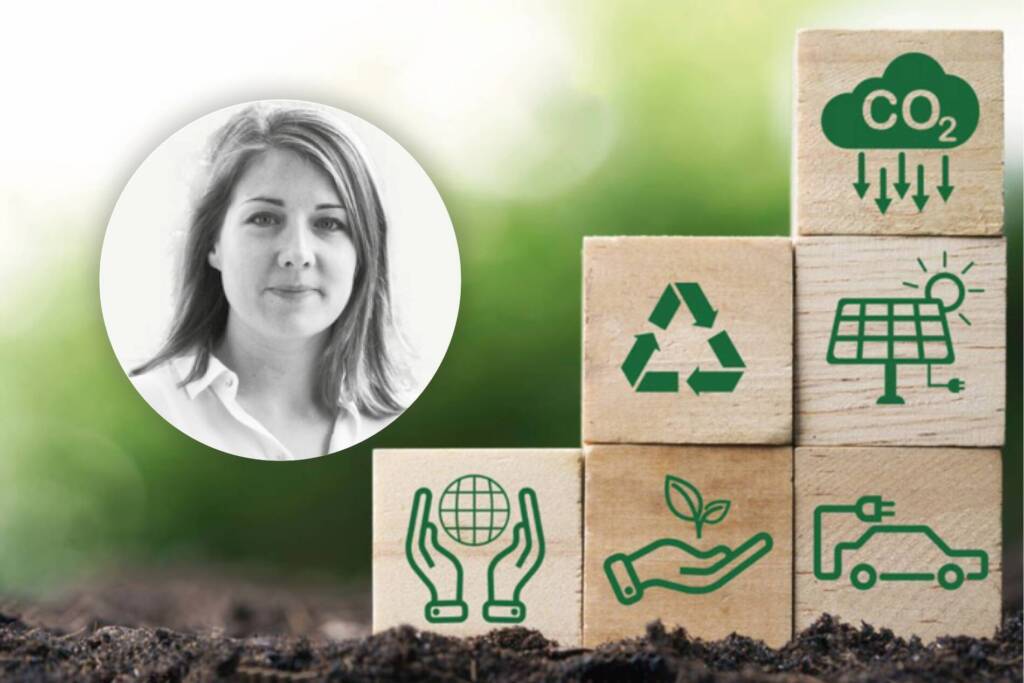
To deliver product sustainability, we must be able to quantify and put a number on what we are doing, where we fall short and how far we have come. By measuring sustainability performance, we not only track our own progress and the progress of our partners but enable targeted improvements. So how do we ensure that the data we rely on gives us the level of detail and transparency we require?
We have established and begun to integrate in our workflows powerful ways to measure sustainability impact. Many of the tools we use are also recognised and widely adopted by peers in the science community and regulatory bodies around the world. At the same time, we continue to refine and strengthen our systems, both internally and in collaboration with our partners across the value chain. Measurability and transparency are central, not just for R&D but for our value proposition to our customers. This is how we demonstrate pioneering performance for positive impact.
The Beckers Sustainability Index (BSI) is firmly embedded in our business and our 2030 targets. A holistic tool that quantifies sustainability and puts every product into its relevant ‘class’, BSI is our main KPI and has been internationally validated by external assessors. BSI is complemented by a suite of other tools that measure specific aspects of the overall sustainability impact of our activities and those of our customers and suppliers.
A Life-Cycle Assessment (LCA) assesses the environmental impacts associated with all the stages of the life cycle of a product, process or service, from raw material extraction and processing to manufacture, distribution and use, to the recycling or final disposal of materials. We follow the general LCA standards (ISO 14040/14044) and the specific standard for the construction industry (EN 15804+A2). This guarantees that everyone across the value chain measures sustainability in the same way. LCA also form part of the Environmental Product Declarations (EPD) of our customers, which in turn help their customers obtain green building certification points such as BREEAM or LEED.
Implementatioln of local LCA calculator software
In recent years we have steadily increased in-house LCA capabilities. Indeed, the ability of our Product Sustainability team to deploy different models and system boundaries has been a key factor in our sustainability journey. In 2025 we will expand our in-house capabilities further with the implementation of the LCA Calculator software in all countries, which will allow local teams to generate LCA on their product portfolio.
One crucial parameter measured in an LCA is the Global Warming Potential or Carbon Footprint of the product (GWP/PCF). This indicates the total greenhouse gas (GHG) emissions associated with the lifecycle of that product, measured as kg CO₂ equivalents. It also can be used to help understand the impact on other environmental aspects, such as land use, water use, minerals use or ozone depletion potential.
Tools for accurate measuring and date sharing
Since committing to The Science Based Targets initiative (SBTi), Beckers has launched two additional tools to support accurate measurement and data sharing. A tool used for R&D, measuring the carbon footprint of a formulation using raw materials codes and quantities. From this, simulations are created showing the carbon footprint of the formulation when certain raw materials or other input parameters such as coverage, dry film thickness or weight solids are altered. Another tool calculates the carbon footprint of a specific product portfolio. This allows for “hot-spot analysis” of the portfolio, i.e. emissions by product, site, colour or customer.
Collaboration along the value chain
Improving product sustainability (or reducing Scope 3 emissions) is a cross-disciplinary challenge and needs partnering along the value chain with suppliers as well as customers. Real data and quantifiable sustainability effects help make the progress real.
By requesting that our suppliers provide high quality data to evaluate their raw materials, we are inviting them to participate in the transformation of the industry to one in which sustainability is built in at every point and protected with every link. Sharing high quality data with customers creates conditions to work together to improve each other’s sustainability performance, whether through carbon footprint reduction, improved BSI scores, or any number of measures already in operation or still in development. It is the lever that raises our collective ability to innovate and hold one another to account.