News Legislation
EU packaging regulation enters into force: PFAS restrictions in food-contact packaging now in effect
The EU’s Packaging and Packaging Waste Regulation has begun to apply across member states, introducing a harmonised framework for packaging and packaging waste. A key measure now in effect restricts the use of PFAS in food-contact packaging, with further requirements on waste reduction and recyclability set to follow in 2030.
The EU’s Packaging and Packaging Waste Regulation (PPWR) has entered into application as of 12 August 2026, establishing a harmonised regulatory framework for packaging and packaging waste across the Single Market. The regulation, which entered into force in February 2025, replaces fragmented national requirements with a common set of EU rules covering the entire packaging life cycle.
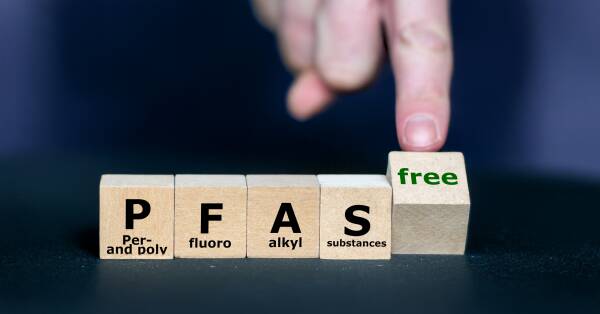
Among the measures now in effect is a restriction on per- and polyfluoroalkyl substances (PFAS) in food-contact packaging. Food-contact packaging containing PFAS above defined limits may no longer be placed on the EU market. PFAS have been widely used in packaging such as takeaway containers, fast-food wrappers, microwave popcorn bags, bakery paper and pizza boxes to repel water or grease. The restriction aims to reduce consumer exposure to these highly persistent substances, which can accumulate in the environment and in the human body.
Harmonised rules to reduce compliance costs and support the circular economy
Jessika Roswall, Commissioner for Environment, Water Resilience and a Competitive Circular Economy, commented: “The new Packaging and Packaging Waste Regulation is an investment in Europe’s future: it will help reduce waste, increase recycling, make food-contact packaging safer for the consumers by limiting harmful substances such as PFAS, and reduce our dependence on virgin raw materials. These are essential steps towards a truly circular economy. At the same time, the Regulation will replace fragmented national rules difficult to navigate for economic operators in the internal market. But new rules also come with adjustment costs, and we have worked intensively with market operators to implement the new rules in a pragmatic and unbureaucratic way.”
By introducing uniform requirements, the PPWR is intended to provide greater legal certainty for businesses operating across borders and to reduce compliance costs. The regulation also aims to strengthen the market for secondary raw materials and support the EU’s transition to climate neutrality by 2050.
Phased requirements on recyclability, recycled content and waste reduction from 2028 and 2030
Further measures are set to apply in subsequent years. From 2028, a harmonised labelling system for packaging will be introduced across the EU to facilitate waste sorting and improve efficiency in recycling and composting streams. The Commission states this is expected to save the packaging industry several billion euros over time.
From 2030, additional requirements will come into effect, including new limits on empty space in packaging, restrictions on certain single-use plastic packaging, reuse targets, mandatory use of recycled plastic waste in new plastic packaging, and a requirement that all packaging be recyclable. Without regulatory intervention, packaging waste in the EU was projected to grow by 19 % by 2030, with plastic packaging waste potentially rising by as much as 46 %. The Commission published guidance in March 2026 to support the implementation of the PPWR, including practical information on the application of the new PFAS restrictions.