News Coatings Technologies
Tyrosine-derived polybenzoxazine coatings offer eco-friendly marine anti-fouling solution
A newly developed bio-based polybenzoxazine coating made from L-tyrosine combines inherent antibacterial activity with low surface energy, offering an environmentally friendly approach to marine antifouling.
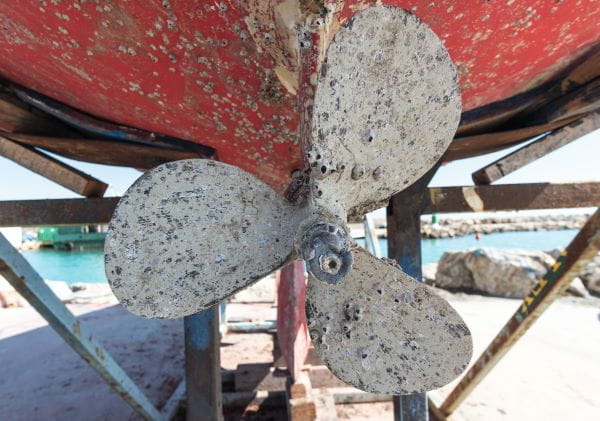
To combat the environmental drawbacks of conventional marine anti-fouling coatings, researchers have synthesised a novel class of bio-based polybenzoxazine (PBOZ) coatings derived from the amino acid L-tyrosine. Published in Progress in Organic Coatings (Volume 200, March 2025), the study presents a coating system with intrinsic antibacterial properties and excellent fouling-release performance, achieved without relying on biocidal additives.
The coatings were prepared by ring-opening polymerisation of branched benzoxazine monomers synthesised from polyether amides and primary amines with varying structures. The formulation containing 1,12-dodecylenediamine (THB-PBOZs-DDA) proved especially promising. It exhibited a high crosslink density (gel content: 86 ± 2.71 %) and strong mechanical properties, including a tensile strength of 3.3 MPa and an elastic modulus of 32.1 MPa.
Reading tip: Functional Coatings
The “EC Tech Report Functional Coatings” gives you an up-to-date bundle on automotive coatings with articles, videos and other handpicked content. In addition to technical articles about the latest technical developments, this all-in-one multi-media pack is rounded off with valuable market insights and important fundamentals about automotive coatings formulation.
Antibacterial action and fouling-release synergy
THB-PBOZs-DDA demonstrated excellent substrate adhesion (5.43 MPa) and a smooth, hydrophobic surface with a water contact angle of 133°. Its antibacterial activity further enhanced its fouling-release capability, making it an effective non-toxic alternative to traditional coatings. The coating resists microbial colonisation while maintaining surface integrity and mechanical robustness.
This bio-based anti-fouling solution stands out through its combination of mechanical durability, inherent antibacterial performance, and environmental safety—offering a compelling candidate for next-generation marine coatings.
Source: Yuan, X. et al. Tyrosine-based branched polybenzoxazines with antibacterial and surface fouling released performances for marine anti-fouling coatings, Progress in Organic Coatings, Volume 200, March 2025, 108978.