News Coatings Technologies
Transparent superhydrophobic coatings enhance LiDAR signal precision
New research unveils a transparent, robust superhydrophobic coating that protects atmospheric LiDAR systems from contamination, ensuring precise environmental monitoring.
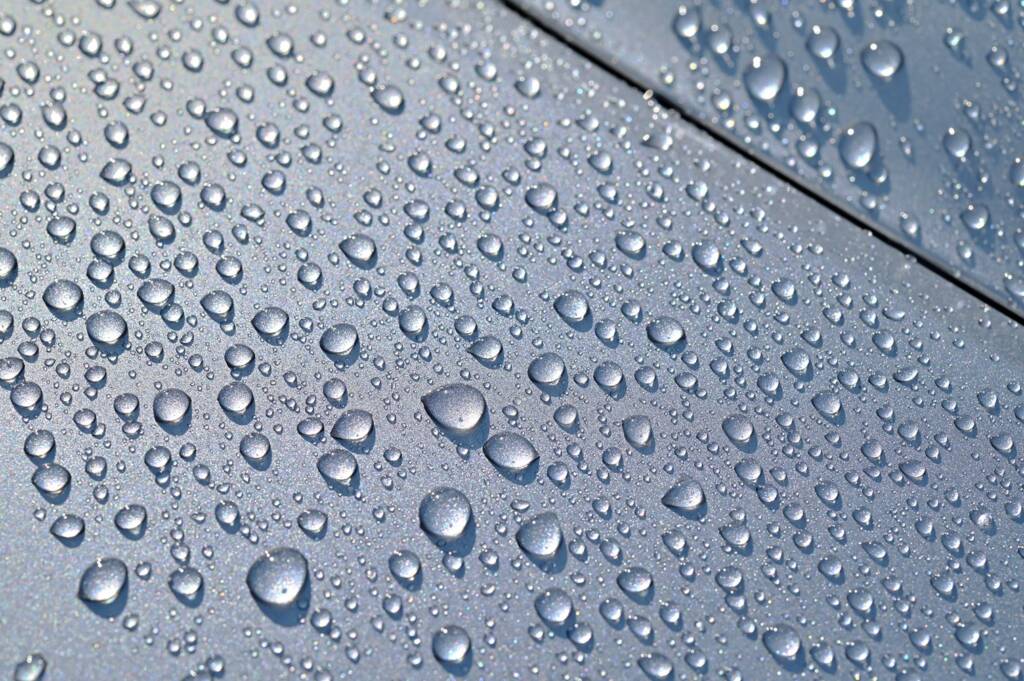
A research team led by Jing Chen and colleagues has developed a transparent and robust superhydrophobic coating designed to enhance the performance of atmospheric light detection and ranging (LiDAR) systems. LiDAR, a key technology for environmental monitoring such as air quality assessment, often suffers from signal degradation caused by water droplets or contaminants on its protective windows. This new coating addresses such challenges by ensuring high-fidelity signal transmission, even under harsh operating conditions.
The coating is built on a polydimethylsiloxane (PDMS) resin-loaded glass substrate, incorporating tetraethylorthosilicate (TEOS) and carbon soot (CS) to create a composite rough structure. High-temperature annealing eliminates the carbon soot, enabling the formation of a dense, three-dimensional cross-linked dendritic structure. The introduction of 1H, 1H, 2H, 2H-perfluorooctyltriethoxysilane (PTES) further enhances the coating’s low surface energy and structural robustness, resulting in exceptional superhydrophobic performance.
Reading tip: Functional Coatings
The EC Tech Report “Functional Coatings” gives you an up-to-date bundle on functional coatings with articles, videos and other handpicked content. In addition to technical articles about the latest technical developments, this all-in-one multi-media pack is rounded off with valuable market insights and important fundamentals about functional coatings formulation.
Durability and Real-World Applications
The study highlights the coating’s remarkable properties, including a water contact angle of 165.04° and a sliding angle of 0.47°, alongside a light transmittance of 92.4 %. Extensive durability tests demonstrate its resilience under various conditions, including abrasion, sand impact, knife scratches, and acid/alkali immersion for up to 120 hours. Furthermore, the coating withstands prolonged weathering tests such as UV radiation (60 days), extreme temperatures between −20 °C and 50 °C (40 days), and real outdoor exposure (90 days) while maintaining its superhydrophobicity.
When integrated into LiDAR systems, the coating prevents contamination of protective windows, thus safeguarding signal transmission quality. This innovative development paves the way for more reliable and precise environmental monitoring technologies, offering significant improvements to air quality assessment and other LiDAR applications.
Quelle: Chen, J., Wang, F., Jia, X., Xiao, X., Chen, S., & Wang, X., Transparent and robust superhydrophobic coatings for high-fidelity signal transmission in atmospheric light detection and ranging windows. Langmuir, 41(40), (2025).