News Coatings Technologies

Towards the identification of the volatile organic compounds emitted by the coatings used in a car factory painting line
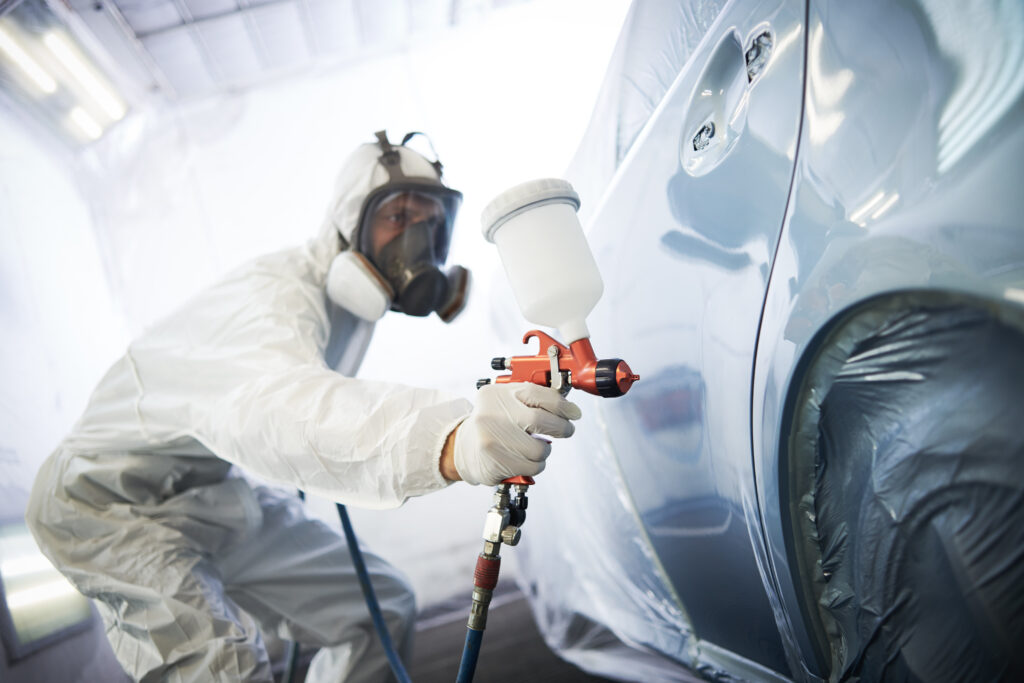
Researchers found that coatings used in a car factory emit 45 volatile organic compounds (VOCs) that pose potential health risks to workers.
Air quality in automotive painting lines is a significant challenge due to numerous volatile compounds impacting indoor air. Source: Kadmy - adobe.stock.com

One of the main reasons for the degradation of working conditions is the lack of air quality. It is known that indoor air contaminants pose a risk to both the human organism and the environment, which constitutes a challenge for employers and major industries. A car factory painting line is an evident example of a work location in which the employers must be especially aware and concerned with the employees’ health. Since the coatings are the main VOCs-emitting source, this work studied the analytes emitted by four primers, 17 basecoats and one varnish used in a car factory of a world-renowned automotive brand, with gas chromatography-ion mobility spectrometry (GC-IMS), as a way of identifying all the coating-borne VOCs that can be emitted to the indoor air.


Event Tip: Fundamentals of Functional Coatings

Dive into the world of functional coatings designed to offer specialized properties such as anti-fouling, anti-ice, easy-to-clean, and drag reduction. This tutorial will cover fundamental principles, materials selection, surface modification techniques, and case studies across different applications. Join us online on 03 Oct 2024 for the EC Short Course “Fundamentals of Functional Coatings” and explore how these coatings are transforming industries worldwide.


The variability of the collected data was assessed, and the repeatability of the results proved the suitability of GC-IMS for this type of study. Among primers, inks and varnish, 45 VOCs were accurately identified using an exclusively developed database of compounds. The presence of the identified analytes in the composition of the coatings represents the potentiality of being emitted to the indoor air of the factory and, consequently, denotes their eventual toxicity for the employees of the painting line. These results represent a step forward in the assessment of the panting line work conditions, so eventual consequences to the employees’ health are theoretically discussed; nonetheless, further studies aim to examine air samples of the factory and evaluate the work conditions and actual consequences to the employees that must be developed.

Journal of Coatings Technology and Research, Volume 21, pages 665–682, (2024)

Similar posts

News Coatings Technologies

Polyphenol hydrogels: multifunctional coatings for smart homes

A review highlights how plant polyphenol-functionalised hydrogel coatings can meet the multifunctional demands of smart home applications. Combining self-healing, environmental responsiveness and antimicrobial...

News Coatings Technologies

MXene-enhanced epoxy film achieves 96 % self-healing efficiency

Researchers have developed a high-performance epoxy resin film that combines MXenes with dynamic diselenide bonds, enabling efficient photothermal self-healing. The new formulation overcomes the brittleness...

Marcel Butschle discusses the role of bio-based reactive diluents in the context of regulatory requirements, sustainability, and supply security.
News News Raw Materials

Bio-based reactive diluents: Focus on supply security and regulatory requirements

Epoxidised fatty acid esters derived from European vegetable oils offer paint manufacturers advantages in terms of supply security, carbon footprint, and toxicological classification. Marcel Butschle,...

News Markets & Companies

Ystral inaugurates new technical centre

Machinery and plant manufacturer Ystral has invested in a new technical centre at its headquarters near Freiburg, Germany. The modern facility enables extensive trials, training and product development...

Recent developments in printing inks used for food packaging.
News Legislation

Printing inks for food packaging – what’s new

Regulatory Compliance of food packaging inks is a field with constant developments. The EU Commission and national governments are adapting the legal provisions and also associations, like EuPIA, are constantly...

News Markets & Companies

Fraunhofer IFAM and Plasmatreat collaborate on PFAS-free coating technologies

Fraunhofer IFAM and Plasmatreat are accelerating the industrial adoption of PFAS-free coating systems. The partnership focuses on sustainable plasma-based coatings, catering to industries like plastics,...

News Markets & Companies

Siegwerk closes Swiss site: production moves to Turkey

Siegwerk is relocating its production from Bargen, Switzerland, to Tuzla, Turkey. Over 100 employees are losing their jobs due to declining demand for UV printing inks and high production costs in Europe....