News Coatings Technologies
Self-healing copper anticorrosion films deliver adaptive protection without organic solvents
Researchers developed solvent-free polydisulfide films for copper surfaces using emulsion-assisted self-assembly. The innovative coatings repair and strengthen themselves in corrosive environments, achieving outstanding long-term protection.
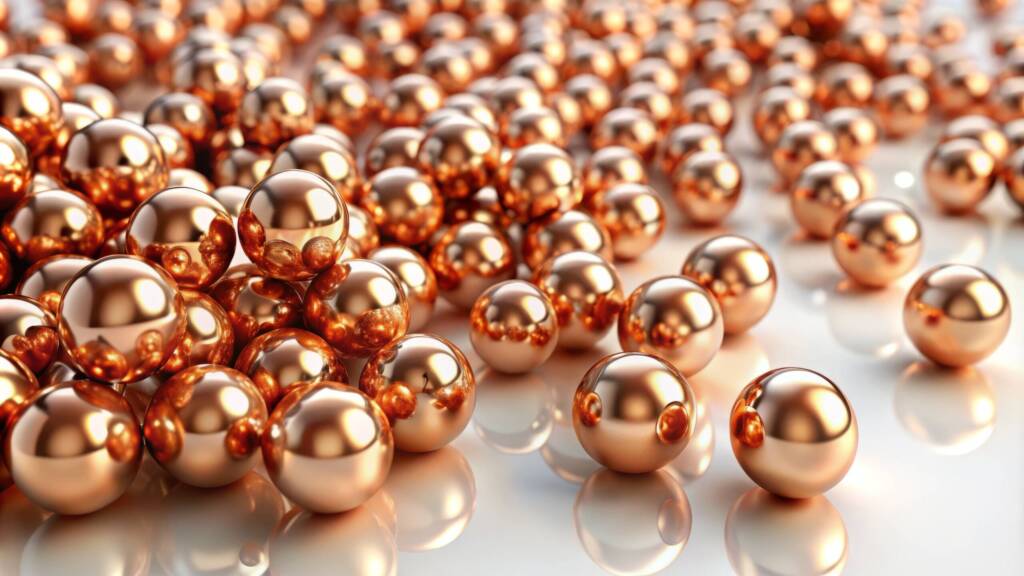
Creating high-performance, self-healing anticorrosion films for metal surfaces using environmentally friendly methods has long been a challenge. A new study presents a breakthrough with solvent-free polydisulfide films fabricated via emulsion-assisted polymerization-induced self-assembly (PISA). This scalable approach eliminates the need for organic solvents and offers adaptive protection for copper surfaces in corrosive environments.
The films are formed through an oil-in-water emulsion system using two thiols, which enable in situ oxidative crosslinking directly on the copper substrate. The resulting ∼3 μm thick polydisulfide coating exhibits remarkable self-healing and self-strengthening capabilities, leveraging metal-thiolate coordination and disulfide bond reformation via residual thiol groups. These mechanisms enhance the coating’s crosslinking density upon exposure to corrosive conditions, ensuring structural restoration and long-term durability.
Event Tip: Anticorrosive Coatings
What principles determine the corrosion of metals and how can protective coatings help to prevent corrosion? In this e-learning tutorial, the basics of electrochemical processes will be explained, and typical ingredients and formulation features of corrosion protection coatings will be presented and discussed.”
Exceptional long-term performance
Electrochemical impedance spectroscopy (EIS) demonstrated continuous self-enhancement of the films during a 35-day immersion test in a 3.5 % NaCl solution. The impedance modulus at 0.01 Hz increased from ∼106 Ω·cm² to over 3 × 10⁸ Ω·cm², marking a 33-fold improvement in barrier performance compared to control films. Molecular dynamics simulations further confirmed the superior barrier properties, with diffusion coefficients of H₂O and Cl− in the film being 1–2 orders of magnitude lower than conventional coatings.
This innovative approach enables a green and scalable platform for advanced corrosion protection in demanding environments. The solvent-free emulsion strategy establishes a paradigm for damage-responsive self-repair coatings, offering targeted mechanical reinforcement and barrier enhancement.
Source: Qiu, J., Luo, X., Gao, X., Zhang, J., & Ma, H. (2025). Self-healing and self-strengthening anticorrosion films on copper via emulsion-assisted polymerization-induced self-assembly. Progress in Organic Coatings, 109806. https://doi.org/10.1016/j.porgcoat.2025.109806