News Coatings Technologies
Microencapsulation of corrosion inhibitors: a review
A detailed review of microencapsulation technology reveals how advanced coatings provide long-lasting corrosion protection through controlled inhibitor release.
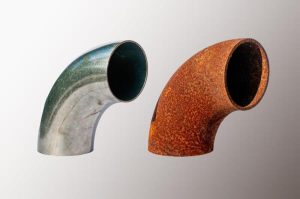
Corrosion is a global issue that causes significant damage across industries. To mitigate its harmful effects, researchers have developed innovative solutions, including microcapsule-embedded coatings. This cutting-edge technology enables sustainable, long-lasting protection against corrosion by releasing inhibitors in response to the pH of the surrounding environment.
The study explored a wide range of shell materials compatible with corrosion inhibitors such as quinoline, azoles, and MBT. Researchers found that the limitations of bio-based shell materials, such as chitosan and ethyl cellulose, can be overcome with optimised synthesis techniques. Urea-formaldehyde and other amino resin shells were highlighted for their ability to encapsulate a wide variety of compounds and for their effectiveness in creating dual-shell and hybrid-shell systems.
Event Tip: Anticorrosive Coatings
What principles determine the corrosion of metals and how can protective coatings help to prevent corrosion? In this e-learning tutorial, the basics of electrochemical processes will be explained, and typical ingredients and formulation features of corrosion protection coatings will be presented and discussed.
Diversity of shell materials and controlled release
Materials such as acrylates and polystyrene were also found to be effective for encapsulating complex structures that allow long-term storage and slow release of corrosion inhibitors. These advancements in microencapsulation technology offer sustainable solutions for corrosion protection and extend the functional capabilities of protective coatings.
Source: Mhatre, A. M. & More, A. P., Microencapsulation of corrosion inhibitors: a review. Journal of Coatings Technology and Research, Volume 23, Pages 103–171, 2026. DOI: https://doi.org/10.1007/s11998-025-01144-1.