News Coatings Technologies
Lignin–zein adhesive enables fully bio-based, debondable plywood
Researchers have developed a water-borne wood adhesive combining zein protein and lignin that avoids formaldehyde and synthetic cross-linkers. The fully bio-based system delivers competitive bonding performance for plywood and can be debonded on demand, enabling adhesive recovery and reuse.
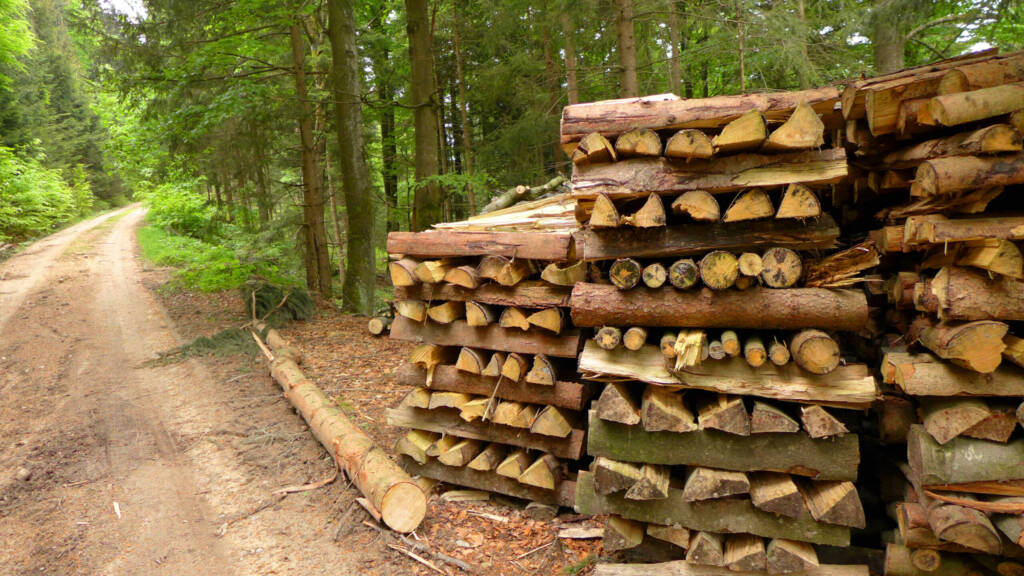
Formaldehyde-containing adhesives still dominate the production of wood-based panels, raising concerns over volatile organic compound emissions and indoor air quality. Bio-based alternatives derived from proteins, polysaccharides or lignin have been widely investigated, but combining strong bonding performance with a scalable, practical and truly green formulation has proved difficult. A recent study addresses this challenge by developing a water-borne adhesive in which zein protein is dispersed in a viscous micellar lignin gel.
Inspired by the natural interactions between proteins and polyphenols, the system is fully bio-based and free of cross-linkers. When applied to birch veneers and hot-pressed into three- to five-layer plywood, the adhesive delivered performance competitive with existing bio-based formulations, demonstrating that the lignin–protein network can form robust joints without synthetic additives.
Event Tip: EC Conference Frontiers in Wood Coatings
The EC Conference Frontiers in Wood Coatings, formerly the Wood Coatings Congress, has established itself as the international reference platform for scientific and technical exchange in the field of wood coatings. Over the course of two intensive days in Amsterdam, the conference will bring together stakeholders from across the value chain — from resin and additive producers to leading research institutes, coating manufacturers, and end-use industries — to discuss the latest advances in formulations, application processes, and sustainable solutions.
Favourable green metrics and debonding on demand
The formulation achieved an Eco-scale score of 94, supported by the absence of organic solvents, a small number of preparation steps and the water-borne nature of the system. The authors also report low E-factor and process mass intensity values, indicating high material efficiency and low waste generation during manufacture. These metrics position the adhesive as a genuine alternative to petroleum-based commercial products for indoor applications.
A further feature of the system is its debond-on-demand behaviour: bonded wood specimens can be separated in a 70 % ethanol–water solution, allowing the adhesive to be recovered, reused and reprocessed. This reversibility supports circular use of both the wood substrate and the binder itself. Future development, the authors note, will focus on improving water resistance while preserving the debonding capability, reusability and fully bio-based character of the formulation.
Source: Gryaznov, R. et al., Fully bio-based wood adhesives from lignin and zein protein. Green Chem. 28, 13265–13278 (2026).