News Coatings Technologies
Keratin from chicken feathers boosts coating performance
Researchers at Fraunhofer IPA and Fraunhofer IAP are investigating whether keratin extracted from chicken feathers can be used as a multifunctional additive in coatings. The bio-based protein could improve corrosion protection, UV resistance and microbial resistance, while reducing production costs and resource consumption.
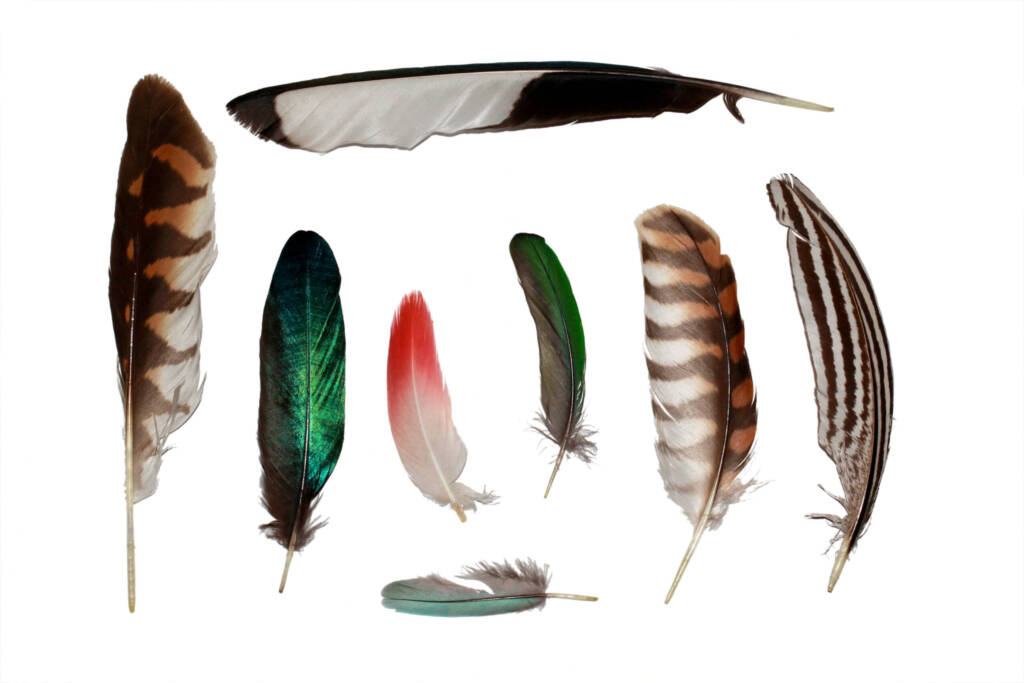
Mineral fillers are a standard component of many paints and coatings. Researchers at the Fraunhofer Institute for Manufacturing Engineering and Automation (IPA) and the Fraunhofer Institute for Applied Polymer Research (IAP) are now examining whether keratin from chicken feathers could serve as a multifunctional alternative. According to the two institutes, the structural protein could potentially fulfil several functions in coatings simultaneously, while reducing both production costs and resource consumption.
Finely ground keratin combined with water forms a dispersion that is only slowly degraded by microorganisms. This makes the material suitable not only as a low-cost filler, but also as a possible component in coatings with increased resistance to microbial attack. In laboratory tests, keratin combined with small amounts of copper salts or copper particles also provided protection against UV radiation, suggesting that the protein could in the longer term take over functions currently performed by titanium dioxide.
Enhanced mechanical and corrosion protection with boron nitride
The researchers also see potential in combinations of keratin with boron nitride. In a binder system, ordered structures can form that make coatings mechanically more resistant and slow down the penetration of water. This opens up potential applications in corrosion-inhibiting powder coatings for products such as fences, garden tools or outdoor furniture.
For industrial use, however, keratin must first be processed efficiently. Chemical methods deliver larger quantities of powder but partially impair the functional properties of the protein. Mechanical and mechanochemical processes achieve better results but are currently limited to laboratory scale.
Reading tip: Powder Coatings
Scale-up and industrial partnerships
To scale up production, the project partners plan to cooperate with the plant manufacturer Zoz GmbH. In parallel, a cleaning and grinding unit is being developed that could process feathers directly on site into micro- or nano-powder, potentially reducing transport requirements, CO₂ emissions and disposal costs.
A collaboration with powder coating specialist Enviral is also being pursued in order to further develop keratin-based coatings for industrial applications. If the approach can be scaled successfully, chicken feathers – currently regarded largely as a waste stream from the poultry industry – could become a genuine raw material source for the coatings sector.
Source: Keiber, M., Wie Hühnerfedern als Rohstoff für Lacke dienen können. Springer Professional, 6 July 2026.