News Coatings Technologies
Data-driven optimisation cuts lithium-ion battery costs
A new techno-economic analysis identifies mixing, coating and drying as the most cost-sensitive steps in lithium-ion battery electrode production. By tuning key parameters, manufacturers could save up to USD 22 million per year in a 10 GWh facility.
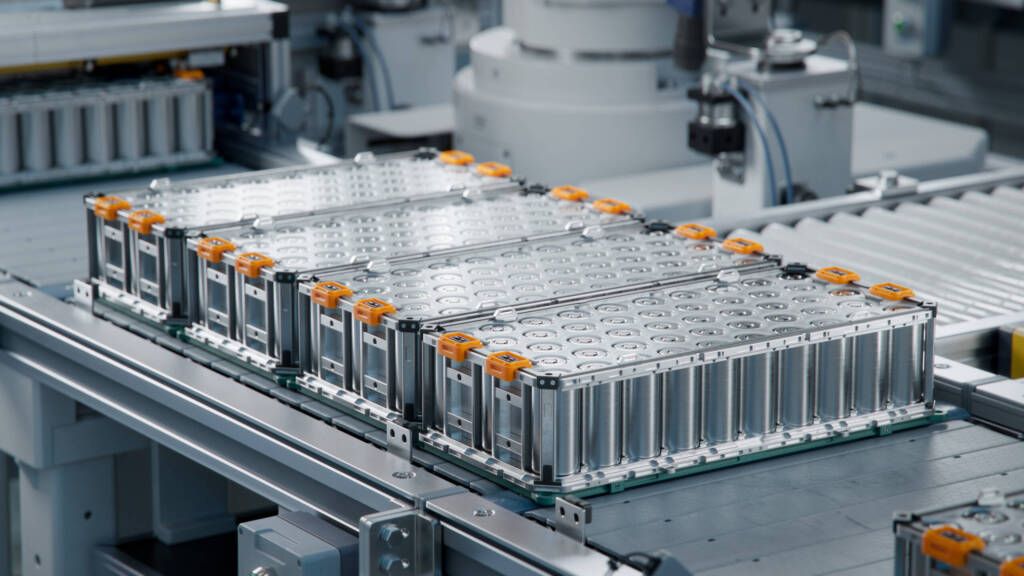
As global demand for lithium-ion batteries (LIBs) is projected to exceed 6 TWh by 2030, reducing manufacturing costs has become a pressing concern for producers serving the electric vehicle and grid storage markets. Researchers Domalanta, Maalihan and Caldona examined the cost sensitivity of three electrode fabrication steps – mixing, coating and drying – which together account for more than 20 % of total production costs and are among the most defect-prone stages of the process.
The team combined the process-based ProZell cost model with a Plackett–Burman design of experiments to overcome the limitations of conventional techno-economic models, which typically treat these steps in aggregate and obscure the influence of individual parameters. The analysis focused on a 10 GWh lithium iron phosphate (LFP) cylindrical cell facility.
Reading tip: Automation in Coatings Production
While the automation of processes in many areas ensures higher efficiency and safety, the question arises how this affects the coatings industry. The eBook “”Automation in Coatings Production”” shows what is already automatable and how the coatings industry can learn from other branches of industry to help make the working days more efficient and future-ready. This eBook is a compilation of different, trend-setting articles regarding e. g. the important role of planning in the development of new paint-making systems, a consistent product quality in a fully automated, continuous coating production or process adjustments in dispersing pigments and fillers.
Cathode mixing time emerges as key cost driver
The study identified cathode mixing time as the most influential variable, with an 80 % reduction corresponding to roughly USD 12 million in annual savings, equivalent to about 1.12 % of overall costs. Increasing both anode and cathode coating speeds by 80 % yielded combined savings of around USD 8.8 million per year. In total, parameter optimisation could reduce annual costs by up to USD 22 million, or approximately 2.0 %.
Emerging technologies such as dry electrode processing and high-shear mixing were highlighted as additional levers for cost reduction. Complementary BatPaC modelling identified upper cathode thickness limits of 310.3 µm for LFP and 168.8 µm for nickel manganese cobalt (NMC) chemistries, beyond which further optimisation becomes constrained. The findings provide actionable, chemistry-specific guidance for scalable cost reductions in LIB manufacturing.
Source: Domalanta, M. R. B. et al., Data-driven electrode processing cost optimization for lithium-ion battery production. Journal of Coatings Technology and Research 23, 1133–1148 (2026).