News Coatings Technologies
Amphiphilic acrylate copolymers with zwitterions show excellent anti-fouling effect
A new amphiphilic coating system with zwitterions achieves outstanding anti-fouling properties – both in the laboratory and after several months of use in seawater.
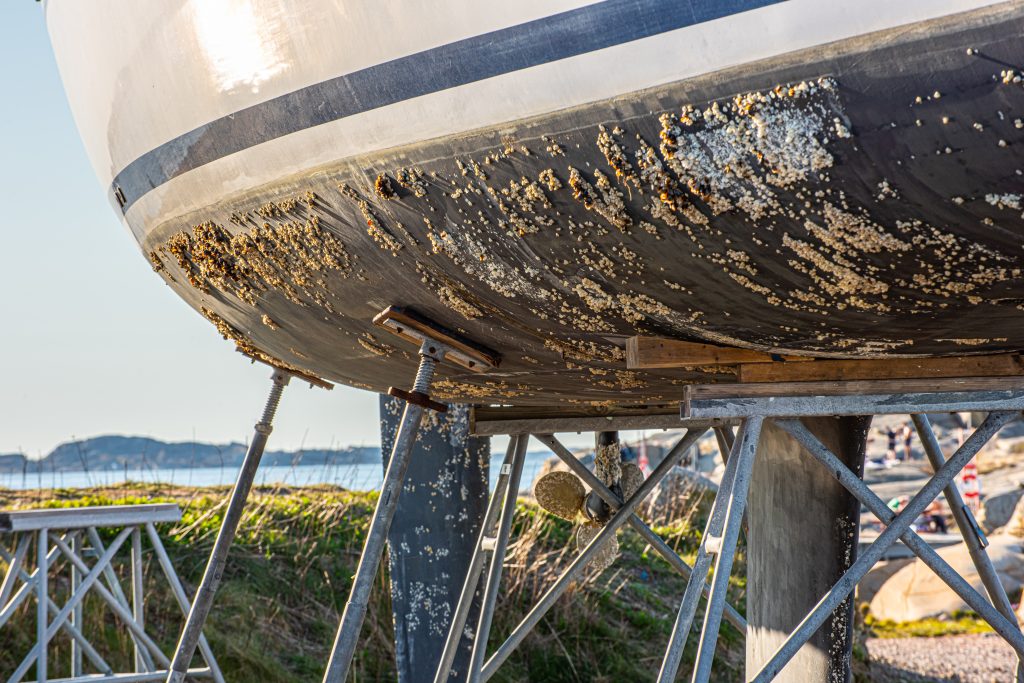
Anti-fouling coatings are increasingly the focus of research, especially when they do not require biocidal additives. A Chinese research team has now developed novel amphiphilic acrylate copolymers that contain zwitterions and thus offer a promising approach for biocide-free biofouling prevention in marine applications.
The copolymers (ACZ) were synthesised by free radical copolymerisation from various monomers: the zwitterion TMS (3-triethylammonio-2-methacryloyloxypropane-1-sulfonate), lauryl methacrylate (LMA), methacrylic acid (MAA) and acrylic acid (AA). Fine-tuning the hydrophilic TMS and hydrophobic LMA content was crucial for the performance of the coating. A balanced formulation with 5.0 mol% TMS and 46.9 mol% LMA showed the best results.
Reading tip: Bio-based coatings
The EC Tech Report “Bio-based Coatings” is a hand-picked compilation of all the key aspects concerning bio-based coatings, offering the latest technical developments. Leading R&D experts present their various binder developments, how binders can be produced sustainably and also how the performance of your coatings can be optimised. Exclusive market insights and data as well as an impressive package of digital bonus material round off this Tech Report.
Long-term effectiveness against biofouling in the maritime environment
In laboratory experiments, the optimised formulation achieved anti-bacterial efficiencies of 94.8 % (against E. coli), 95.1 % (against S. aureus) and 95.2 % (against Pseudoalteromonas). The growth of marine microalgae such as Phaeodactylum tricornutum and Chlorella vulgaris was also inhibited by 80.4 % and 68.4 % respectively. The coating also proved itself in real-life use: after 147 days in the sea, there was hardly any growth on the coated surfaces.
The results emphasise the potential of zwitterionic amphiphilic polymers for biocide-free anti-fouling systems. The study also provides indications of the possible mechanism of action, in which the balance of hydrophilic and hydrophobic components plays a decisive role.
Source:
Hao, Xinghai et al (2025): Amphiphilic acrylic copolymers containing zwitterions: Modulation of hydrophilic unit and hydrophobic unit for anti-fouling. In: Progress in Organic Coatings, Volume 200, Article 108964.