News Coatings Technologies
A breakthrough in sustainable polyurethane production without toxic isocyanates
Researchers at Fraunhofer IAP have developed an innovative process for producing polyurethanes without the use of harmful isocyanates. Using dicarbamates and CO₂ as raw materials, this environmentally friendly and safe production method sets new standards.
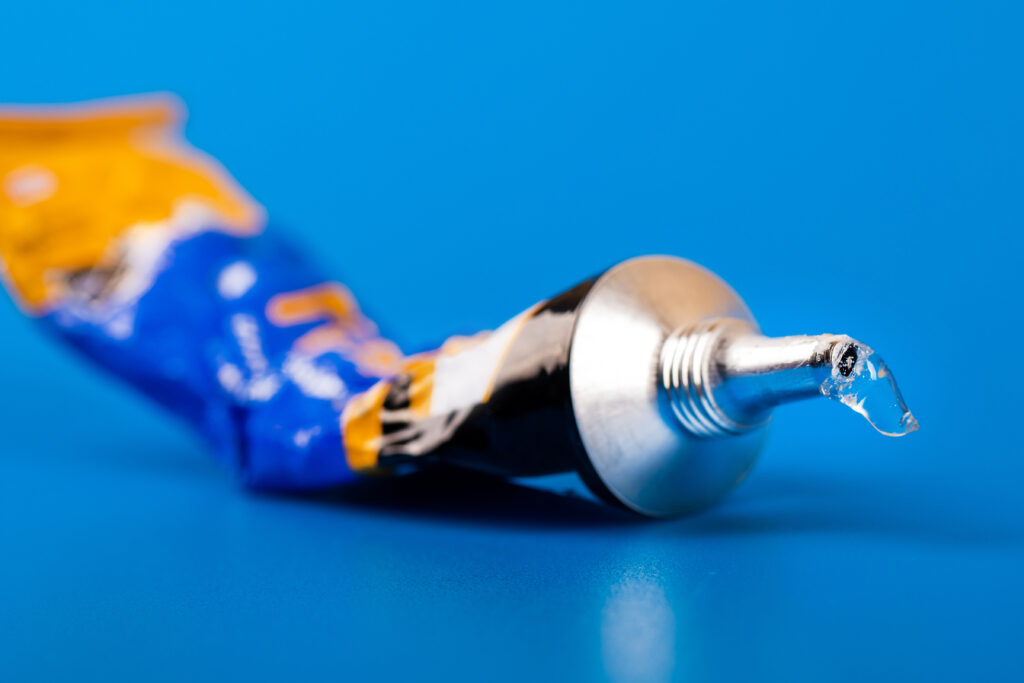
Polyurethanes (PUR) are versatile plastics used in products ranging from upholstered furniture and coatings to medical catheter tubing. Traditionally, their production relies on isocyanates, which are toxic and pose significant health risks. Researchers at the Fraunhofer Institute for Applied Polymer Research IAP have now developed a groundbreaking alternative. As part of the “CO2NIPU” (Non-Isocyanate Polyurethanes) project, they have replaced isocyanates with safe and sustainable dicarbamates.
Dicarbamates: Key to sustainable PUR production
Led by Dr Christoph Herfurth, the Fraunhofer team employs dicarbamates—synthesised from methanol and CO₂—as a safe substitute for isocyanates, making the production process not only safer but also more environmentally friendly. The method reduces greenhouse gas emissions and simplifies handling, eliminating the need for complex safety measures. Furthermore, the researchers have developed a modular system to precisely tailor material properties, such as elasticity or adhesive characteristics, through chain extenders and other additives.
Although the production process takes six to eight hours—longer than conventional methods—it allows for greater control, reducing waste and ensuring consistent quality.
Event Tip: Polyurethane Coatings
Uncover the versatility and durability of polyurethane coatings in industrial applications. This tutorial will explore polyurethane chemistry, advancements in hybrid formulations, applications in automotive and aerospace sectors, and sustainability considerations. Join in to deepen your knowledge of this resilient coating technology.”
Circular economy and industrial scalability
In addition to sustainable production, the project emphasises recycling methods for used PUR materials, such as foam, which can be repurposed into new products. Fraunhofer UMSICHT employs high-pressure techniques to incorporate CO₂ as a raw material for synthesis. The technology has already progressed from laboratory testing to industrial application: initial kilogram-scale quantities have been produced at Fraunhofer’s technical facility, with the Pilot Plant Centre PAZ in Schkopau preparing for larger-scale manufacturing.
The first application being tested is the production of biocompatible catheter tubing for the medical industry. Additionally, Fraunhofer IFAM is developing adhesives to ensure secure bonding between cannulas and tubing.
Source: Fraunhofer IAP, Sustainable polyurethane production without toxic isocyanates. Research Compact, February 2026.