News Application Areas
Interview: “Renewed interest in water-borne alkyds”
Dr Ioanna Tzortzi, Associate Specialist in Resins & Coatings Innovation at Perstorp, explains the reasoning behind the primary R&D focus areas in the water-borne coatings sector and how we might address the current limitations in performance.
What is currently the main focus in developing new water-borne coatings – new technologies or raw materials?
Dr. Ioanna Tzortzi: With the reduction or elimination of solvents, formulators need to maximise the intrinsic properties of water-borne resins and additives to overcome performance challenges. In resin design, the focus is both on developing new technologies and adapting established resins for water-based use. For example, there is renewed interest in water-borne alkyds because of their high bio-based content and low VOC potential. This has led to improvements in drying time, gloss, adhesion, and corrosion resistance. However, solvent-borne alkyds still dominate the market, as there are still major challenges in emulsification methods and the choice of emulsifiers. These factors determine whether a stable water-borne alkyd emulsion can be formed and how this will affect the final coating properties. Alkyd resins also offer potential for hybrid solutions with other resin systems such as polyurethanes, acrylics, and epoxies, enabling new options for high-performance applications.
What is currently the biggest technical limitation for water-borne industrial coatings?
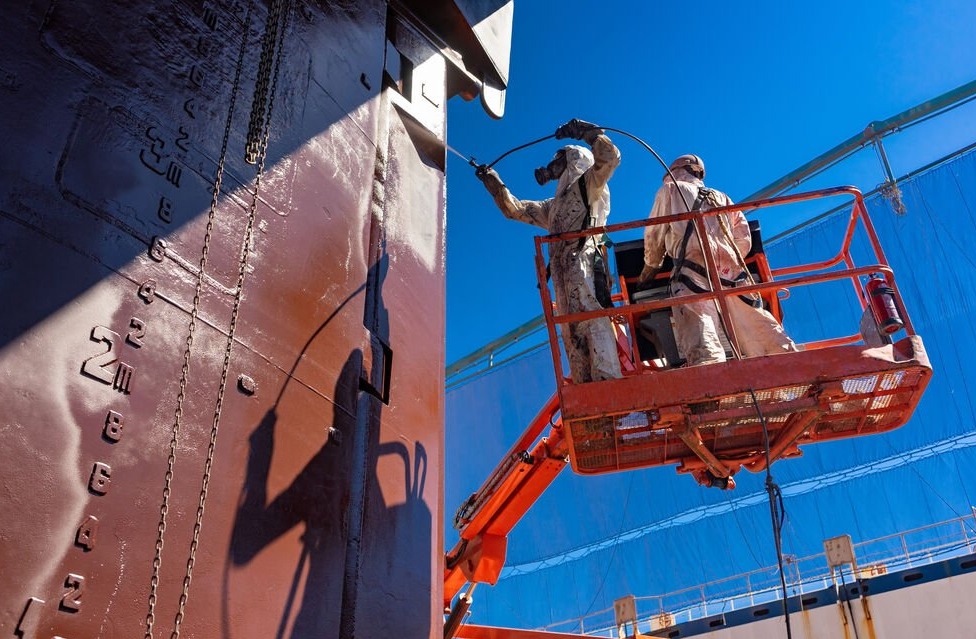
Dr. Tzortzi: The biggest limitation is still the less forgiving application window, along with performance challenges related to weather durability, adhesion, corrosion resistance, and chemical resistance. Water-borne coatings are already used in industrial applications such as automotive primers and clearcoats, metal components in appliances and machinery, wood and furniture coatings, and electronic devices. These applications benefit from controlled environments with appropriate temperature, humidity, and ventilation levels. However, higher application costs can make solvent-borne alternatives more attractive. For heavy-duty applications, coatings must withstand extreme humidity, temperature fluctuations, and constant immersion – requiring high protection against corrosion and chemicals, which remains challenging for water-borne systems.
How can the performance variations of water-borne coatings in different climates be addressed?
Dr. Tzortzi: Water-borne coatings are highly sensitive to climatic conditions, which affects application, durability, and performance. Hybrid resin technologies and multifunctional additives can help address these challenges by improving resistance to temperature fluctuations, humidity, and UV exposure. This could expand the application window and ensure consistently good film formation, performance, and durability under different climate conditions. Given varying environmental factors, climate-specific formulations and optimised application periods may also be necessary. Ongoing research is crucial to validate and further develop these approaches.