News Application Areas
Novel flame-retardant coating for wood surfaces

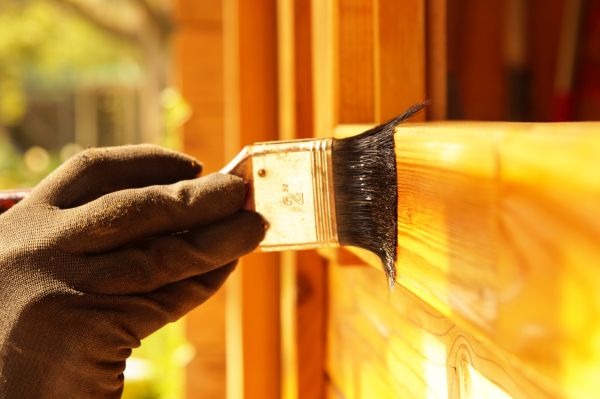
In a new work, an epoxy-modified silicon (SiR) coating was formed by the condensation of dimethyldiethoxysiloxane with 3-glycidoxypropyltrimethoxysilane (KH-560), while the resin cured by nitrogen-containing phosphorus flame-retardant (PTDP) curing agent. The flame-retardant coating (PTDP/SiR) has outstanding hardness, water resistance, solvent resistance and it is appropriate for utilising in wood surfaces.
Improved flame retardancy
Meanwhile, PTDP/SiR-1 exhibits obvious flame retardancy. The PTDP/SiR-1-coated spline received a UL-94 V-1 rating and a 31.0% LOI, compared to 26.0% and 21.5% for the control coating and uncoated splines, respectively. Compared with the control spline, the peak heat release rate decreased by 23%. The mechanism of improving the flame retardancy is due to a dense char layer, incombustible gas, and phosphorus-containing segment formed by pyrolysis. The combination of these factors improves the coatings flame retardancy.
The study has been published in Progress in Organic Coatings, Volume 170, September 2022.