News Coatings Technologies
Hydrogel antifouling coatings analysed by OCT in real time
A new study uses optical coherence tomography and rheometry to analyse how formulation and salinity influence the performance of xanthan gum-based hydrogel antifouling coatings. The findings provide guidance for developing durable marine coatings with reduced biocide content.
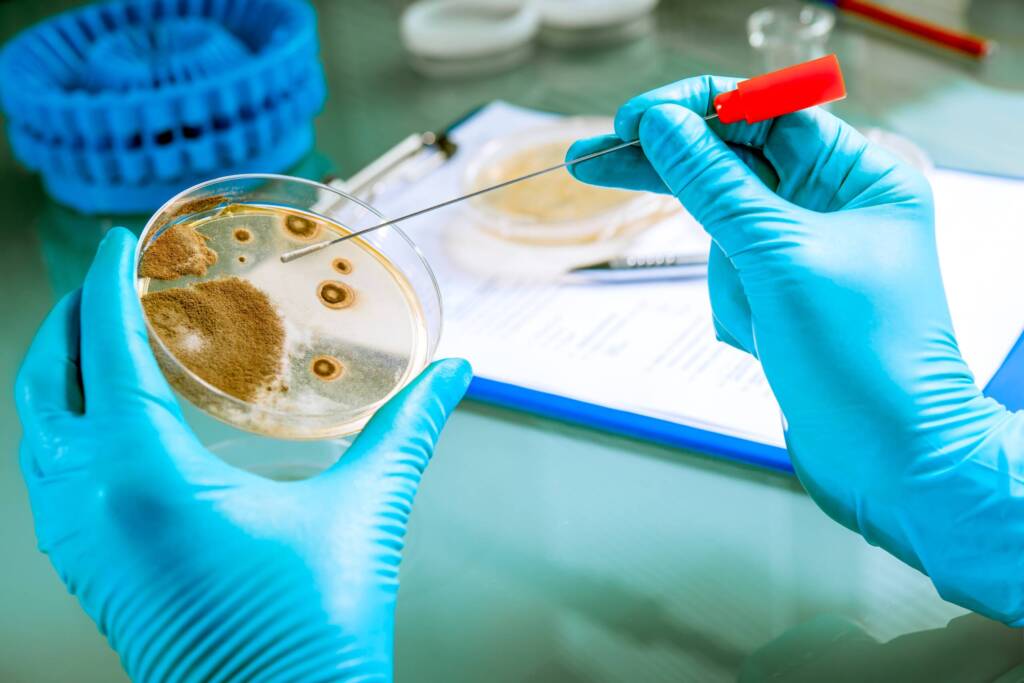
Xanthan gum (XG)-based hydrogel coatings have emerged as a promising strategy to reduce biocide use in marine antifouling systems by forming in-situ protective barriers upon contact with seawater. However, because these layers are thin, transparent and dry quickly, the effects of formulation and environmental factors on gel formation and durability have remained difficult to characterise. A recent study addressed this challenge by combining optical coherence tomography (OCT) with rheometry to monitor gel behaviour in real time.
The researchers evaluated three binder systems — an inert acrylic, a chemically active rosin and a chemically active silyl acrylic self-polishing system — while varying XG content, particle size and the PVC/CPVC ratio. Within the tested parameter space, an inert acrylic binder with a PVC/CPVC ratio of approximately 1.0, 10 vol.-% XG and particle sizes below 32 µm delivered the most favourable balance of hydrogel coverage, gel strength and coating integrity.
Reading tip:
European Coatings Handbook Explore the essential reference “”European Coatings Handbook,“” your go-to resource for in-depth knowledge on coatings formulation and application. Covering everything from raw materials to processing techniques, this handbook is indispensable for professionals seeking to deepen their understanding of the coatings field and optimize their formulations.
Influence of particle size, XG content and salinity
Higher XG contents produced thicker and stronger gels but also increased surface damage of the coating, whereas smaller particles generated smoother and more homogeneous gel layers. Gels formed from particles below 5 µm proved difficult to analyse by OCT and rheometry. An inverse relationship between gel thickness and gel strength was observed with varying formulation ratios, pointing to hydration-dependent states. Across all systems, gel strength decreased over immersion time even where thickness remained stable.
The chemically active rosin and silyl acrylic systems initially performed comparably to the inert acrylic reference, but after 15 days of immersion they swelled significantly, dissolved and collapsed, limiting long-term durability. Salinity also proved decisive: gels remained stable for 30 days at salinities of 1.8 wt.-% or higher, but degraded rapidly under lower salinity conditions, restricting the technology’s use to sufficiently saline waters. The results underline how formulation and environmental parameters jointly determine hydrogel performance and provide practical guidance for the development of durable, low-biocide marine coatings.
Source: Lindner, S. et al., Time-dependent gel formation analysis in hydrogel antifouling coatings: Influence of coating composition and environmental parameters. Progress in Organic Coatings (2026). https://doi.org/10.1016/j.porgcoat.2026.110227