News Coatings Technologies
Urea-modified silica sol enables self-healing steel coating
Researchers have developed a dual-autonomous self-healing composite coating for steel that combines nanoscale dispersion of a silicone-based healing agent with a reversible hydrogen-bonding network. The system delivers stable barrier performance in saline environments and repeatable healing without external stimuli.
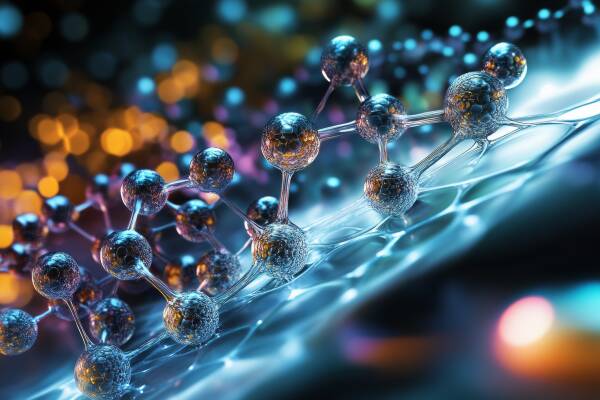
Combining mobile healing agents with rigid polymer matrices in self-healing anticorrosive coatings has long been limited by thermodynamic incompatibility. To overcome this, researchers introduced a molecular compatibilisation strategy based on urea-functionalised polysiloxane silica sol (Urea-SI) grafted onto an acrylic resin backbone. This architecture enables a uniform nanodispersion of methyl silicone oil (MSO), forming sub-100 nm healing reservoirs within the coating matrix.
The urea moieties simultaneously establish a reversible hydrogen-bonding network, allowing intrinsic self-healing to occur at room temperature without external stimuli. The dual mechanism integrates physical healing through MSO release with dynamic chemical recovery via hydrogen bonds, addressing the persistent trade-off between mechanical strength and healing efficiency.
Reading tip: Formulating High-performance Coatings
Looking to master the art and science of modern coatings formulation? The textbook Formulating High-performance Coatings by Martin Winkler and Ulrich Poth is your ultimate guide to understanding the complex world of coatings technology. From achieving stable color effects to ensuring robust corrosion protection, the book dives deep into the chemical and physical principles that define the performance of coating systems.
Stable barrier properties and repeatable healing
The optimal formulation containing 5 wt% Urea-SI delivered balanced mechanical robustness and self-healing performance. Electrochemical impedance measurements showed |Z|₀.₀₁Hz values exceeding 7 × 10⁹ Ω·cm² after 27 days of immersion in a 3.5 wt% NaCl solution. The corrosion current density was two orders of magnitude lower than that of control systems, and the coating sustained at least five healing cycles.
Compared with conventional microcapsule-based and dynamic covalent network coatings, the strategy offers improved scalability and long-term stability. The authors highlight its potential for protective applications in demanding marine and industrial environments, providing a generalisable molecular engineering principle for autonomous anticorrosive coatings.
Source: Lin, Z. et al., Dual-autonomous self-healing composite coating for steel with enhanced corrosion resistance: Mechanism and performance evaluation. Progress in Organic Coatings, 110119 (2026).