News Coatings Technologies
POSS-acrylic hybrids deliver durable water-borne metal coatings
Researchers have synthesised a reactive acrylate-functional POSS monomer and covalently integrated it into a high-solid water-borne acrylic matrix. The resulting hybrid coatings combine mechanical reinforcement with ultralow corrosion current densities and long-term barrier protection on metal substrates.
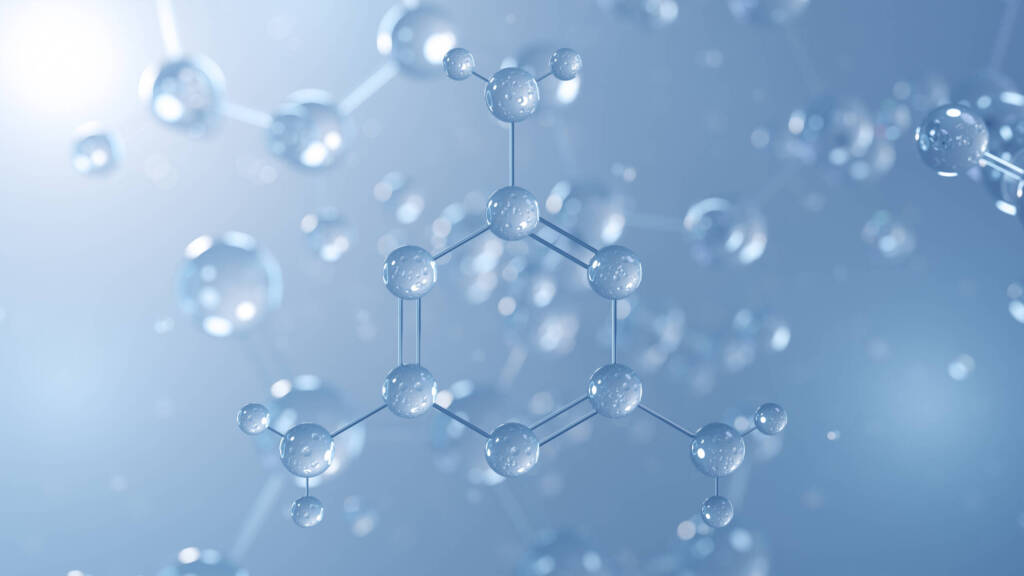
Developing water-borne coatings that combine high performance with environmental compliance remains a challenge, as organic film flexibility must be balanced with inorganic durability. A research team has addressed this by synthesising a reactive acrylate-functional polyhedral oligomeric silsesquioxane (PIB₇AC₁, abbreviated PAC) and covalently incorporating it into a high-solid acrylic network via in situ mini-emulsion polymerisation. The molecular-level hybridisation embeds the Si-O-Si nanocage directly within the polymer backbone, producing a densely crosslinked yet flexible network with improved film cohesion and interfacial adhesion.
The covalent integration strategy ensures that the inorganic nanocage is uniformly distributed throughout the matrix, avoiding the phase separation typically associated with physically blended fillers.
Reading tip: Resins for Water-borne Coatings
Expand your knowledge and get fully acquainted with the various aspects of water-borne coatings – from production to properties to special features of their use! With the slow change from solvent-borne resins and coatings to water-borne coatings “Resins for waterborne coatings” is a must-read for any formulator wanting to expand their knowledge.
The authors discuss important aspects of the “solvent-to-water-transition” of the past 40 to 50 years, take a deep dive into the key aspects and theories behind the production, properties and applications of these resins as well as providing an overview of how they are currently used in water-borne coatings.
Balanced mechanical and barrier performance
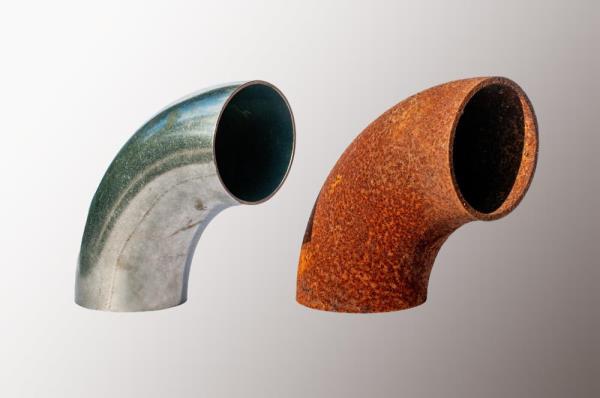
The optimised coating containing 1 wt% PAC delivered a tensile strength of 5.4 MPa, a pencil hardness of 5H and a reduction in abrasion loss of more than 50 %, while maintaining excellent flexibility and an adhesion strength of 2.7 MPa. The incorporation of POSS also established a continuous inorganic diffusion barrier, leading to an ultralow corrosion current density of 5.84 × 10⁻¹¹ A/cm² and a high polarisation resistance of 3.2 × 10⁷ Ω·cm².
Thermal stability and scalability
Thermal stability increased with rising POSS content, attributed to the formation of a silica-enriched char layer during decomposition. According to the authors, the rationally designed, covalently integrated POSS-acrylic framework synergistically enhances thermal robustness, mechanical durability and long-term corrosion protection. The approach offers a scalable and sustainable route to next-generation high-performance water-borne coatings for metal protection applications.
Source: Joshi, S. S. K. et al., Reactive acrylate-functional POSS-modified waterborne acrylic coatings with enhanced hardness, adhesion, abrasion and long-term corrosion resistance. Progress in Organic Coatings (2026), https://doi.org/10.1016/j.porgcoat.2026.110040.