News Coatings Technologies
Polydopamine-graphene boosts anticorrosion performance of waterborne zinc-rich epoxy coatings
A new polydopamine-modified graphene (PDA-G) filler significantly enhances the adhesion, dispersibility, and corrosion resistance of waterborne zinc-rich epoxy coatings (WZEP). The innovation demonstrates extended cathodic protection and exceptional durability in harsh environments, offering promising applications for marine and industrial steel protection.
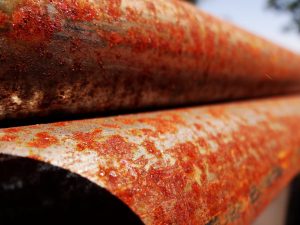
Researchers have developed a novel polydopamine-modified graphene (PDA-G) material that significantly enhances the performance of waterborne zinc-rich epoxy coatings (WZEP) for corrosion protection of steel structures. The study, published in Progress in Organic Coatings, highlights the potential of PDA-G to address limitations in traditional zinc-rich coatings, such as weak adhesion, poor dispersibility, and galvanic corrosion.
The PDA-G filler, synthesised through a simple one-step process, improves the compatibility between graphene and epoxy resin, resulting in better adhesion and reduced sedimentation. PDA-G/WZEP coatings demonstrated an 80 % increase in adhesion strength compared to unmodified WZEP coatings, even maintaining high adhesion levels after 30 days of saline immersion.
Extended cathodic protection and salt spray durability
The study emphasises the PDA-G/WZEP coating’s ability to deliver long-term cathodic protection. During a 45-day immersion test in a 3.5 % NaCl solution, the coating’s open-circuit potential (OCP) remained below −0.80 V, indicating sustained protection against corrosion. Electrochemical impedance spectroscopy (EIS) revealed that the charge transfer resistance (Rct) and polarisation resistance (Rp) of the PDA-G/WZEP coating remained significantly higher than those of traditional WZEP and graphene-enhanced WZEP coatings.
Moreover, the coating withstood 1.200 hours of salt spray testing without blistering or substrate corrosion, significantly outperforming other coatings. Its superior performance is attributed to the PDA-G material’s ability to mitigate galvanic corrosion, optimise zinc utilisation, and enhance the density of the coating matrix.
Reading tip
The EC Tech Report Waterborne Protective Coatings gives you an extensive up-to-date bundle on protective coatings, focusing on water-borne solutions, with articles, videos and other content handpicked by the European Coatings Team. In addition to cutting-edge technical articles, the Tech Report is rounded off with valuable market insights and key fundamentals on water-borne protective coatings.
Practical implications for severe environments
By reducing the zinc content to 70 % while maintaining robust anticorrosion properties, the PDA-G/WZEP coating also addresses environmental and health concerns linked to high zinc concentrations. With its long-lasting protection and reduced need for volatile organic compounds (VOCs), the technology offers a sustainable alternative for protecting marine and industrial steel structures exposed to harsh conditions.
This innovative approach highlights the synergy between bio-inspired polymers and advanced nanomaterials, paving the way for further developments in eco-friendly protective coatings. The researchers note that future work should explore optimising the ratio of polydopamine to graphene and further investigating the galvanic corrosion mechanisms.
Source: Liu, B., Kong, G., Su, G., Che, C., & Lai, D. (2025). Research on the mechanism of improving the corrosion resistance of waterborne zinc-rich coatings by polydopamine-modified graphene. Progress in Organic Coatings, 109805. https://doi.org/10.1016/j.porgcoat.2025.109805