News Coatings Technologies
Eco-friendly antifouling coatings: a review of innovations and challenges
A comprehensive study explores advancements in marine antifouling coatings, focusing on adhesion mechanisms, current technologies, and the urgent need for sustainable solutions to mitigate environmental and economic impacts.

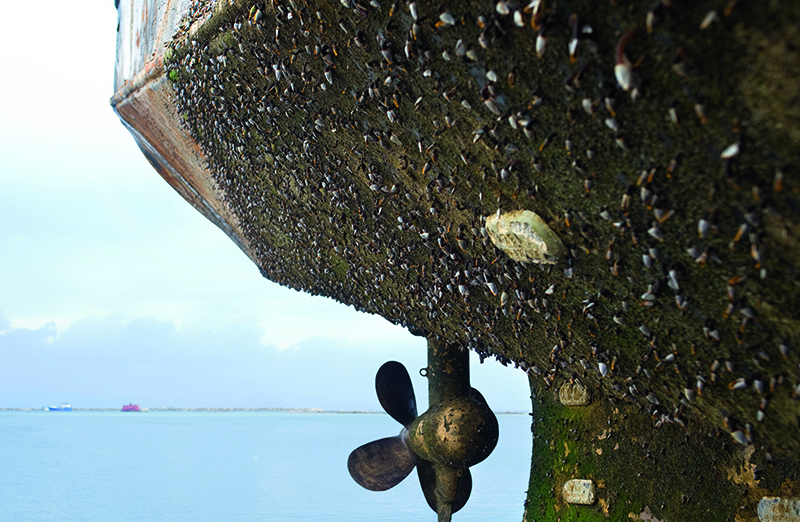
Marine biofouling, the accumulation of microorganisms, plants, algae and animals on submerged surfaces, presents a significant challenge for offshore structures and vessels worldwide. It contributes to increased drag, reduced fuel efficiency, and accelerated material degradation, resulting in substantial economic losses and environmental repercussions. Antifouling coatings have emerged as an essential technology, providing protective layers that prevent biofouling and reduce maintenance costs.
Early formulations, primarily biocide-based, proved effective but raised severe concerns over marine ecosystem stability and human health due to their toxic effects on non-target organisms. These issues have driven a shift towards eco-friendly alternatives that balance efficiency with environmental responsibility.
Reading Tip: Marine Coatings
Stay updated on the latest in Marine Coatings with theEC Tech Report! This multimedia report covers key developments in anti-fouling formulations, sustainable epoxy binders, and graphene applications. It also includes market insights and trends, along with access to expert articles and conference content. Save time on research and get all the essential updates curated by the EC Tech editorial team. A must-read for industry professionals!
Advancing sustainable antifouling technologies
The review, authored by Hao et al., examines the adhesion mechanisms underlying marine biofouling and the performance parameters used to evaluate antifouling coatings. The researchers highlight the development of major coating types, including silicone-based fouling release coatings, self-polishing copolymers, and advanced nanotechnology-enhanced solutions.
While these innovations have shown promise, challenges remain in achieving long-term efficacy without environmental harm. The authors emphasise the need for interdisciplinary research to develop coatings that combine superior antifouling performance with minimal ecological impact. Future directions include exploring biomimetic designs, enhancing durability, and integrating renewable materials into antifouling formulations.
Source: Hao, R. et al., Strategies and challenges in marine antifouling coatings: current innovations and future outlook. J. Coat. Technol. Res. 23, 77–101 (2026).