News Raw Materials
THFM facilitates bio-based hydrophobic waterborne coatings
Researchers from the University of the Basque Country have demonstrated that tetrahydrofurfuryl methacrylate improves the incorporation of hydrophobic biobased monomers in waterborne protective coatings while enhancing their water resistance.
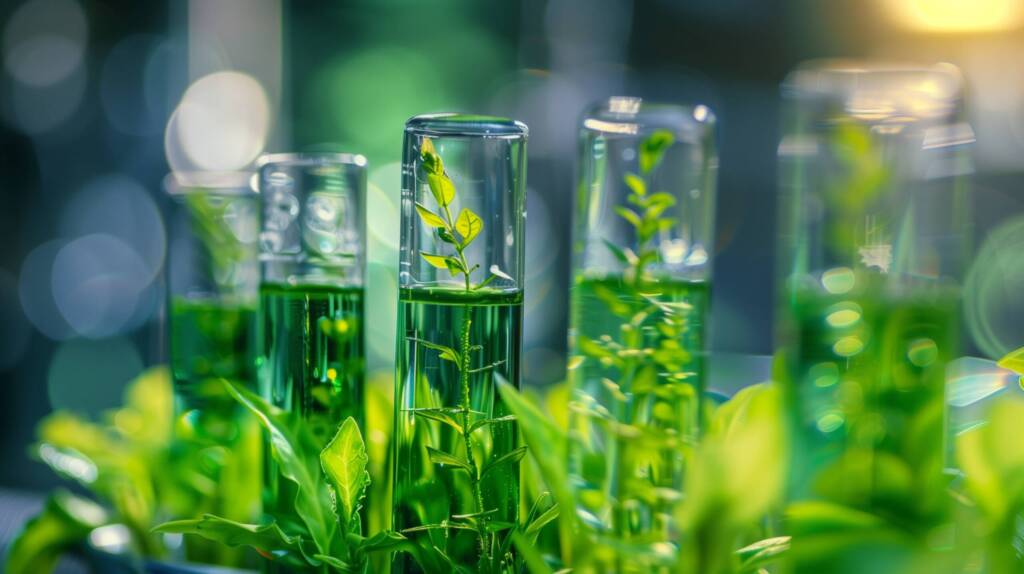
As sustainability demands increase, the use of bio-based monomers in waterborne coatings is gaining importance. The study investigated the emulsion polymerisation of three hydrophobic, bio-based methacrylates: 2-octyl methacrylate (OMA), tetrahydrogeraniol methacrylate (TGM), and tetradecyl methacrylate (TDM). However, polymerisation of these monomers is challenging due to diffusion limitations, and the resulting homopolymers displayed limited properties.
Tetrahydrofurfuryl methacrylate (THFM), a harder and more hydrophilic bio-based monomer, proved to be the key. Its incorporation during copolymerisation facilitated the integration of hydrophobic monomers. This enabled the production of copolymer latexes with high bio-based content of 61–71 % and solid contents of up to 40 %.
Reading tip: Corrosion protection coatings
The book “Anticorrosive Coatings: Fundamentals and New Concepts” brings together all the disciplines involved in the creation and use of corrosion protection coatings for metals. It presents the latest insights into the quality and chemistry of surfaces, the proper way to prepare them by conversion treatment, the function of resins and anticorrosion pigments in paints, and novel concepts in corrosion protection. As an added bonus, all the standards and directives mentioned in the text are grouped together in their own chapter for a better overview.
Superior water resistance compared to oil-based systems
Two copolymer formulations showed particularly promising results: OMA/THFM (87/13 wt%) and TGM/THFM (41/59 wt%). Both demonstrated good film-forming ability, suitable mechanical properties, and superior water resistance compared to a petroleum-based methyl methacrylate/butyl acrylate copolymer. The findings highlight how THFM enables the successful incorporation of hydrophobic bio-based monomers into waterborne protective coatings, paving the way for more sustainable formulations with improved performance.
Source: Rubio, S., Leiza, J. R., Barquero, A. & González, E., Tetrahydrofurfuryl methacrylate helps to produce bio-based hydrophobic waterborne protective coatings by emulsion polymerization. Prog. Org. Coat. 203, 109159 (2025).