News Application Areas
“By eliminating additives, we reduce the ecological footprint”
Zuelch Industrial Coatings is working on an additive-free coating. This not only supports the company’s commitment to the Green Deal in multiple ways, but also makes it less dependent on raw material availability, as Samuel Menacher explains. Damir Gagro
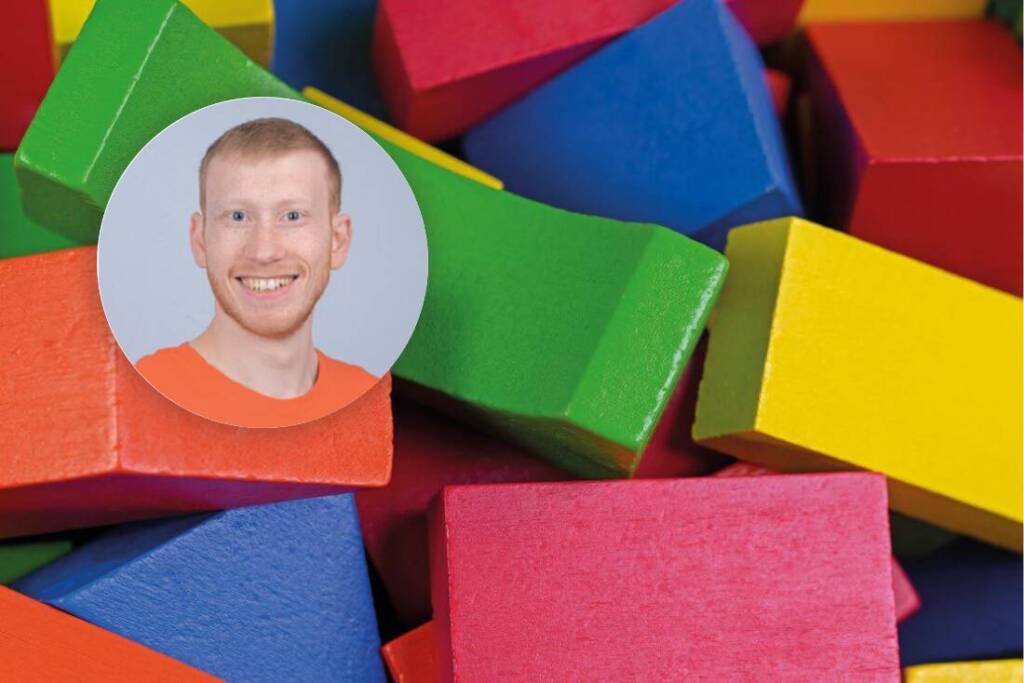
You are currently working on the development of an additive-free coating. How did this come about, and who is involved?
Samuel Menacher: As part of the partnership programme “Plasma for Life” at the University of Applied Sciences and Arts (HAWK), the idea emerged to combine plasma technology with the coating of children’s toys. The effect of plasma on wood had already been the subject of research at that time. In addition to excellent wetting with water, results had also been published showing improved adhesion properties of adhesives. The next step was to examine the influence of plasma treatment on the coating of lacquer systems.
Since the end of 2022, the project funded by the German Federal Environmental Foundation (DBU) has been running (Ref.: 38093/01) under the title “PlasAdd – Development of an innovative coating system with the help of plasma pre-treatment to substitute conventional additives” in cooperation with HAWK. The overarching aim is to develop a sustainable additive-free coating system that contributes to resource conservation.
How does an additive-free coating contribute to achieving your sustainability goals and making your production processes more sustainable?
Menacher: Additives usually contain chemical compounds that are used for production-technical reasons. By eliminating additives, we reduce the ecological footprint and at the same time increase sustainability. This is a strong argument, especially in the context of current discussions about sustainability, the Green Deal and raw material availability. An additive-free coating also reduces the risk of being affected by supply shortages of additives. Raw materials such as zinc or uranyl compounds could be relevant here.
Why did you decide to start with this coating for wooden toys?
Menacher: In addition to industrial and automotive coatings as well as special products, we also specialise in niche applications. In the field of mass coating of small parts, we offer lacquers and stains for drum coating, with the cold drum for coating children’s toys accounting for a significant share.
Children’s toys must meet high requirements – mechanical durability, sweat and saliva resistance, chemical resistance. Thanks to innovative plasma pre-treatment, we can meet these high requirements even without additives. And an additive-free coating for wooden toys also addresses an important sustainability aspect.
When is the project phase expected to be completed and the coating “market-ready”?
Menacher: The project will run until 31 May 2025. By then, we aim to have developed a functional coating based on an additive-free system that can also be used in larger production volumes. We expect the plasma pre-treatment to enable a very homogeneous coating, ensuring a stable large-scale production process.
In which segments/application areas do you plan to reduce the use of additives next?
Menacher: The findings from this project form an important basis for further applications. It is conceivable, for example, to reduce additives in industrial coating systems, in the automotive industry or in the field of special coatings. An expansion of the project to other application areas is already being considered or is in preparation.