News Raw Materials
CO₂-based δ-lactone enables functional copolyesters under mild conditions
A new catalytic approach enables the chemoselective ring-opening copolymerisation of δ-lactone from CO₂ and butadiene at room temperature, paving the way for advanced functional polyesters.
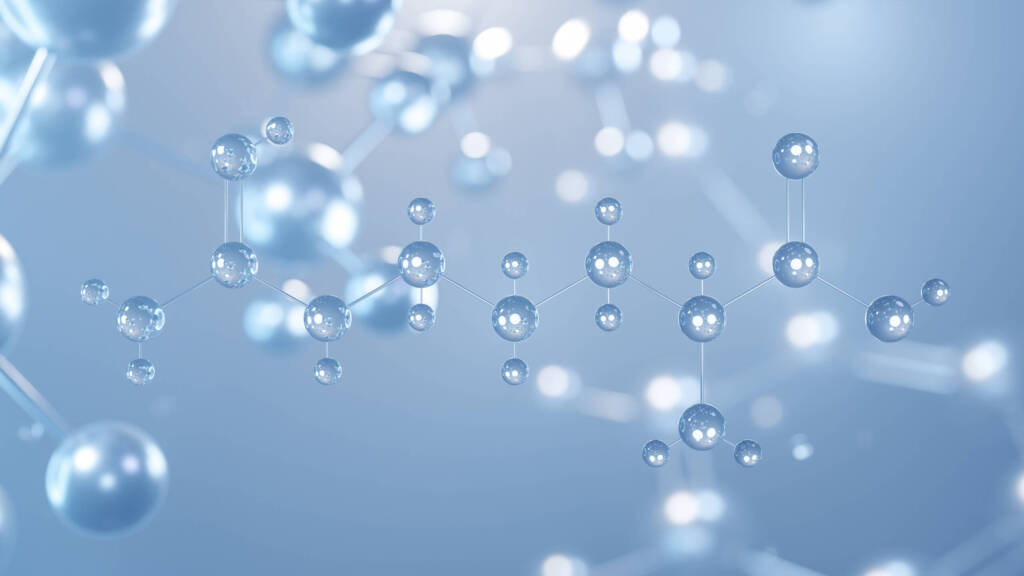
Carbon dioxide is a promising feedstock for producing valuable chemicals. Telomerisation of CO₂ with 1,3-butadiene yields 3-ethylidene-6-vinyltetrahydro-2H-pyran-2-one (EVP), an α,β-unsaturated cyclic ester suitable for various polymerisations. However, the chemoselective ring-opening polymerisation (ROP) of EVP has been limited by low conversion and harsh conditions, such as −50 °C.
A research team has now developed an organic base/urea catalytic system to efficiently perform the ROP of EVP with trimethyl carbonate (TMC) at room temperature, achieving 38 % EVP conversion and producing linear poly(TMC-co-EVP) copolymers.
Reading tip: Polyester and alkyd resins
“Polyester and Alkyd Resins” belongs to the most diverse and important material classes of paint chemistry and their usage as binders has been established for a long time. This standard work goes into detail on the composition, structure and properties of these important binder groups and subjects previous findings in that field to a critical review. It shows different precise calculation approaches in modern coatings development, ways to formulate polyester and alkyd resins in experimental designs and how to vary them systematically. A practice- and future-oriented reference book that should not be missing in any laboratory!
Extension to commercial PLA
Kinetic studies and structural characterisation revealed that the copolymerisation proceeded via a transesterification mechanism. The synthesis of poly(TMC-co-EVP) was also successfully achieved directly from PTMC homopolymer and EVP. Notably, this strategy was extended to commercial polylactide (PLLA), enabling the preparation of functionalised poly(LLA-co-EVP) copolyesters with enhanced properties.
This approach offers an efficient pathway for using EVP under mild conditions to design advanced CO₂-based materials.
Source: Polymer Chemistry, Issue 30, 2025