News Coatings Technologies
Silane-modified polysulfide adhesives improve solvent resistance
A new silane-modified one-component polysulfide adhesive achieves significantly enhanced mechanical performance and solvent resistance—offering a promising solution for demanding sealing applications such as aircraft fuel tanks.
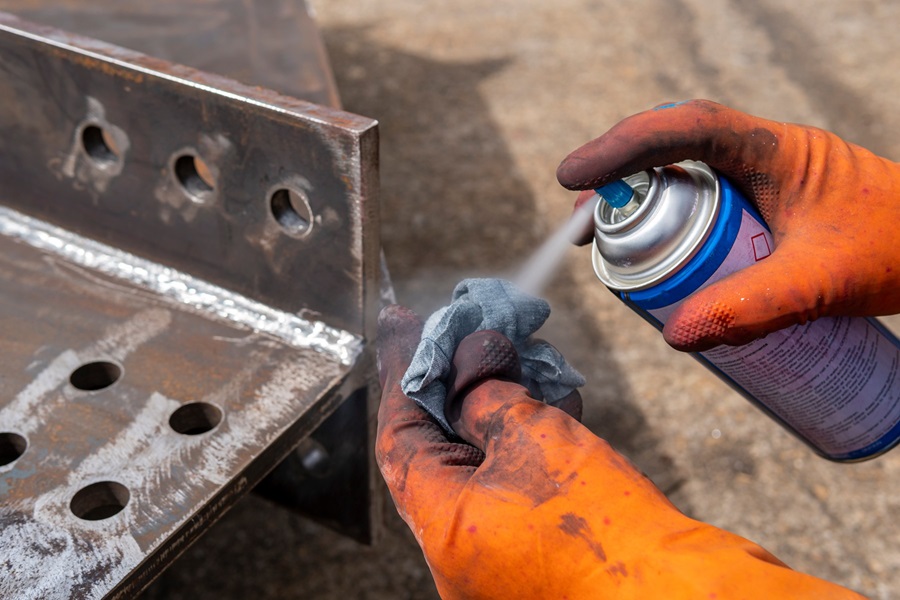
Researchers have developed a new generation of one-component polysulfide adhesives with improved resistance to solvents and enhanced mechanical properties. These formulations are based on diisocyanate-terminated prepolymers and 1,4-butanedithiol (BSO), which normally enable easy moisture curing but suffer from limitations due to the formation of polysulfide–urea groups.
To address this, silane side chains were introduced using a second chain extender—(3-(2-aminoethyl)aminopropyl)trimethoxysilane (AEAPTMS)—in varying proportions with BSO. Among the tested formulations, a 7:1 mass ratio of BSO to AEAPTMS (labelled Si-OCPS3) delivered the most balanced performance profile.
Event tip: Sealants and adhesives
The EC Seminar “Composition of Reactive Sealants and Adhesives” will take place online on 28 October 2025. What makes adhesives and sealants perform reliably – and how can their properties be adjusted through formulation? This seminar provides a thorough introduction to reactive systems, covering chemical structures, functional groups and formulation techniques. Through practical formulation tips, guide recipes and patent examples, participants will gain the skills to confidently formulate and evaluate high-performance adhesives.
Improved strength and solvent barrier properties
Si-OCPS3 exhibited a 20.5 % reduction in oil absorption and a 43.6 % reduction in water uptake over 21 days, compared to the unmodified version. At the same time, tensile strength increased to 17.34 MPa in oil and 15.67 MPa in water, outperforming the unmodified system (Si-OCPS0).
The improvements are attributed to enhanced interfacial interactions and suppression of Si–O–Si crosslinking, which typically limits flexibility. The results suggest that silane modification offers a viable route to overcoming the durability limitations of traditional polysulfide adhesives, particularly in challenging environments such as aerospace applications.
Source: Polymer Chemistry, Issue 24, 2025, Royal Society of Chemistry