News Coatings Technologies
New process for breathable, antibacterial polyurethane-based synthetic leather
A research team has developed a novel multifunctional synthetic leather that offers breathability, moisture management, antibacterial activity, UV and weather resistance – without compromising mechanical strength.
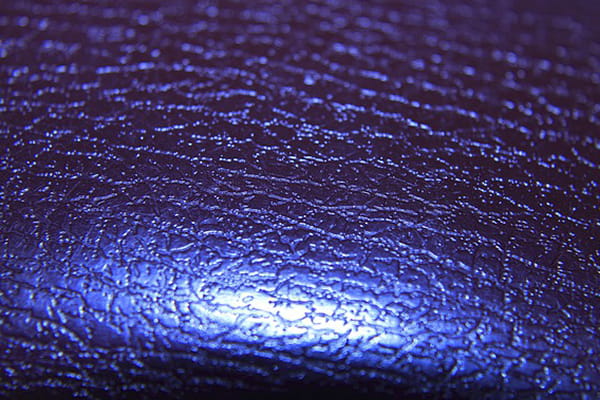
The team led by Xue Tian and colleagues reports in Progress in Organic Coatings on the development of a new water-borne polyurethane (WPU) synthetic leather combining outstanding properties: breathability, moisture permeability, antibacterial activity, UV resistance, thermal insulation and high mechanical strength. This was achieved by incorporating lignin-hybrid hollow silica spheres (LHHSs) into a WPU coating applied to sea-island microfibre synthetic leather.
The hollow structure of the LHHSs enhances breathability and moisture transport, while lignin hybridisation provides UV absorption and antibacterial performance. Hydrogen bonding between the lignin’s hydroxyl and sulfonic acid groups and the amide bonds of the polyurethane matrix ensures homogeneous dispersion of the functional additives without compromising mechanical properties.
Reading tip: Functional Coatings
The EC Tech Report “Functional Coatings” gives you an up-to-date bundle on functional coatings with articles, videos and other handpicked content. In addition to technical articles about the latest technical developments, this all-in-one multi-media pack is rounded off with valuable market insights and important fundamentals about functional coatings formulation.
Outstanding performance values achieved
The newly developed material, Multifunctional Waterborne Polyurethane Microfiber Leather (MWPU-MFL), demonstrates remarkable performance: breathability increased by 194.39 % to 193.39 mm/s, while moisture permeability rose by 138.7 % to 4,922.9 g/m²·24 h. The UV protection factor (UPF) reached an exceptional 1,600 – far above the commercial standard of 50. In antibacterial tests, MWPU-MFL achieved a 97.8 % reduction of Escherichia coli and a 95.0 % reduction of Staphylococcus aureus. The mechanical strength was recorded at 20 MPa, confirming the material’s suitability for engineering applications.
The results present a promising strategy for creating high-performance multifunctional coatings for synthetic leather, opening new opportunities in fields such as textiles, automotive interiors and technical protective clothing.
Source: Progress in Organic Coatings, Volume 200, March 2025, 109021