News Application Areas
Lignin in marine coatings: low anti-fouling effect despite promising approaches
Unmodified kraft lignin was considered a promising candidate for bio-based antifouling coatings. A recent study now shows: its effect in a maritime environment is limited – and challenges previous assumptions.
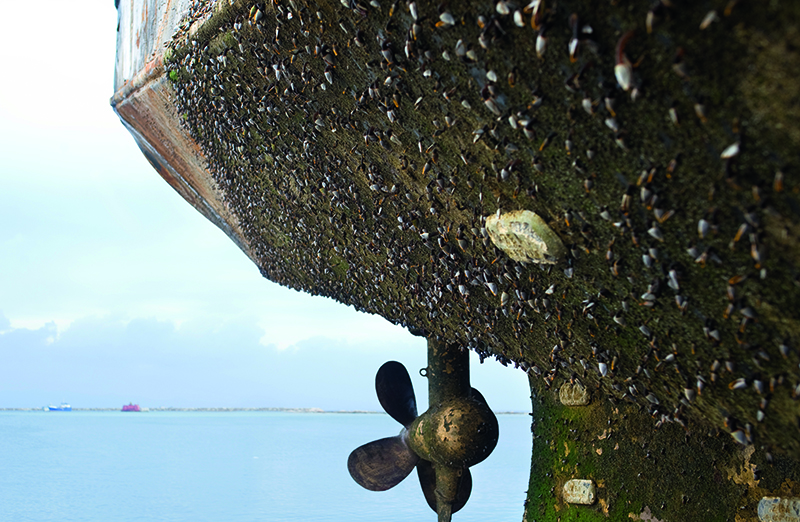
An international research team investigated the potential of unmodified kraft lignin as a functional filler in water-based coatings with antifouling properties. The lignin was incorporated into the formulations at a concentration above the critical pigment volume concentration to enable direct interaction with organisms found in seawater. The incomplete wetting of the lignin particles by the binder was intended to promote the release of bioactive substances.
All the systems developed were water-based to avoid the use of volatile organic compounds. Initial laboratory tests indicated potential efficacy against biofouling. However, field tests at the CoaST Maritime Test Center yielded a different result: the coated substrates showed hardly any antifouling effect, which challenges the original hypothesis of direct interaction between lignin and organisms.
Reading tip: Bio-based coatings
The EC Tech Report “Bio-based Coatings” is a hand-picked compilation of all the key aspects concerning bio-based coatings, offering the latest technical developments. Leading R&D experts present their various binder developments, how binders can be produced sustainably and also how the performance of your coatings can be optimised. Exclusive market insights and data as well as an impressive package of digital bonus material round off this Tech Report.
Mechanical weaknesses due to high lignin concentration
Another result of the study concerns mechanical stability: higher lignin contents improved the probability of contact with marine organisms, but at the same time significantly impaired the mechanical properties of the coatings. This considerably limits the practical applicability of the concept.
Despite the disappointing field results, the team of authors sees the presented formulation as a possible starting point for further research into bio-based fillers. The use of lignin as an environmentally friendly alternative in coating systems remains a much-discussed topic – however, the mechanisms of action and material compatibility require further understanding.
Source: Journal of Coatings Technology and Research, Volume 21, Pages 993–1003, (2024)