News Raw Materials
CO₂-binding alcohols open new pathways for PVC upcycling
Researchers have developed an innovative approach to functionally upgrade polyvinyl chloride (PVC) using CO₂-binding alcohols. The study provides valuable insights for more sustainable recycling processes.
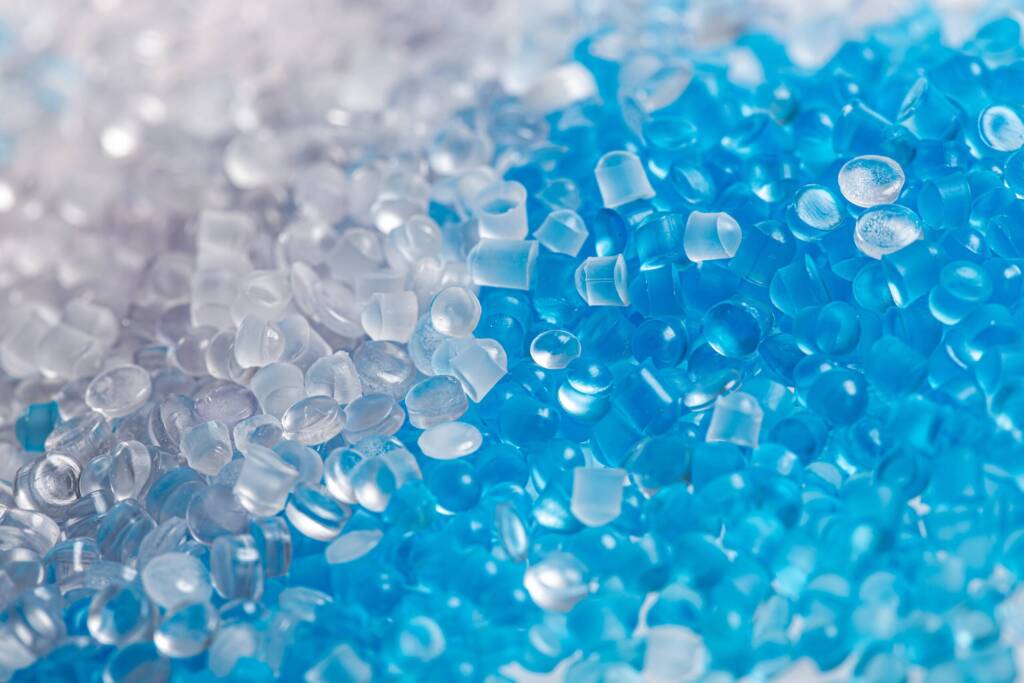
Polyvinyl chloride is one of the world’s most widely produced plastics, yet recycling remains a major challenge due to its high chlorine content and limited compatibility with standard processes. A team from the University of Mons has now explored the use of CO₂-binding alcohols (CO₂BALs) to chemically modify PVC, paving the way for improved upcycling.
The research focused on 1,5,7-triazabicyclo[4.4.0]dec-5-ene (TBD)-based CO₂BALs as nucleophiles for PVC functionalisation. The influence of solvent polarity, conversion rates and reaction times on the substitution-to-elimination ratio was systematically investigated.
Reading tip: Understanding Coatings Raw Materials
Build a solid foundation in coatings raw materials with “Understanding Coatings Raw Materials”. Explore the properties, functions, and selection criteria for key raw materials used in coatings formulations. Enhance your ability to design coatings with tailored properties and improved performance.
High selectivity and thermal stability
Although the substitution degree remained below 10 wt %, an impressive SN2/E2 selectivity of 94/6 was achieved. Using ¹H-NMR, FT-IR, SEC and TGA, the team confirmed successful grafting of carbonate groups and observed trends in thermal stability. However, CO₂BAL stabilisation in polar solvents may limit reactivity.
To overcome this challenge, alternative approaches such as flow chemistry are being considered to improve substitution efficiency. Overall, this work demonstrates the potential of CO₂-based strategies to bridge the gap between polymer upcycling and green chemistry.
Source: Delcorps et al., Polymer Chemistry, Issue 25, 2025