News Raw Materials
Bio-based copolyesters with improved degradability and toughness
A Chinese research team has developed novel bio-based copolyesters based on furandicarboxylic acid. These not only exhibit improved toughness but also accelerated hydrolytic degradability – a decisive advance for sustainable material applications.
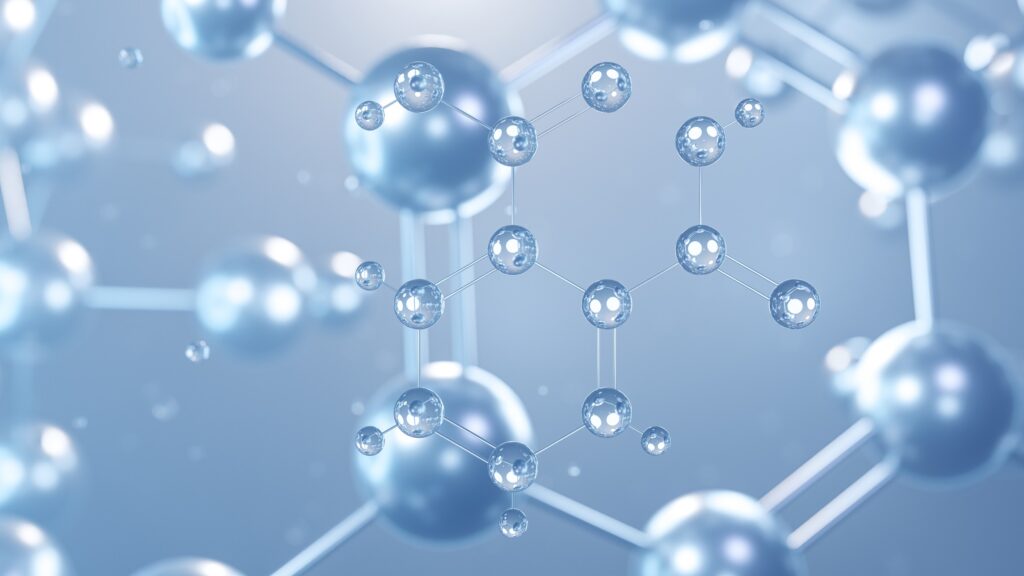
Poly(hexamethylene 2,5-furandicarboxylate) (PHF) is considered a bio-based polyester with promising properties – from good barrier values to high thermal and mechanical stability. The research group led by Shiwei Feng and Zhaobin Qiu has now synthesised a series of novel copolyesters based on PHF, in which parts of the hexamethylene-based backbone have been replaced by diethylene glycol furandicarboxylates (DEGF).
The copolymers, known as PHDEGF, were produced using a two-stage melt polycondensation process and exhibited significantly altered thermal properties. With increasing DEGF content, the glass transition temperature increased, while the melting point decreased or disappeared completely at high contents. Mechanically, the significantly higher elongation of the samples with 20 to 65 mol% DEGF was particularly noticeable.
Reading tip: Polyester and alkyd resins
“Polyester and Alkyd Resins” belongs to the most diverse and important material classes of paint chemistry and their usage as binders has been established for a long time. This standard work goes into detail on the composition, structure and properties of these important binder groups and subjects previous findings in that field to a critical review. It shows different precise calculation approaches in modern coatings development, ways to formulate polyester and alkyd resins in experimental designs and how to vary them systematically. A practice- and future-oriented reference book that should not be missing in any laboratory!
Improved degradability in alkaline media
The results on hydrolytic degradability are particularly interesting in the context of environmentally friendly polymer formulations: in a strongly alkaline environment (pH 14, 37°C), the PHDEGF samples showed significantly faster decomposition than the reference material PHF. PHDEGF30 in particular – with around 20 mol% DEGF – achieved mechanical properties that are at least equal to those of commercial biodegradable polyesters such as poly(butylene adipate-co-terephthalate) or poly(butylene succinate).
The results underscore the potential of furandicarboxylic acid-based copolyesters as a sustainable alternative to conventional materials. Targeted molecular modification opens up new avenues for combining performance and environmental compatibility in polymer-based applications.
Source: Feng, S., Yang, H., Qiu, Z.: Novel biobased poly(hexamethylene-co-diethylene glycol furandicarboxylate) copolyesters with improved mechanical properties and hydrolytic degradation rates, in: Polymer Chemistry, Issue 18, 2025. DOI: 10.1039/D4PY00000J