News Markets & Companies
Peter Lacke: Two moves, one strategy
Peter Lacke’s twin moves – a new Huizhou facility and the takeover of Rickert GmbH & Co. KG – reveal a company repositioning itself for a broader, more technically demanding future. We recently asked David Peter, owner of Peter Lacke, about the reasons behind the decision to purchase Rickert, how this affects the company’s positioning in the market now and is likely to shape the development of the company in future. By Kenneth Beattie, contributing author

The Rickert acquisition represents a significant change of register. Where Peter Lacke has traditionally excelled at the aesthetic end of coatings – the look and feel of a premium surface – Rickert brings hard industrial muscle: corrosion protection, wear resistance, coatings engineered to survive rather than impress. The first question was therefore what the market opportunities of the acquisition are. “We are unlocking additional market opportunities in segments where functional, high-quality surface solutions are in strong demand”, David Peter explained. This is where he sees potential and also envisages the company making significant further inroads into what he describes as “industries such as automotive, sanitary, medical technology, and industrial applications”.
Peter is in no doubt about where and how the company can put the strengths of its new acquisition to good use. This especially holds true in segments where the demand for functional, high-quality surface solutions is high. He pinpoints three key opportunities. Firstly, the company wants to expand its technical repertoire to encompass a much wider range of substrates and streamline the entire process for the benefit of its customers. “We will be able to offer our customers more comprehensive, end-to-end system solutions from a single source – ranging from decorative and tactile design to highly functional coatings across a wide variety of substrates.”
Secondly, he argues that expansion of technical capability and industrial reach is undoubtedly a huge benefit of the acquisition. Ultimately, Rickert brings a huge amount of expertise to the table which perfectly addresses many new applications in markets where the company’s sphere of influence had perhaps been slightly more restricted. “The integration of Rickert’s business units strengthens our position in markets where material diversity, design requirements, and technical performance converge” he points out. The third key opportunity is growth potential among existing and new customers who may be looking to break new ground and explore new avenues. Peter is confident he will now be able to help them develop “innovative, sustainable, and differentiated surface solutions.” His strategy of “expanding our capabilities, entering new application areas, and further reinforcing our position as a leading provider of advanced coating solutions” also has an undeniable logic.
It’s not all about size
From a competitive standpoint, his reasoning is also innately logical: a coatings supplier that has mastered aesthetics and functionality – in other words, both the surface appearance and inner workings – is a more difficult competitor to overlook. When asked how the Rickert acquisition changes the company’s competitive position in Europe and globally, Peter is in no doubt about the positive effects. “It enables us to expand our market presence, offer more comprehensive system solutions, and be even closer to our customers, while strategically enhancing our range of services and capabilities,” he observes. He also makes clear that this is not just about expanding market presence and finding new opportunities, consolidation of know-how is a key factor. “We are increasing our international impact by pooling expertise, leveraging economies of scale more effectively, and further consolidating our position in global competition,” he adds. His answer reflects a strong desire for greater technical facility and qualitative performance for the benefit of customers as opposed to wider expansion. “Importantly, this is not just about growing in size – it is about strengthening our ability to serve customers across Europe and worldwide with greater efficiency, innovation, and proximity.”
The Eastern dimension
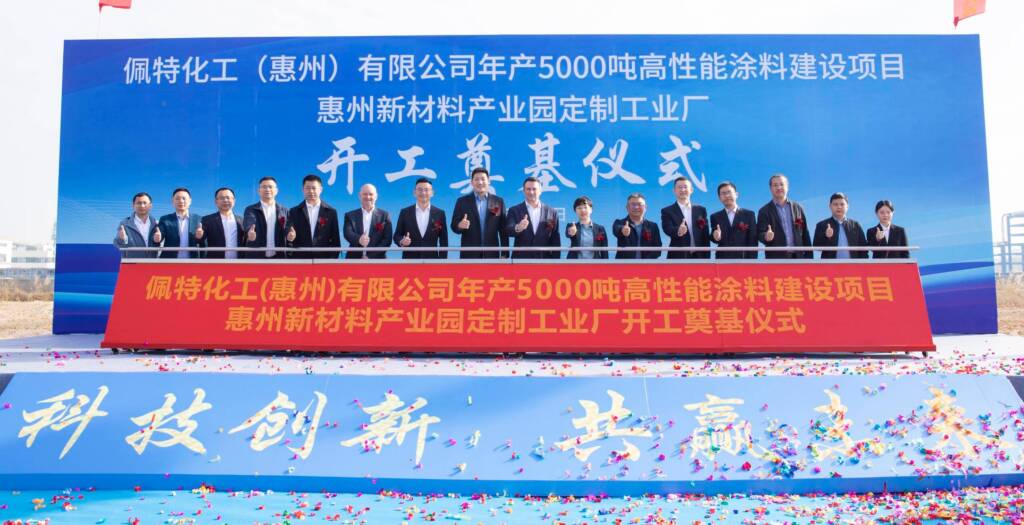
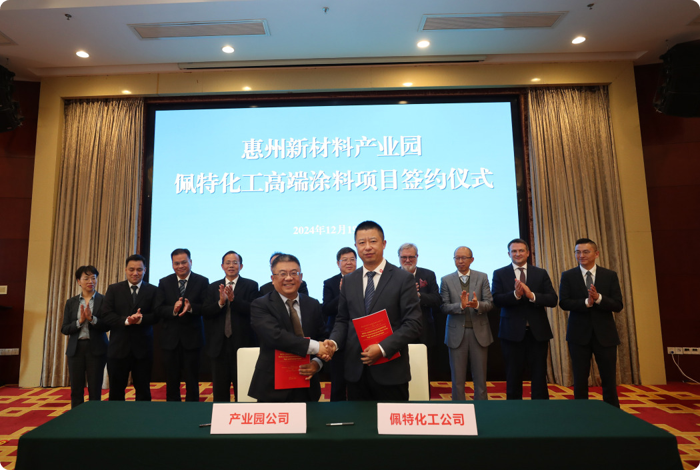
It could be argued that Peter Lacke’s Huizhou investment and its acquisition of Rickert are two sides of the same strategic coin: one establishes a high performance, sustainable coatings hub in South China and the other introduces deep metal and industrial coatings expertise into that global platform. Together, they reposition the company from a primarily automotive focused supplier to a broader industrial and renewables coatings specialist with real competitive weight in Asia. When asked what the acquisition of Rickert means in the context the Asian market, David Peter explains that Rickert technologies are already available in Shanghai. “The new plant in the south (to be completed in 2027) will allow us to expand our locally made product offering with more Rickert products”. It also gives the company a foothold in South China from where it can extend its reach into Southeast Asia.
Coating as a starting point, not a finishing touch
We asked how the extensive Rickert expertise is to be integrated into the company’s existing R&D programmes. Peter first of all explains the context: “Rickert is a global partner to leading foundries and machine builders – industries where the demands on corrosion protection for gearboxes and cast components are exceptionally high. Over the years, the company has built up outstanding expertise in coating technologies, spanning both solvent-based and water-based systems, with a clear focus on functional, protective applications rather than purely decorative finishes.”
He then goes on to reveal a hidden environmental argument in the acquisition, namely that coatings that genuinely extend the lifespan of complex metal components reduce the need for replacement parts and cut transport emissions. In other words, as far as he is concerned good surface protection goes hand in hand with sustainability. “Effective corrosion protection extends the lifespan of complex, resource-intensive components, reducing the need for replacement parts and helping to save energy as well as transport-related emissions,” he explains.
Another very important strategic aspect of this acquisition is that the Rickert expertise can be seamlessly integrated into existing development activities at Peter Lacke. “Its know-how in metal and functional coatings not only helps optimise current processes but also opens the door to entirely new applications. A key success factor lies in involving coating technology at an early stage of product development – embedding it as a functional element from the very beginning, rather than treating it as a final step.”
Peter sees potential in integrating Rickert technology at a much earlier stage in the development process, rather than applying it in the final stages. “This approach improves the interplay between materials, processes, and applications, while accelerating innovation and increasing overall efficiency.” He also anticipates benefits for existing coating processes “whether in terms of corrosion protection, wear resistance, adhesion, or overall surface performance, the result is a targeted improvement in technical performance, sustainability, and cost efficiency” he adds. Intensive exchange of knowledge is also very important. “By combining Rickert’s expertise with existing development capabilities, practical and market-ready solutions can be created more quickly and effectively. In this way, Rickert not only contributes to the advancement of established technologies but also provides fresh momentum for innovative, sustainable, and highly customized coating and system solutions.”
Conclusion
What emerges from this conversation with David Peter is a picture of a company that is quietly but decisively repositioning itself. Peter Lacke has long been known for its expertise in decorative and tactile surface effects – the visual language of premium products. The acquisition of Rickert takes that identity and moulds it into something more meaningful, adding a layer of industrial seriousness and functional depth that opens doors in sectors the company could previously only approach at the margins.
The language Peter uses is telling. He returns repeatedly to words like efficiency, sustainability, and proximity to customers – a vocabulary that demonstrate that this manufacturer understands its clients are under pressure and wants to be seen as a problem-solver rather than a supplier. The emphasis on integrating coating technology earlier in the product development cycle, rather than treating it as a finishing step, reflects a genuine shift in how the company sees its role in the value chain.
The China dimension adds further strategic weight. The Huizhou plant, due for completion in 2027, is not simply a production outpost – it is the vehicle through which Rickert’s expertise in protective and functional coatings will reach new markets across South and Southeast Asia, including the fast-growing wind energy sector. That the two moves were conceived more or less in tandem suggests a coherent long-term vision rather than opportunistic deal-making.