News Markets & Companies
Interview: Combining sustainability and business
Beckers has firmly anchored sustainability in their corporate strategy. Pia Götze, President Europe & Africa at Beckers, provides insights into how the Swedish family-owned company is adapting to the challenges facing the industry and what role measurability, certificates and innovative technologies play. Interview by Vanessa Bauersachs

Beckers has a strong focus on sustainability. How did it all begin?
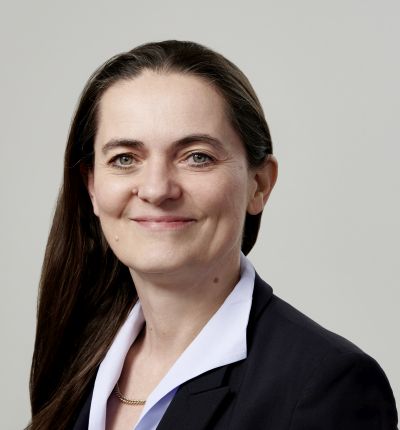
Pia Götze: Sustainability has a long history at Beckers, well before my time. Our origins are crucial: we are a Swedish family business, owned by Jenny Lindén Urnes. She has a clear agenda and is deeply convinced that she wants to use our company to positively influence the world of coatings. This is firmly anchored in our DNA.
The initiative was operationalised about 10 years ago. Since then, we follow a sustainability agenda with clear goals in three areas: people, products and operations.
The people area focuses on safety, engagement, diversity, mental health initiatives and other social topics. In the product area, the Beckers Sustainability Index (BSI) plays a central role, supplemented by topics such as SBTi and the development of new products and their enabling technologies. In the operations area, we consider aspects such as recycling, waste management, renewable energy and water consumption.
As mentioned before, the agenda has clearly defined targets and milestones. Sustainability is firmly embedded in the bonus system for managers, with a percentage of the bonus directly dependent on the achievement of sustainability targets. This makes the topic tangible. Everyone in R&D and Sales knows their figures and is actively working to achieve the targets. The BSI is also calculated for individual customers, many of whom pay close attention to it and track the figures carefully. Particularly important is the Value creation model of our parent company, Lindéngruppen. This model monetises the company’s impact across six areas: net profit as starting point, society (e.g. taxes, living wage), environment (CO₂ emissions, waste) and people (health & safety, gender diversity). These factors determine the True Value, our key KPI, which we are measured against.
This means that measurability is a key issue?
Götze: Absolutely. We formulated our Green Lights strategy in the Executive Board. The core of this strategy is to closely combine sustainability with business. It’s not about either/or, right or left, but about thinking of sustainability in an integrated way across all business processes and linking the goals together. This doesn’t have to be a contradiction. There have always been conflicting targets between price, volume, EBIT, and cash. Now, with CO₂ and BSI added to the mix, I personally find it exciting and motivating to integrate all these factors into the business.
What role do Environmental Product Declarations (EPDs) and other certificates play?
Götze: We are SBTi-committed, which is bold because Scope 1 and 2 only account for 2% of our CO₂ footprint, with 98% falling under Scope 3. With our 2% contribution in Scope 1 & 2, we are the smallest cog in the wheel; however, we still believe we have the ability and responsibility to drive change in Scope 3.
On the raw materials side, the aim is to make the use of raw materials CO₂-efficient by, for example, substituting fossil carbon with renewable carbon. Mechanisms such as mass balance will be important during the transition period, but they require certification and clear regulations to prevent eco-washing.
Currently, however, mass balance is not yet recognised everywhere; many customers do not accept it, and even SBTi has challenges with it. Support is needed to move the chemical industry and raw material value chains forward e.g. via legislation and/or financial incentives. This is already the case in other industry sectors such as fuel and packaging.
EPDs already play a major role for us. We are proud to be at the forefront of this and have established resources to meet these requirements. As a paint manufacturer, however, we are far removed from the end product – our customers are steel or aluminium manufacturers, whose customers in turn are the end consumers. Influencing the entire chain is not easy. Certificates such as EPDs are therefore one effective lever we have to anchor sustainability along the value chain. It remains a challenge, but it is central to our strategy.
Looking ahead to the next few years, where do you expect market momentum to come from? Primarily from the area of sustainability, or are there other aspects as well?
Götze: That’s difficult to predict – a crystal ball would be great. Our business is relatively mature, so a complete product revolution, the likes of which we have never seen before, is rather unlikely. But there is still a lot of potential in terms of functionality, what we call our handprint or “operational carbon”. In addition to the “embodied carbon” footprint with CO₂ emissions, this is about active positive functionality. One example is the energy absorption of facade paints. Other additional product features are also conceivable. In short, add-ons and new functionalities in paints continue to offer opportunities.
There will also be a strong focus on process improvements: efficiency in paint application, energy consumption, emissions, flow rate and plant performance. Technologies such as UV/EB curing, low peak metal temperature (low PMT), Slot Die and other innovative methods help to reduce energy consumption. This is of great value to our customers because it is directly linked to cost savings, efficiency and CO₂ reduction.
Event tip
The Sustainable Coatings Conference, which takes please November 3 and 4 in Amsterdam, Netherlands, will provide practical insights into low‑carbon technologies, circular economy approaches, bio‑based and water‑based systems, and robust assessment methods such as LCA and mass balance. Learn how the industry is responding to regulatory pressure, customer expectations, and material constraints – and how sustainability can become a measurable business advantage rather than a compliance burden.