News Markets & Companies
Akzo Nobel and Axalta:“A deal of this size almost always prompts a reaction.”
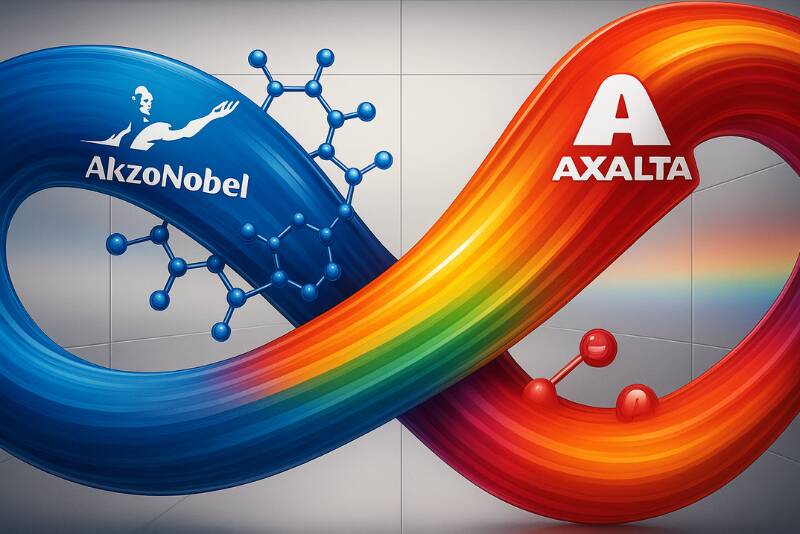
The merger of Akzo Nobel and Axalta marks one of the most consequential shifts in the coatings industry since Sherwin–Williams acquired Valspar. Ben Scharff, Managing Director at Grace Matthews, reflects on the strategic logic behind the combination, the ripple effects it will send through global markets, and what it signals for the next wave of consolidation. By Damir Gagro.
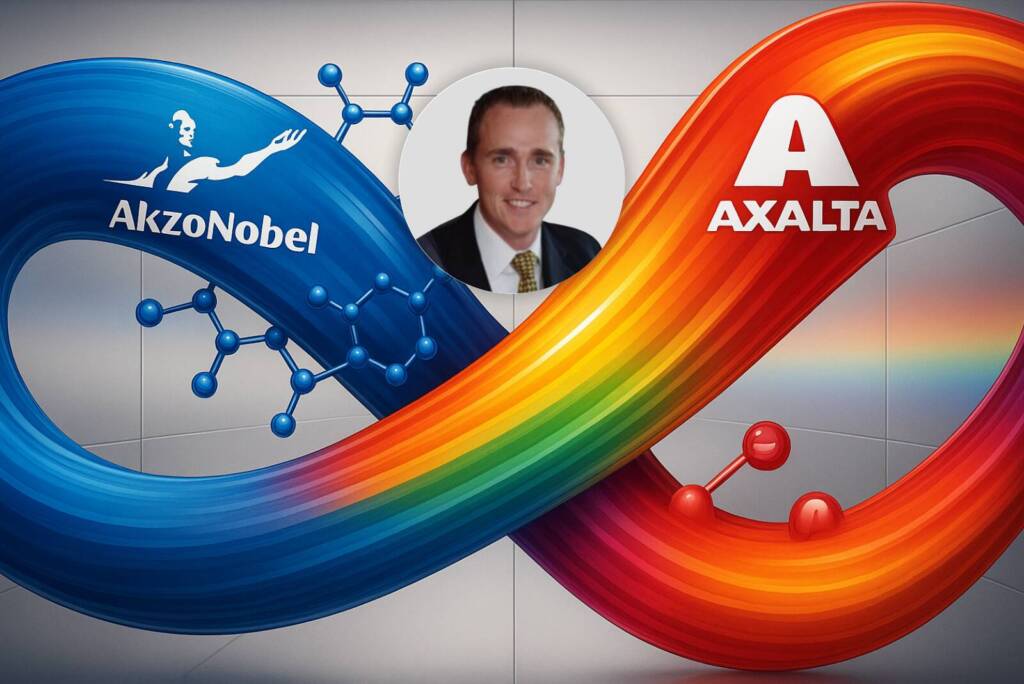
How does the Akzo Nobel–Axalta merger reflect the consolidation dynamics you currently observe in the global coatings and specialty chemicals markets?
Ben Scharff: The Akzo Nobel – Axalta combination is very much in line with the long-running consolidation trajectory we’ve seen across coatings and specialty chemicals. Scale is increasingly critical, not simply for procurement leverage, but for managing regulatory complexity, absorbing raw-material volatility, and funding the kind of R&D that customers expect in areas like sustainability, product functionality, and next-generation performance. Both companies were facing the same macro pressures, and in many ways, this deal is an acknowledgment that the industry is entering a phase where global breadth and technical depth are becoming prerequisites rather than differentiators.
What makes this particular merger notable is that it pulls together two portfolios with complementary strengths. Akzo Nobel brings strong positions in marine, protective, and selected industrial lines, while Axalta delivers real leadership in refinish and transportation coatings. The combined entity is better balanced geographically and technologically, and that reflects a broader shift in the industry: competitors are no longer pursuing scale for its own sake, but to build platforms resilient enough to manage the regulatory, supply-chain, and innovation demands of the next decade. We have completed roughly 10 transactions with Akzo Nobel and Axalta over the years, and have always believed that a combination of the two companies could make strong business sense.
How does the deal merger reshape the global competitive landscape in coatings?
Scharff: The merger with Akzo-Nobel effectively elevates Axalta from a focused specialist to a truly diversified, global coatings player, and the collective businesses change the competitive picture at the top of the market. We haven’t had many deals in recent years (since the 2017 transaction between Sherwin–Williams and Valspar) that genuinely shift the hierarchy among the majors, but this one does. A company with strong positions in refinish, meaningful exposure to industrial segments, and expanded global reach is now competing head-to-head with the largest multinationals across more parts of the value chain than before. That compresses the upper tier and raises expectations on service levels, innovation cadence, and customer coverage.
For mid-sized and regional players, the implications are different, but still significant. Larger global competitors tend to exert procurement and pricing pressure very quickly after achieving scale, and that dynamic often trickles down into industrial and protective segments first. Customers will also notice the shift; a combined Akzo Nobel – Axalta can support broader supply programmes, deeper technical resources, and a more consistent global presence. That inevitably forces other players, even the well-established ones, to think differently about where they invest and how they differentiate.
Where do you see the next major consolidation clusters: in industrial coatings, transportation coatings, powder coatings, or in specialty protective coatings?
Scharff: Industrial coatings is the segment with the widest set of potential transactions ahead. It remains highly fragmented, and the pressures driving consolidation, such as regulatory scrutiny, capital intensity, growth ambitions and the need for strong technical service, continue to intensify. Powder coatings is a close second, fuelled by sustainability momentum and the fact that many strong powder assets are still regional (more so in the European markets) or niche players that haven’t been rolled up. Those two areas present opportunities for both strategic buyers and private equity, which continues to be active in the coatings market.
Protective coatings will also see activity, but the deals there tend to be very targeted. Buyers are typically looking for specific chemistries or performance capabilities tied to infrastructure, corrosion protection, or energy markets. Transportation coatings, by contrast, is already fairly consolidated, so the next moves there will be more about capabilities than scale. Overall, the most meaningful consolidation opportunities lie where fragmentation, regulation, and sustainability trends intersect.
Do you anticipate a wave of follow-up deals or defensive consolidations, as competitors react to the creation of a new global market leader?
Scharff: A deal of this size almost always prompts a reaction. It forces other players to reassess their own scale, cost position, and technology roadmap, and that often leads to a mixture of defensive and strategic moves. Mid-sized companies may seek partners to strengthen procurement leverage or broaden their product range, particularly in segments where raw-material costs and regulatory compliance create structural disadvantages for smaller operators. And private equity, which has been active in coatings, tends to view these moments as openings to create new platforms.
Larger multinationals usually respond more selectively. Instead of chasing scale, they’re more likely to evaluate their portfolios for divestitures of slower-growing or lower-margin assets, and then redeploy that capital into faster-moving technologies, like sustainable, low-VOC coatings systems, high-performance coatings, or functional, smart coatings. Over a 12–24-month horizon, it’s reasonable to expect more transactions than we’ve seen recently. When the competitive baseline shifts, the industry generally recalibrates.
What are the biggest integration risks you see for a transaction of this nature?
Scharff: With a deal like this, customer continuity is always the first area to watch. Competitors will be looking to “pick off” customers if possible. In refinish and industrial segments, especially, relationships are built over many years through technical service and field support, and customers do not hesitate to move if they sense instability or distraction. Integration efforts, whether they involve rationalising product lines, merging sales teams, or aligning channel strategies, have to be managed very carefully to avoid unintended churn. These are high-touch businesses, and even small changes can ripple quickly.
Operational integration presents its own set of challenges. Rationalizing manufacturing footprints, standardizing resin strategies, integrating supply chains, and aligning ERP systems all require significant time and attention. Cultural alignment is equally important; coatings businesses often have deeply rooted operating cultures tied to technical service and long-standing customer commitments. On top of that, both companies need to maintain momentum in their R&D pipelines, because if innovation slows during integration, the deal’s longer-term value becomes much harder to realize.